Trump tariffs, the Upper House election… What will the “billionaires” buy with their bonuses this summer for “new investments”?


Urgent Survey! Ask the “Millionaires” “How will you spend this summer’s bonus?”
(According to the “Survey on the Compensation Level of Summer Bonuses and Lump-Sum Payments (Bonuses) of TSE Prime Listed Companies in 2025” by the Institute for Labor Administration, this year’s summer bonus payment level will be 862,928 yen, up 3.8% from the previous year. We therefore asked the “billionaires” we have interviewed in the past how they would utilize their bonuses if they received them now, in addition to their outlook for the stock market after the defeat of the ruling party in the House of Councillors and the Trump tariff agreement.

The market has already “factored in” the ruling party’s defeat in the House of Councillors election.
The 27th Upper House election ended in a crushing defeat for the ruling party, leaving it with less than a majority in both the House of Councillors and the House of Representatives. Although the domestic political situation suddenly became more uncertain, the stock market was very calm the day after the results of the House of Councillors election were known.
The Nikkei Stock Average soared after the news of the Trump tariff agreement, temporarily exceeding 40,000 yen at the end of June, and then moving back and forth in the upper 39,000-yen range in July, but it has now suddenly moved up.
Looking overseas, U.S. stocks are performing well, with major stock indexes holding near their highs. The US dollar/Japanese yen exchange rate is hovering around the 150-yen level. In this environment, what do the “billionaires” of the past think about the stock market?
There is a good possibility of “high prices” in the second half of this year.
First, Mr. Nanonano, known for his highly repeatable high-dividend stock investments, points out that the current stock market “looks unexpectedly strong, with foreign investors overbought for 15 weeks in a row despite concerns about U.S. tariffs.
Regarding the market development in the second half of 2013, he added , “Once the political developments after the Upper House election and the details of the U.S. tariffs are known, I think there is a possibility that the market will rise further as the concerns are dispelled in the near term. In some cases, I believe that the Nikkei 225 may even break the record high of 42,224 yen set in July 2012,” said Nanonano.
His own portfolio, he says, remains largely unchanged, with “mainly high-dividend stocks and a cash ratio of 10% or less.
Next up was Mr. Nagocho, a long-term investor from Nagoya who practices thorough diversification and ultra-long-term investing. Regarding the current market situation and the second half of this year, he said, “I feel that the market is doing extremely well. Thanks to your support, my brokerage account is at record highs day after day. I expect the market to be pulled down by the U.S. market and fluctuate wildly, but I think it will continue to move higher toward the end of the year,” he said.
He added, “Basically, I take a full position in stocks in any market. I will continue to switch stocks as usual, but I will not change my stance based on changes in the market,” said Mr. Nagocho.
So, what would the two of them buy with their summer bonuses as new investments? Let us introduce them as follows.
Nanonono: “Pay attention to the movement of dissolving cross-shareholdings.
Nanohana: Profile
Since 2008, when he focused on high-dividend stocks, he has been in the black for 17 consecutive years. He is the author of the book “Bakudendai” Kabushiki Ga Sukeroku (Investing in “Bakudendai” Stocks, taught by a billionaire who earns 410,000 yen a month in “unearned income”) (KADOKAWA).
Click here for Nanonano’s blog “Nanonano’s High Dividend Stock Investment Memo.

Market Materials to Watch
Three factors to watch: “TOB to resolve parent-subsidiary listing,” “activists’ movements,” and “movements to dissolve cross-holding shares.
Stocks to invest in with this summer’s bonus money
MS&AD Insurance Group Holdings (Stock code: 8725): 100 shares
One of the top class non-life insurers in Japan. The group’s subsidiaries include Mitsui Sumitomo Insurance, Aioi Nissay Dowa, Mitsui Direct General Insurance, Mitsui Sumitomo Aioi Life Insurance, and Mitsui Sumitomo Primary Life Insurance. The company is also active in overseas expansion.
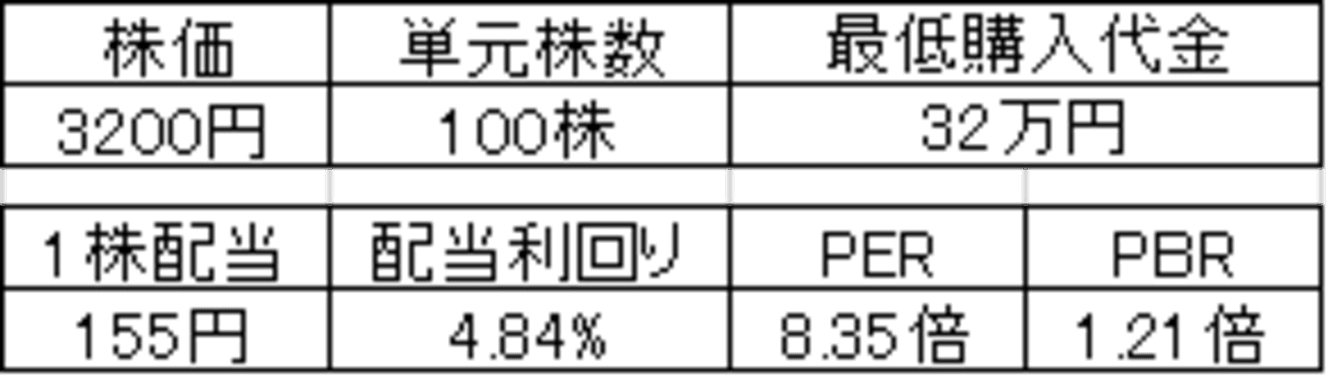
Itochu Enex Corporation (Code 8133): 200 shares
A fuel trading company in the ITOCHU Group. It has the largest market share in Japan as an energy trading company. It is involved in a wide range of businesses including petroleum products, LP gas, power generation, electricity sales, renewable energy, and sales of Nissan vehicles.

Investment trust “Daiwa-iFree Foreign Stock Index (with currency hedge)”: approximately 200,000 yen
An investment trust linked to the MSCI KOKUSAI Index, a representative index of stock price movements in developed countries excluding Japan. It mainly invests in large- and mid-cap stocks of major countries.
Supplemental Information
The parent-subsidiary listing refers to the listing of shares by both the parent company and its subsidiary, and has raised concerns in recent years from the perspective of corporate governance and capital efficiency. For example, the parent company’s interests may be prioritized to the detriment of the minority shareholders of the subsidiary, and the subsidiary may not be able to make independent decisions. The Tokyo Stock Exchange, which has been pushing for stock market reform, requires parent-subsidiary listed companies to strengthen information disclosure from the perspective of protecting minority shareholders. This is a reason why there has been a noticeable trend toward the dissolution of parent-subsidiary listings, and there have been many cases of parent companies conducting “takeover bids” (TOB) of their subsidiaries to take them private.
In addition, pressure on companies from “activists,” or shareholders who demand greater capital efficiency, is increasing. An increasing number of companies are also promoting the dissolution of cross-shareholdings from the perspective of capital efficiency.
Nanoha Nanoh, who became a “billionaire” by investing mainly in “high-dividend stocks” with high dividend yields while working at a company, has developed investment criteria for “high-dividend stocks. …… The detailed technique can be read in the paid version of “FRIDAY Subscription”.
Mr. Nagochou: The impact of the Trump tariffs will start to show up in figures from the first quarter of companies with fiscal years ending in March, so we need to keep a close eye on it.
Nagochou: Profile
Long-term investor in Nagoya (Nagochou) / Ultra-diversified long-term investor, holding more than 200 stocks. He has built a portfolio that emphasizes income gains and dividend growth. Invests mostly in stocks with P/B ratios below 1x. He likes NSE stocks.
Click here for Mr. Nagochou’s X “Long-term investor in Nagoya (Nagochou).
Market Materials to Watch
We expect that the U.S. market will continue to be volatile and pull back toward the end of the year,” said Mr. Nagochou.
I believe that listed companies will continue to emphasize shareholder returns, so I look forward to seeing how companies that have yet to implement significant shareholder return policies will be affected in the future.
Stocks to invest in with this summer’s bonus money
◇Aichi Electric (stock code 6623): 100 shares
Aichi Electric is a transformer manufacturer affiliated with Chubu Electric Power Co. Transformers are devices that supply electricity from power plants to businesses and homes. The annual dividend for the fiscal year ending March 31, 2013 is 220 yen per share (interim: 80 yen, year-end: 140 yen), a large increase of 60 yen from the 160 yen per share paid in the previous year. The company has set a policy of aiming for a consolidated dividend payout ratio of 30% or more, and expects to pay a dividend of 220 yen (interim 110 yen, year-end 110 yen) for the next fiscal year. The company is listed solely on the Nagoya Stock Exchange Premier Market.

Meiko Trans (Code 9357): 200 shares
Meiko Trans is a major port operator based at the Port of Nagoya and is responsible for loading and unloading cargo. In addition to port transport, Meiko Trans provides comprehensive logistics services including warehousing, land transport, and air cargo transport. The company also has local offices in Europe, the U.S., and Asia. The annual dividend for the fiscal year ended March 31, ’25 was 46 yen, an increase of 8 yen over the previous year. The annual dividend for the fiscal year ending March 31, 2014 is expected to be 70 yen, an increase of 24 yen over the previous year. The company is listed solely on the Nagoya Stock Exchange’s Main Market.

The detailed path and investment rules of Mr. Nagochou, a company employee who became a “billionaire” by steadily investing in undervalued stocks with low downside risk, can be read in the paid version of “FRIDAY Subscription”.
The purpose of this article is to provide reference information on investment and asset management, and is not intended as a solicitation to invest. The final decision to actually make an investment is your own responsibility. Therefore, you shall be responsible for any and all damages arising from investment decisions based on the information provided, and neither the operator nor the information provider/licensee shall be liable for any such damages. Please note that although the stock prices and data described have been checked by the editorial office, you are advised to confirm the information yourself when making an investment.
Interview and text: Kenji Matsuoka
After working as a money writer, financial planner, and market analyst for a securities company, Matsuoka became independent in 1996. He writes articles on finance and asset management mainly for business and economic magazines. Author of "A Textbook for the First Year of Robo-Advisor Investing" and "Understanding with Rich Illustrations! The Book of Cashless Payments and the Book of Absolute Advantages. X (former Twitter)→@1847mattsuu