Is the name “Shibuya” derived from the topography? From the name of a defeated bandit? The “Surprising History” of Yamanote Line Station Names – Shibuya
From "The Mystery of Yamanote Line Station Names


The Yamanote Line is a major artery running through the center of the capital city of Tokyo. Although generally recognized as a loop line, it is surprisingly little known that the official Yamanote Line is actually only the section between Shinagawa and Tabata (via Shinjuku). The line between Tabata and Tokyo is the Tohoku Main Line, while the line between Tokyo and Shinagawa is the Tokaido Line.
On July 28, Edo culture and customs historian Akira Kobayashi published a book entitled “Yamanote Line ‘Station Name’ Mystery” (Tetsujinsha), which unravels the mysteries surrounding the Yamanote Line based on station names. The book introduces unexpected histories of various locations in the center of Tokyo, with the origins of the names of all 30 stations on the Yamanote Line as the key. This time, we will introduce “Shibuya” from the book.
There are three theories on the origin of station names.
Shibuya Station Data
Opened on March 1, 1885
Average daily passengers: 314,059 (4th place out of 30 stations)
Lines served: Yamanote Line, Saikyo Line, Shonan Shinjuku Line (above JR), Denentoshi Line, Toyoko Line (above Tokyu), Ginza Line, Hanzomon Line, Fukutoshin Line (above Tokyo Metro), Keio Inokashira Line
Shibuya Scramble Crossing is said to be the most crowded intersection in the world, and foreign visitors to Japan flock to see it. Although it is hard to imagine nowadays, this area was a peaceful farming village until the Meiji Era (1868-1912).
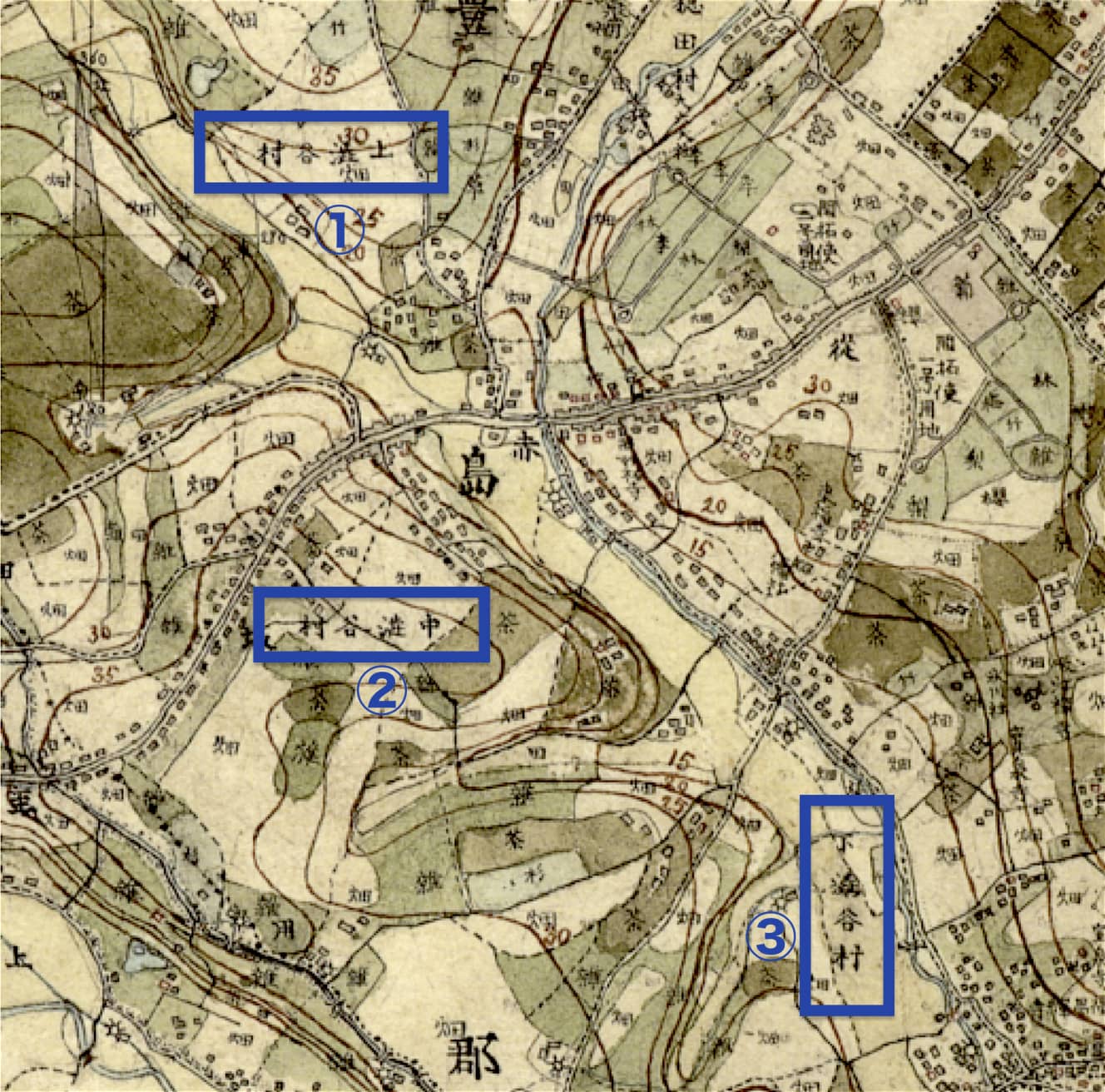
According to the “Historical Agro-Environment Browsing System” of the National Institute of Agricultural Science, the area around Shibuya Station was divided into “Kami-Shibuya,” “Naka-Shibuya,” and “Shimo-Shibuya villages,” surrounded by tea fields and pear trees. The station was established here on March 1, 1885. The three villages were merged into “Shibuya-mura” in 1889 when the town-village system was enacted, and the town became “Shibuya-cho” in 1909.
The population of Shibuya-cho was 81,000 according to the first national census in 1920. There are several theories as to the origin of the name “Shibuya.
(Topography, seaside theory) The name “Shibuya” was derived from the name “Shioya-no-sato,” which in turn was translated into “Shibuya. It is highly likely that this area was a seaside area in ancient times, and salt was extracted when digging deep.
(Topography, lowland along the river theory) The river flowed through the area, and the basin was a concave lowland, or valley. The water of the river was reddish brown with iron, and the name “Shibuya” was derived from the color of the valley.
This “river” is the Shibuya River, which still flows for 2.4 km from the south of Shibuya Station to Tengenji Bridge. The rest of the river is buried underground and culverted. It is a so-called sewer trunk line. It is not well known that the Kawagonegawa River, a tributary of the Shibuya River that flows toward Sangubashi Bridge, is the model for the children’s song “Haru no Ogawa” (Spring Stream). The river is called “Sarasara-iku,” which means “flowing clear” in Japanese, so it must have been a clear stream. The Kawakonegawa River is now a culvert.
(Human name, theory of episodes during the Heian period) The theory goes that in the late Heian period, a warrior who captured bandits who invaded the Kyoto Imperial Palace and was given the surname “Shibuya” by the emperor came to this area and ruled it.
According to Tanigawa Akihide, a place name researcher, the most reliable theory is the “topography/riverfront theory,” but the “topography/riverfront lowland theory” is also topographically correct and “hard to discard. The highest station on the Yamanote Line is Yoyogi, at 38.7 meters above sea level, from where the line descends to about 15 meters around Shibuya Station and then climbs back up toward Ebisu. Shibuya is located in a valley.
Was there a samurai who was given the surname “Shibuya” as a reward for capturing a bandit?
<The story of a samurai who was given the surname “Shibuya” as a reward for capturing bandits is only a legend, but it is quite interesting.
The samurai who captured the thief at the Kyoto Imperial Palace was a man named Shigeie Kawasaki, a descendant of the Kammu Taira clan and based in Tachibana-gun (Kawasaki City, Kanagawa Prefecture) in Musashi Province. The name of the bandit Shigeie captured was Shibuya Gonsuke Morikuni of Sagami-no-kuni (Kanagawa Prefecture). It is said that the bandit confessed his name to the authorities.
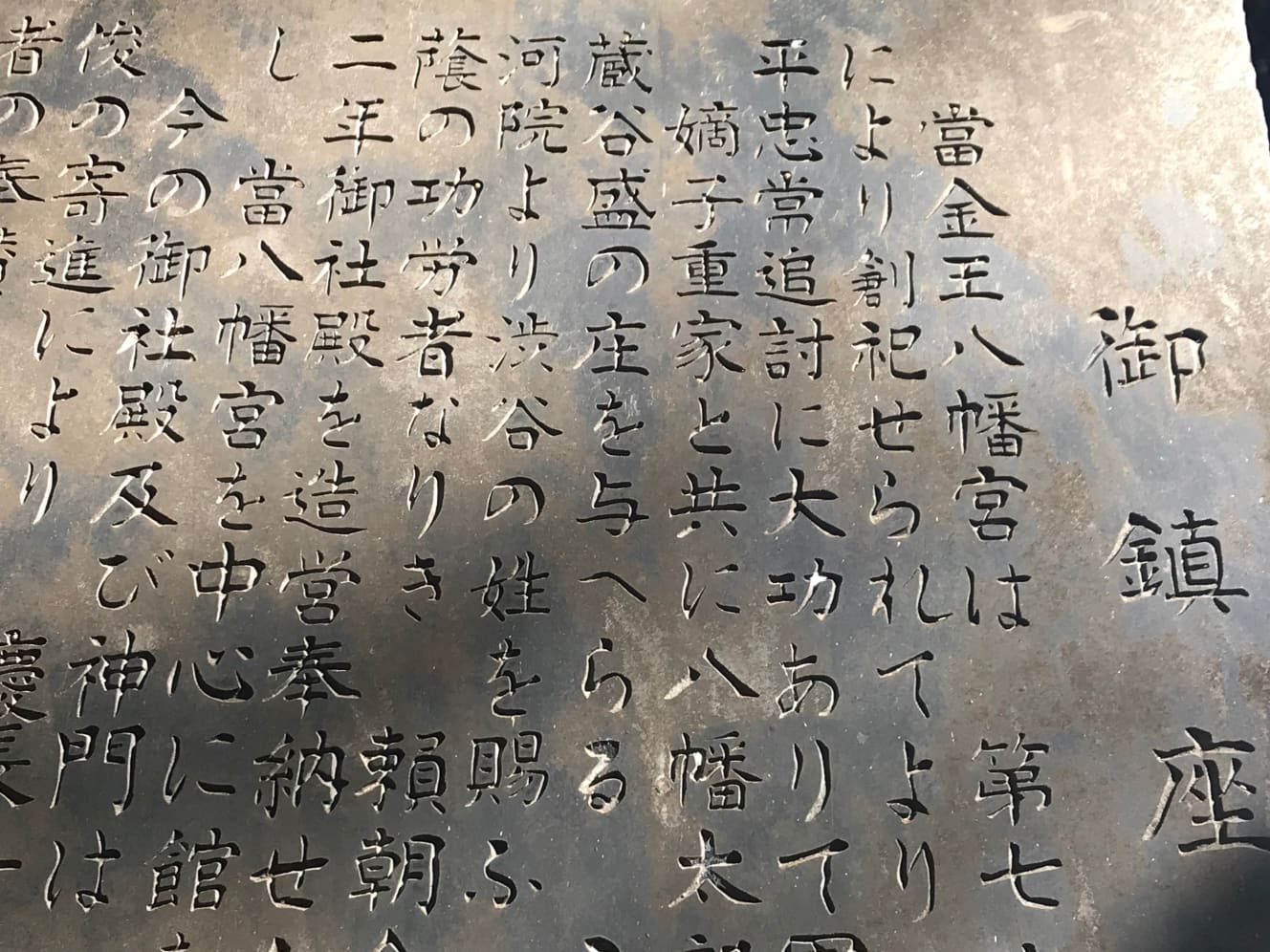
Hearing of Shigeie’s bravery, Emperor Horikawa (the 73rd) praised him and bestowed upon Shigeie the name of the thief, Shibuya, as a reward for his bravery. When Shigeie was relieved of his duty of guarding the Imperial Palace, he changed his name from Kawasaki to “Shibuya Shigeie,” and went to the present Shibuya area to take possession of the estate. This story is inscribed on a monument at Kaneo Hachimangu Shrine, located behind the Shibuya police station.
The Shibuya clan once had a mansion in the area around Kaneo Hachimangu Shrine. According to the shrine legend, Shigeie built Shibuya Castle here in 1092 (the 6th year of the Kanji Period), in the late Heian Period. In fact, the castle was the seat of government of the Shibuya clan until its demise in 1524 during the Warring States period.
However, since no remains of the castle remain, Nishimata Sosei, a researcher on castles and warring states history, says that it is only a “castle site legend” and that there may have been only a mansion there.
However, the theory that the family name was taken from the name of a bandit is a leap too far. Although it is only a hypothesis, the “gonsuke” of the bandit Shibuya Gonsuke is written exactly as “gonsuke” and may have referred to the “gonkan,” a local government position held during the Heian period (794-1185). In other words, he may have been a legitimate official appointed by the Imperial Court.
Shibuya Gonsuke was originally a powerful family in Sagami-no-kuni appointed by the Imperial Court, but was the target of a strike against him for some misbehavior. Gonsuke, on the other hand, was stigmatized as a bandit as time went by.
After all, Shibuya is a place name derived from geographical features such as “Shiotani no Sato,” and it is reasonable to assume that the story of the defeat of the bandits was invented by the Shibuya clan, which took the name of the place as its surname, in order to propagate their military exploits.
Dogenzaka and Miyamasu Mitake Shrine are highlights
Across the station to the west from Kaneo Hachiman is Dogenzaka. At the intersection in front of the Dogenzaka-ue police box, there is a monument inscribed with the origin of the hill’s name, but few people stop to look.
According to the inscription, the name “Dogenzaka” derives from the fact that after the Warring States period general Hojo Ujitsuna invaded the area in 1524 and destroyed the Shibuya clan, his family member Owada Dogen built a hermitage on the side of the hill.
The “Tensho Diary” written by Kiyonari Naito, a vassal of Ieyasu Tokugawa, also states that Dogen sent such a letter of history to Ieyasu. However, the authenticity of the “Tensho Diary” is extremely doubtful, and it is necessary to listen to it with one’s brow furrowed.
On the other hand, the “Edo Meisho Zue” (Edo Meisho Zue) states that Owada Dogen was a man of the early Kamakura period and a member of the family of Wada Yoshimori, a retainer of Minamoto no Yoritomo. Yoshimori rebelled against the Kamakura shogunate in Kenryaku 3 (1213) and was defeated, and the Wada clan was destroyed. At that time, Dogen fled from Kamakura and thereafter hid out on this hill, where he became famous as a bandit. Hence, the name “Dogenzaka,” or “Dogen Hill. This is a completely different episode from the one in the Tensho Diary, but there is no proof of this either.
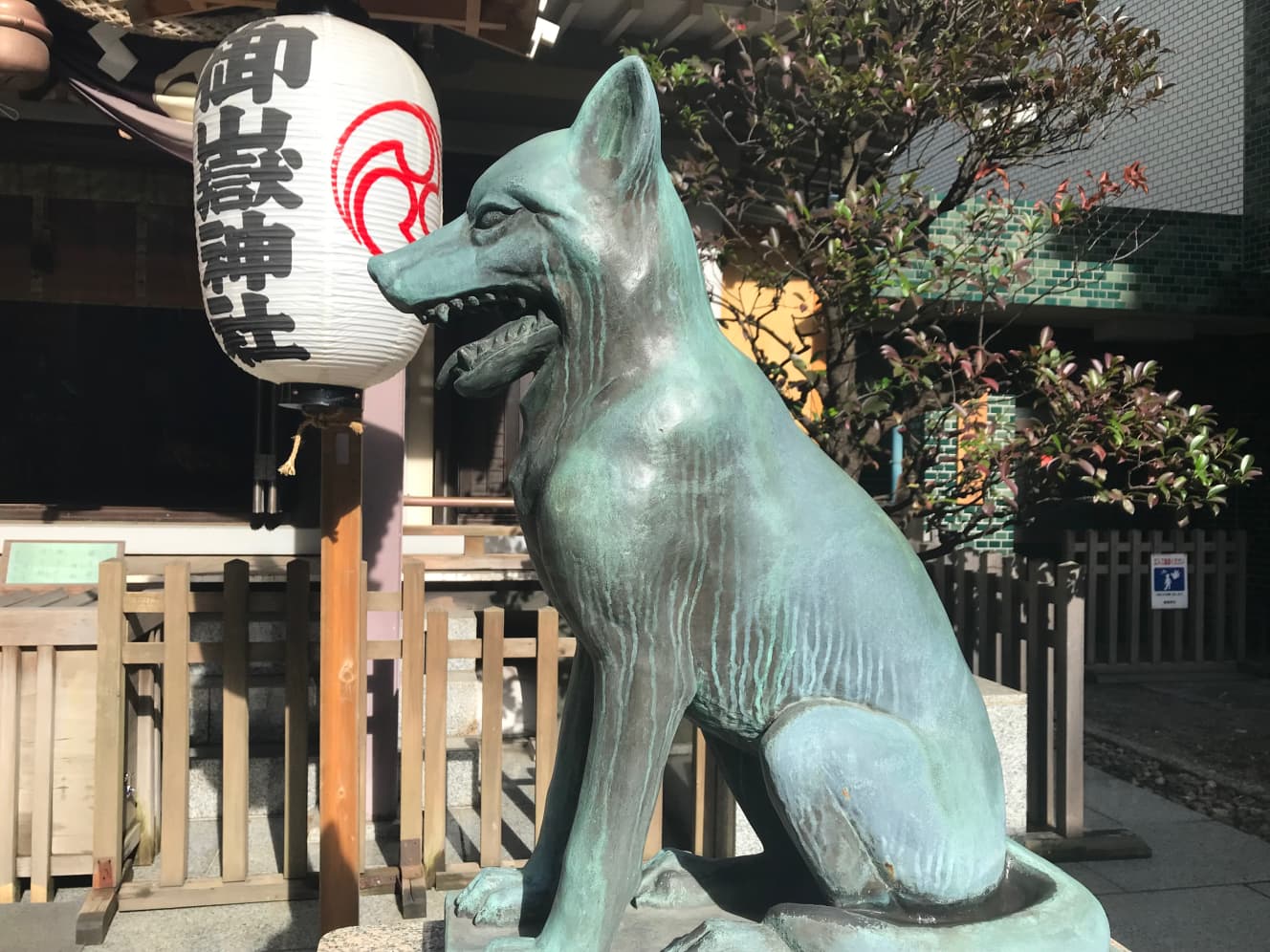
Another hidden gem of Shibuya is Miyamasu Mitake Shrine, located about a two-minute walk from the station. In front of the shrine building, there is a bronze statue of a mountain dog instead of a guardian dog. The mountain dog is a Japanese wolf. This is a replica of the original wolf statue, which is believed to have been made during the Enpo period (1673-1681), and is enshrined in the shrine office.
The Chichibu mountain range, which stretches along the upper reaches of the Arakawa River, was the habitat of the Japanese wolf, which is believed to have become extinct at the end of the Meiji era (1868-1912).
There are many shrines enshrining wolves in the area under the name “Oinu-sama” (meaning “dog” in Japanese). In the Edo period (1603-1867), the belief in wolves spread to the plains of the Kanto Koshin region, coinciding with the wish to ward off epidemics.
Miyamasu Mitake Shrine is a precious place that conveys the vestiges of wolf worship to the heart of the city.


Mystery of Yamanote Line Station Names” by Akira Kobayashi, published by Tetsujinsha