Facing the Rising Threat from China: A Close-Up Look at the Japan Ground Self-Defense Force’s Powerful V-22 Osprey


Deployment of the V-22 Osprey began at Saga Garrison in July
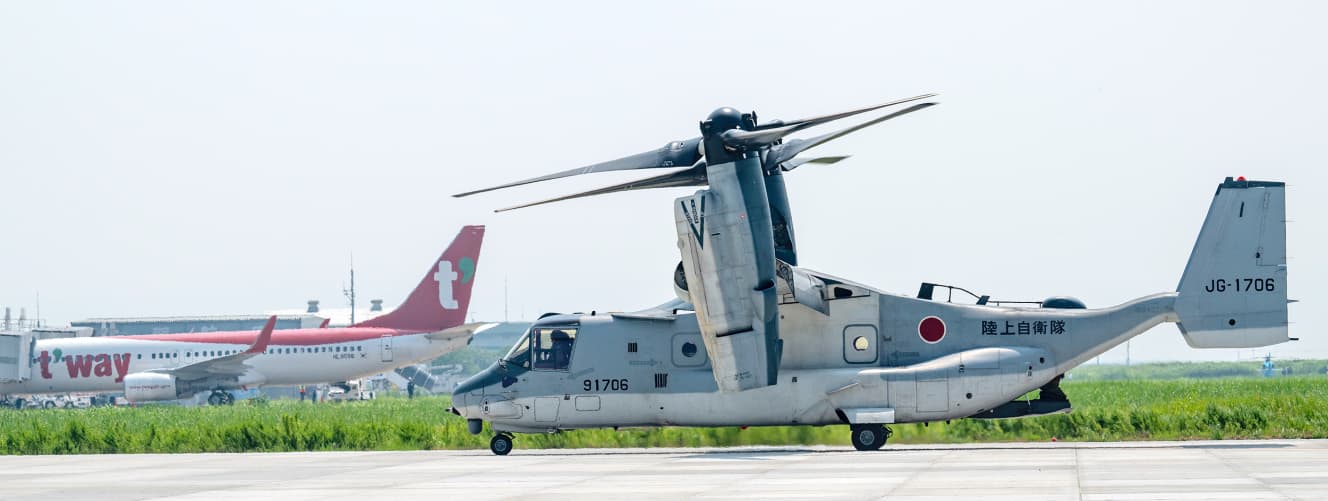
On a summer day in Kyushu, with occasional clear skies, a single aircraft moved across the sky, roaring with its distinctive deep low-frequency sound. It was the V-22 Osprey, characterized by its two massive rotors and slender body.
Around 10:30 a.m. on July 9, the aircraft landed in front of the hangar at the Japan Ground Self-Defense Force’s Saga Garrison, adjacent to Saga Airport. Four personnel—two pilots and two onboard maintenance crew—disembarked and were welcomed by the unit members. This marked the first deployment of the V-22 Osprey to the Saga Garrison.
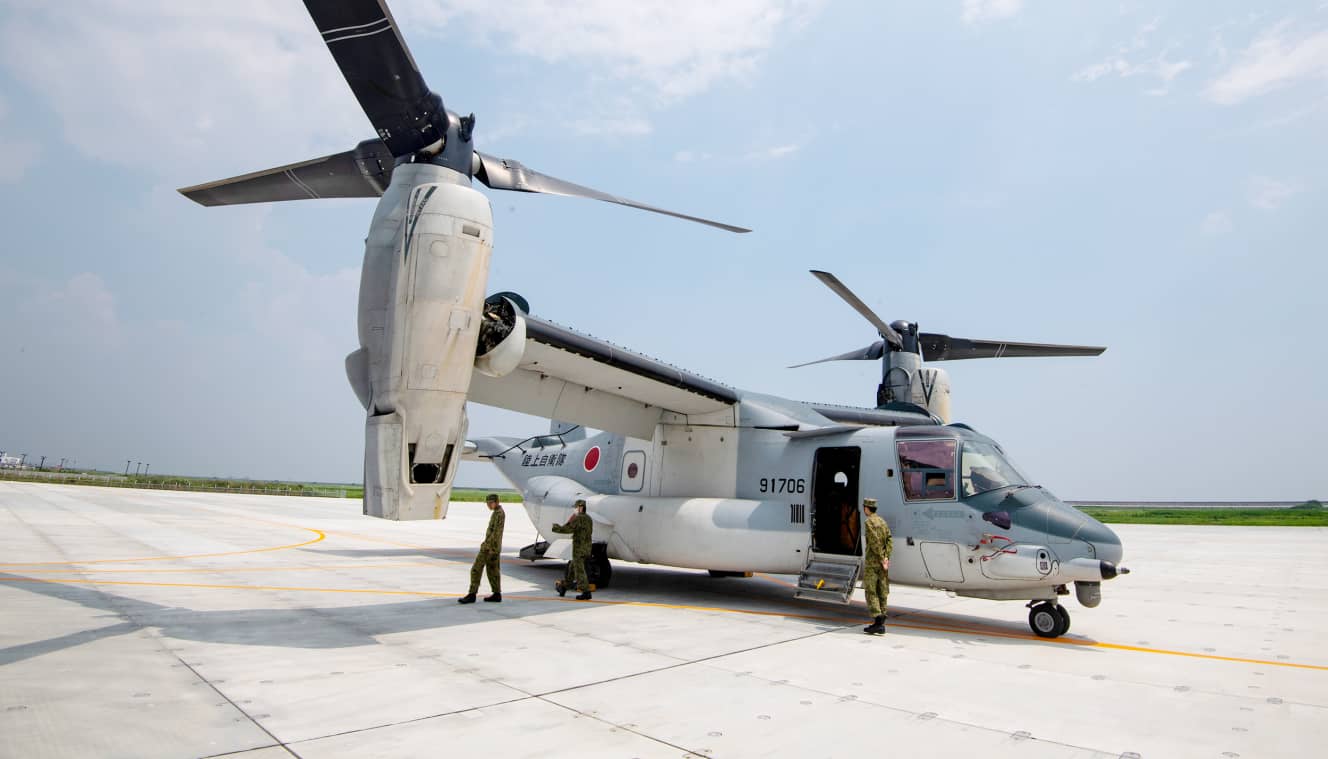
About an hour after the Osprey’s arrival, a commemorative ceremony was held to officially open the Saga Garrison. Originally, the plan was to open the Saga Garrison simultaneously with the establishment of the Transport Aviation Unit in 2020.
The five-year delay was due to several concerns: the past crash accidents involving the Osprey and its safety, fears that Saga could become a target of attack, environmental damage to the Ariake Sea caused by the garrison construction, and especially worries about negative impacts on Saga’s core industry—nori seaweed farming—which sparked opposition movements among Saga residents.
While discussions continued between both sides, the Transport Aviation Unit temporarily stationed 17 Ospreys at Kisarazu Garrison as a temporary home.
There was a strong reason to wait for deployment to Saga. The unit using this aircraft is the Amphibious Rapid Deployment Brigade—Japan’s equivalent of a marine corps—based at Ainoura and Takematsu Garrisons in Nagasaki Prefecture, just about 60 km from Saga Garrison.
Sharing the runway with Saga Airport was also a major advantage, as it eliminated the need to build airport facilities from scratch.
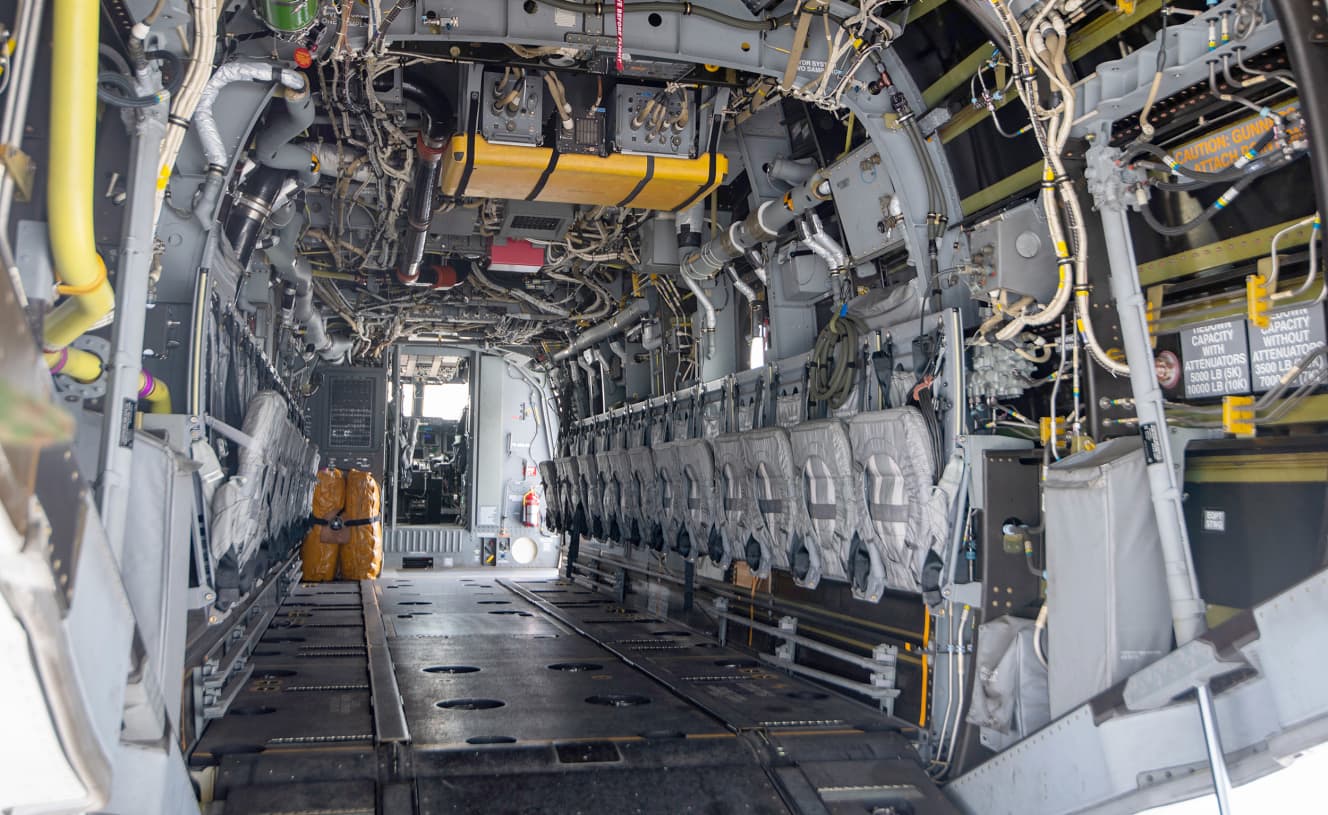
The Osprey was chosen over helicopters because its speed and range are more than twice those of the Ground Self-Defense Force’s largest helicopter, the CH-47, and because it can take off and land vertically—essential for the Amphibious Rapid Deployment Brigade’s rapid deployment to islands scattered from Kagoshima to Okinawa Prefecture.
Still, a senior Ground Self-Defense Force official said, “It’s still not enough.”
“The Chinese military already has three aircraft carriers and is rapidly building combat ships equipped with advanced radars and missiles. The deployment of Ospreys has improved defense capabilities in the southwest, but what’s urgently needed now is the deployment of stand-off missiles that can strike enemy vessels from outside their missile range to keep threats away from Japan.”
Even in July, Chinese naval vessels and unidentified drones have appeared almost daily near Yonaguni Island, Miyako Island, and Okinawa’s main island, prompting the official to sound the alarm: “There is no more time to waste.”
Going forward, Ospreys will be gradually deployed to Saga Garrison, with all aircraft expected to be relocated there by mid-August.
Interview, text, and photos: Masayuki Kikuchi