Tomoka Takeuchi Aims for Gold in Her 7th and Final Olympic Snowboarding Appearance
The 41-year-old with wounds all over her body holds the record for the most consecutive appearances by a Japanese woman in the Winter Olympics.


She met the selection criteria for dispatch this January
“I think God told me, ‘Give the Olympics one more tries.'”
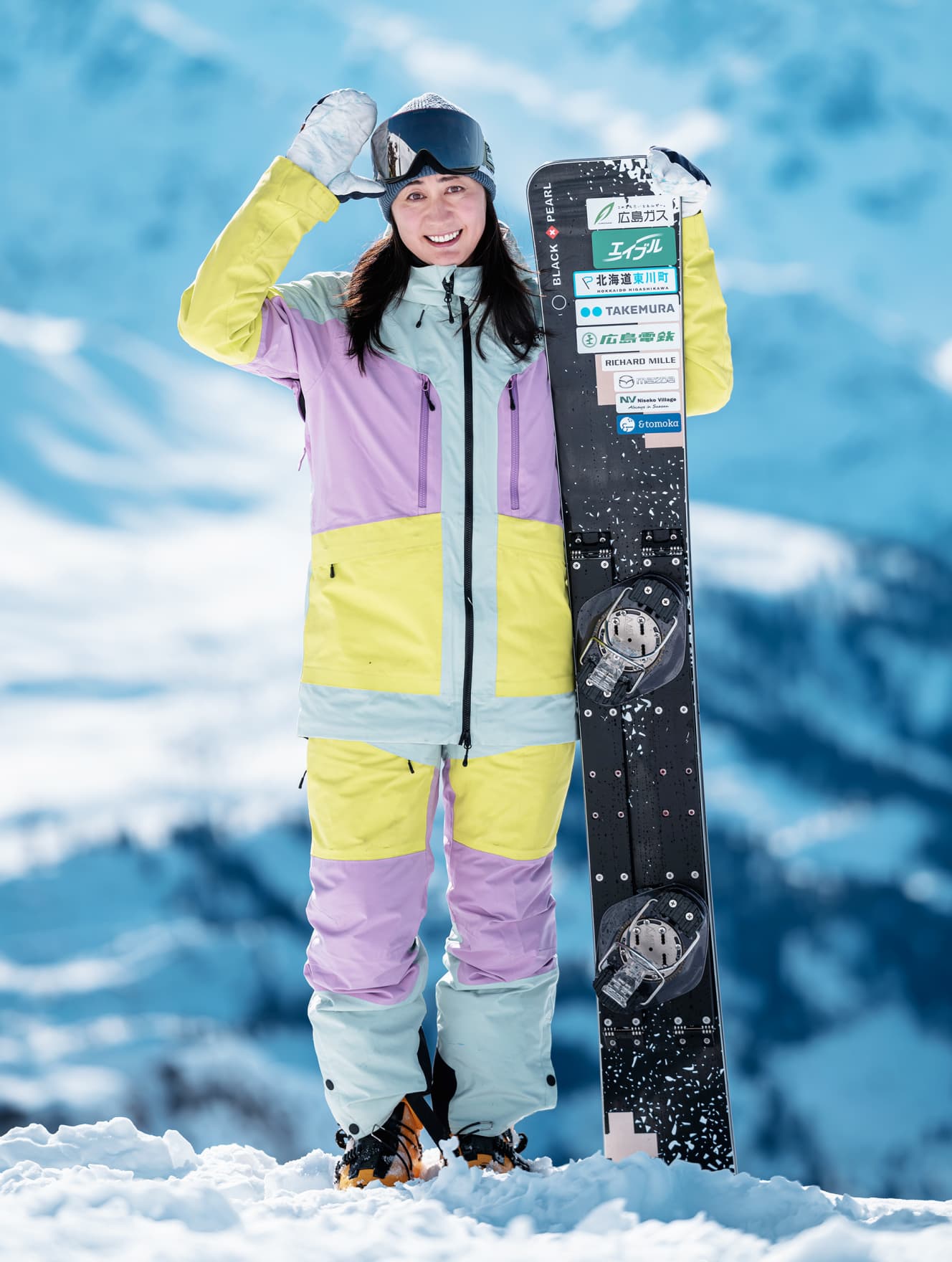
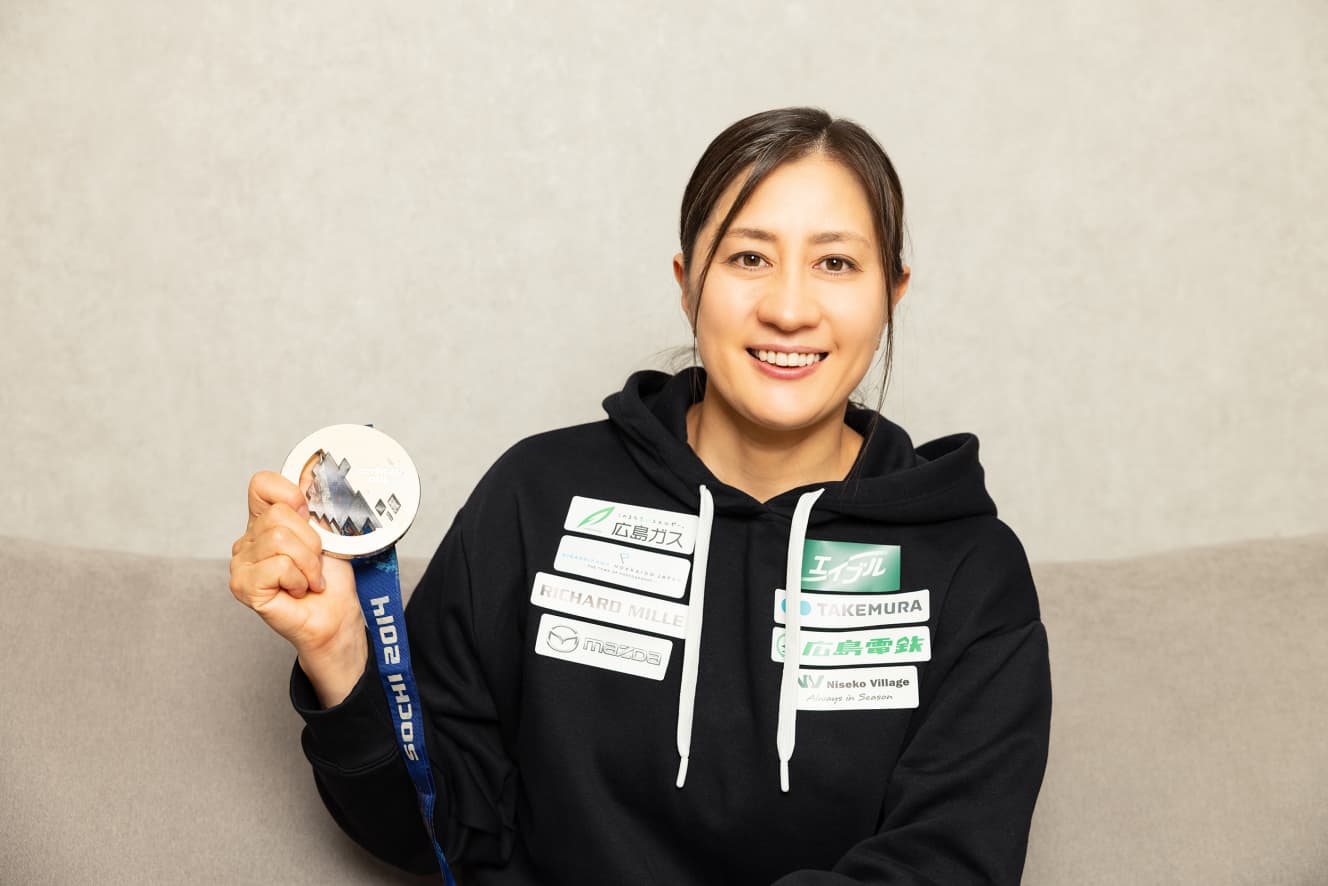
So said Tomoka Takeuchi (41), silver medalist in women’s snowboarding at the 2014 Sochi Olympics, her expression tightening with determination. She has competed in six consecutive Winter Olympics up to the 2022 Beijing Games—more than any other Japanese woman.
However, after years of competing at the highest level, her body is worn down. In recent years, she has struggled with severe back pain, sometimes to the point where walking was difficult. Takeuchi continues:
“This January, my symptoms had eased a bit, and I was fortunate enough to place third at a World Cup event in Switzerland. With that result, I met the selection criteria for the Milan-Cortina d’Ampezzo Olympics next year. Until then, I was seriously thinking, ‘I can’t do this anymore.’ But I’ve now decided to return to the Olympic stage, win that long-awaited gold medal, and then retire.”
Though Takeuchi is a leading figure in the snowboarding world, her journey hasn’t been without challenges.
She was born in Asahikawa, Hokkaido.
“Growing up surrounded by snow was just a normal part of life. I started skiing at age 2, and snowboarding when I was 10. What sparked my Olympic dream was the 1998 Nagano Olympics. Snowboarding became an official Olympic event that year, and when I watched it, I felt, ‘I have to be there too!'”
She initially enrolled in a full-time high school with a snowboarding club, but to compete in the Olympics, she needed strong results in international competitions. So, she transferred to a correspondence course school. Her first Olympics was the 2002 Salt Lake City Games, at age 18.
“The roar of the crowd was like an earthquake—it was completely different from any other competition. My mind went blank, and I thought, ‘I don’t belong here’ I finished 22nd out of 35. Before the Games, I had a mindset of ‘just being here is enough,’ but after competing, my desire to aim higher only grew stronger.”
At her next Olympics in Turin (2006), she placed 9th. It was an improvement, but still no medal. In August 2007, after the Games, she made a bold decision.
“I was 23 at the time and had become the oldest on the Japanese national team, eventually getting dropped from the roster. I also had concerns about the training environment in Japan, so I knocked on the door of the Swiss national team, a powerhouse. Naturally, I was rejected—they asked, ‘Why would we put a foreigner on the Swiss team?’ But I kept visiting the Swiss coach’s room at every event, pleading my case. After repeated negotiations, I was finally allowed to join their training on a two-month trial basis.”
“I’m glad I didn’t win a medal.”
Takeuchi went to Switzerland on her own, starting out by working as a babysitter and doing housework while staying with a host family. On overseas trips, she sometimes slept in a car in a sleeping bag or shared a hotel room with teammates. She studied German intensively for about six months and became fluent.
“From the spring of 2008, I was finally able to officially join the Swiss national team’s activities. Japan’s training volume was much higher, but in Switzerland, even with shorter hours, the balance between on and off was clear. You refresh your mind and heighten your focus, so the quality of each training session is high.”
Takeuchi spent five years in Switzerland. During that time, she competed in the 2010 Vancouver Olympics, finishing in a disappointing 13th place.
“Looking back now, I’m glad I didn’t win a medal. If I had, I probably would’ve convinced myself that the Swiss method was the only right way—not Japan’s. But in the 2012–2013 season, my coach Felix, who became my dedicated trainer, told me, ‘It’s time to go back to Japan.’ He said, ‘If you want to win at the Olympics, you need the support of your home country’s staff and to fulfill your responsibility as a national representative.’ That was a real eye-opener for me.”
As mentioned earlier, by combining her experiences from Japan and Switzerland, Takeuchi went on to win silver at the 2014 Sochi Olympics—the first-ever Olympic medal by a Japanese female snowboarder. But just two years later, in March 2016, she tore her ACL during a competition in Germany.
“Even after returning, I couldn’t perform well. I didn’t even want to stand at the start line. I felt physically sick just being at the venue. At the 2018 PyeongChang Olympics, I competed with the mindset: ‘Please, just look at this version of me who can’t do it.’ I felt like I was exposing my shame.”
Despite that, she finished 5th—an impressive result. But afterward, she lost motivation, distanced herself from competition, and began thinking seriously about retirement.
“With more free time, I went skiing with friends in the mountains. It was genuinely fun. I felt the pure joy of snowboarding again—something I’d forgotten through years of intense training. It brought me back to my roots. And I started thinking, ‘Maybe getting back into competition could be fun.’”
She placed 15th at the 2022 Beijing Olympics. Then this January, during training, she suffered a dislocation so severe that bone was exposed. Still, her mindset remains positive.
“One of the phrases I came to love in Switzerland is Locker bleiben—German for take it easy. I plan to make the most of this chance that God has given me once more.”
Next year, Takeuchi will challenge her seventh Winter Olympics, setting a new record for the most Olympic appearances by a female Japanese athlete.


From the August 1, 2025, issue of “FRIDAY”
PHOTO: Hiroyuki Komatsu