90-Year-Old Former Sony Executive Shares the Three “Y’s” for Post-Retirement Happiness
Long Interview Part 2


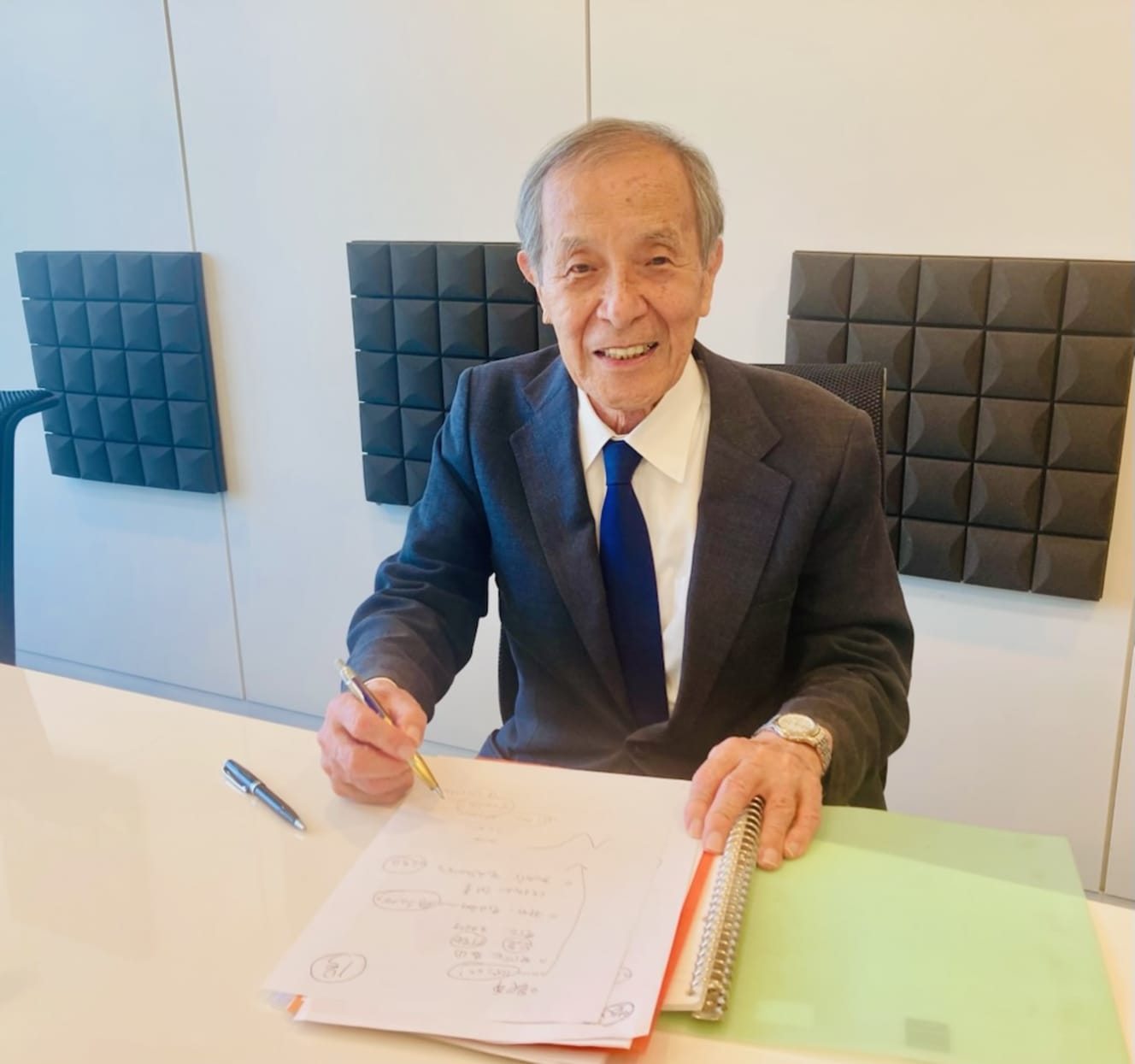
Mr. Shirō Koriyama, who held key executive positions at Sony, is now 90 years old and serves as President and CEO of the staffing company CEAFOM. He says, “Right now, I feel happier working than at any other point in my life.” Looking back on his career from his late 30s, when Sony began its full-scale entry into the U.S. market, he reflects on his path and shares in his own words what it means to find happiness in work after retirement.
In 1973, at the age of 36, Koriyama briefly left Sony to join Singer Company in the U.S. but returned to Sony in 1981. Shortly after becoming head of corporate strategy, Sony purchased Columbia Pictures in September 1989 for $4.8 billion (about ¥670 billion at the time). The hidden purpose behind this acquisition, he explains, was for Sony to establish direct ties with the American political and business elite.
【Part 1: Former Sony Executive “What I Learned from the Two Great Founders” 】
Koriyama went on to serve in several high-level positions at Sony and in 1995, at the age of 60, became President and CEO of Sony PCL. He later continued as an advisor to the company until 2002.
His third major turning point—after his wartime experiences and his career at Sony—came with his reform of how to work after retirement.
Around the age of 65, Koriyama began seeking re-employment, only to realize the harsh reality of post-retirement life: “Even if you want to work, there are no opportunities.” At first, he admits, he overestimated his own value after retirement:
“I think I had become arrogant. In my 50s, I had received many headhunting offers. But the reality wasn’t so easy.”
As a new hire with a generation 45 years younger than him.
He was told by an acquaintance at a staffing company that once you’re past your mid-60s, there are zero job openings. At first, he thought, that can’t be true, but gradually he came to realize how low his market value had become. Just when he was at a loss in 2002, he finally found a new job.
“The president of Creek and River, a staffing company for the creative industry, happened to be a friend. I told him, ‘You can treat me the same as a fresh university graduate in terms of salary and duties,’ and he hired me. I even attended the April entrance ceremony. About 10 new employees each gave a pledge, and when 67-year-old me said, ‘I’ll do my best not to fall behind!’ people around me chuckled.”
Thus, Mr. Koriyama began working as a new hire alongside colleagues 45 years younger. But he immediately faced tough challenges.
“First of all, I couldn’t use a computer. Back in my Sony days as a division director, I knew all about the principles and how they were made, but I’d never actually used one. Even when taught, I couldn’t manage it, so clerical work was hard.
So maybe sales? But compared to the other new hires, I walked slower. I couldn’t do rounds. Then I was assigned to planning and content creation, but I was no good at e-learning or programming either. I had jumped in with the spirit of ‘I’ll do anything!’ but quickly realized I was of no use.”
However, a chance to redeem himself soon came he was asked to help turn around a loss-making subsidiary. “Management I can do.” True to his confidence, he cut costs, tightened control, and boosted sales. He was recognized for restoring the company to health, and the firm was pleased to have gotten such high-quality work from someone on a new hire’s salary.
Without being particular about salary
After that, Koriyama was approached by an acquaintance who asked, “Why don’t we start a company?” and thus began the personnel placement firm CEAFOM.
“I wanted to make use of my own struggles in finding reemployment to create opportunities where many people could find happiness through the right matches,” said Koriyama enthusiastically.
“If you insist on the same title and salary as during your corporate career, you’ll hardly find any job opportunities after retirement. On the other hand, seniors who don’t cherry-pick, who don’t obsess over salary, and who sincerely devote themselves to the work in front of them are the ones who discover the happiness of working.”
Three years ago, he published 87-Year-Old Businessman: Right Now, Is My Peak (Seishun Publishing), which lays out the mindset of middle-aged and older workers as well as reforms in working styles, based on his experience interacting with over 5,000 people before and after retirement.
“For those in their 50s and above, what’s needed is a shift in mindset. If you can transition from being a player to supporting the younger generations who are in their prime, your sense of fulfillment will increase. You’ll also be able to find work.”
When it comes to career changes for those in their 60s and older, he cautions against being misled by ads on job sites, which are essentially open markets.
“Use your personal network, and dive into the field directly. And follow the three Ys: Yasui (work cheaply), Yamenai (don’t quit), Yasumanai (don’t take time off). I call the ability to continue working vibrantly after retirement being a Senior Freshman. If this idea spreads among seniors, it will lead to a true reform in the way older people work.”
The way people work in their 30s–50s is different from after their 60s. It seems essential to let go of past successes and illustrious résumés, and adopt the mindset of starting again from zero, from a fresh perspective.
(Honorifics omitted in text)
Interview, text, and photography by: Kaoru Natsume
Columnist, novelist, and writer. Born in Akita Prefecture. Graduated from Rikkyo University, Department of Japanese Literature, and has interviewed more than 20,000 working women about their work, love, marital life, and marriage. She has written a column from a woman's point of view, "'Expiration Date' Makes Women Uncomfortable" (Gendai Business), as well as a movie column. Her reports include "Alumni Love" (Fujin Koron) and "The Poverty of Highly Educated Women" (Sunday Mainichi). She has also written about marital problems in such articles as "Women Who Don't Divorce Strategically" (Shukan Asahi). In April 2020, her article in Nikkan SPA ranked No. 1 overall in Yahoo! In 2007, she was cured of Guillain-Barré Syndrome, an intractable disease that affects only one in 100,000 people, without any aftereffects.