Complex Power Dynamics in the “Luffy Group” Emerge During Executive’s Trial


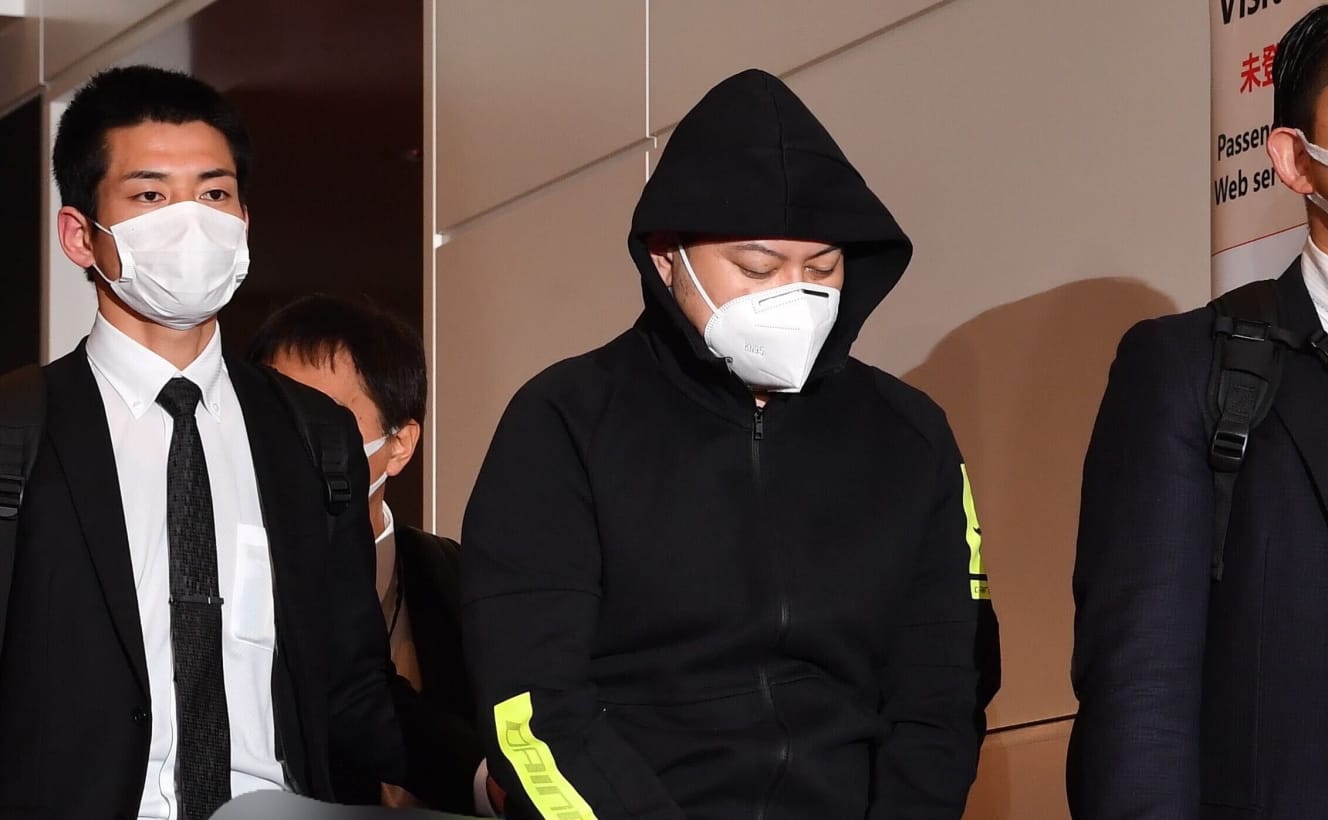
“Kojima has killed someone.”
The trial of Tomonobu Kojima (47), an executive of the wide-area robbery group “Luffy,” which opened on July 1, is underway. The first part of the report detailed Kojima’s rise within the group and the sophisticated organizational structure established by boss Yuki Watanabe (41). In this second part, Kojima’s statements about the personalities of three executives and the testimony of another executive who appeared as a witness for the prosecution are presented.
Among the ten court sessions, the courtroom was most stirred on July 9 and 11—when Seiya Fujita (41), also an executive of the group, appeared as a witness.
From the prosecution’s statements during the trial, it seems that group executives Mato Imamura (41) and Watanabe have remained silent during questioning about the robberies. In other words, the testimonies of Kojima and Fujita carry extremely significant weight for the upcoming trials of the other executives. However, their accounts sharply contradicted each other.
As Kojima stated in his opening remarks, “These four are not a friendly foursome,” there were several exchanges that symbolized the complex relationships among the executives. Fujita revealed that Kojima was “a frightening figure above me in status” and added, “Kojima has killed someone.”
However, Kojima flatly denied such statements, saying, “Eighty percent of what Fujita says is lies. I am surprised,” and further testified, “Fujita and Watanabe were planning to drug Imamura, kill him, and seize all of Imamura’s operations.”
Particularly interesting in Kojima’s testimony was his description of the group’s connection to “JP Dragon,” reported to be the mastermind behind the “Luffy” group. The special fraud group led by Watanabe, the predecessor of the Luffy Group, was said to have been in conflict with JP Dragon.
The plan to kill defendant Fujita
According to defendant Kojima’s testimony, there was an incident in which all members of the special fraud group led by defendant Watanabe were detained by Philippine authorities. At that point, a person connected to JP Dragon, who had channels with the authorities, offered to mediate, and by paying JP Dragon 55 million yen, Watanabe secured the release of his members.
However, this detention itself had been orchestrated by JP Dragon. When the executives realized this, their hostility toward JP Dragon increased. As a result, in addition to the headquarters box organized by Watanabe, personnel involved in business and fraud were taken away by JP Dragon.
Kojima believes that one reason the plan to kill defendant Imamura emerged was that JP Dragon, who had been wronged, collaborated with Imamura to run a methamphetamine business, provoking the anger of Watanabe and Fujita. Kojima also stated that Imamura, who had been incarcerated earlier than Fujita, Watanabe, and Kojima (from 2021 onwards in Bicutan Prison), initially denied to other executives any involvement in robberies in Kyoto and other locations.
In court, Kojima revealed that the wide-area robbery incidents were carried out to raise funds for the executives planned prison escape and that they attempted methamphetamine smuggling. After being transferred to a provincial prison with looser surveillance, they planned to bribe staff to escape and travel to Spain via Colombia.
The trial also presented evidence clarifying the roles of the executives in the wide-area robberies. Imamura was responsible for planning and directing the perpetrators during the crimes. Watanabe arranged the funds, including transfers from Japan to the Philippines, and gave instructions to Fujita. Fujita directed the perpetrators, while Kojima arranged the perpetrators at Fujita’s request. Regarding why Kojima and Imamura avoided direct contact and communicated only through Fujita, Kojima explained in court:
“My acquaintance who procured the perpetrators refused payment from Imamura, which led to a huge argument. I decided, ‘I can’t do business with Imamura.’ From then on, I received reports through Fujita.”
Kojima also testified about how the executives treated the perpetrators, highlighting how little regard they had for them:
“For some of the perpetrators in certain robberies, there was no intention to pay them. There was always a stock of perpetrators ready, assuming arrests would happen. Some perpetrators who escaped arrest were reused a second or third time and received payment, but the basic understanding was that there was no intention to pay them.”
The personalities of the three executives
Defendant Kojima also touched on the personalities of the three executives.
Defendant Imamura was addicted to methamphetamine and described himself as a “20-year warrior.” The meth he handled had broken out in Hokkaido as the “Kyoto brand.” He was so prosperous within the detention facility that he was nicknamed “Wagyu no Kyoto.” At the same time, there were many occasions when Kojima felt danger from his tendency to push things through aggressively.
Regarding defendant Fujita, he was described as “a violent person,” and Kojima explained that “his closeness to defendant Watanabe increased within the detention facility,” adding, “I thought Fujita was mainly involved in the robberies rather than Watanabe.”
As for defendant Watanabe, Kojima said he was “pathologically stingy,” “trusted no one,” and seemed to earn more from casinos than from the special fraud business. Nevertheless, Kojima repeatedly mentioned that he “felt gratitude for having been saved” by him.
In response to Kojima’s testimony, Fujita’s statements stood out for being precise and concise.
Regarding Kojima, he stated: “By controlling the money and personnel of the fraud organization, he could exert influence within the group,” “He held personal information, which gave him leverage to prevent employees from escaping,” “A quick-thinking person who lies skillfully,” “One of the few people who could speak directly with the boss, Watanabe,” and “I considered him the number two in the group.”
He also mentioned that he had “not received any reward” for the series of robberies. There was a moment when Fujita, who had been calmly answering questions from Kojima’s lawyer, showed emotion. This occurred when the discussion turned to life in Bicutan Prison:
“It was truly a hellish place, nothing like the reported idea that ‘if you pay money, you can gain freedom.’ Life was really tough.”
Afterwards, there was a scene where the presiding judge had to raise his voice to restrain the now more talkative Fujita. There was a slight gap between Fujita’s composed courtroom demeanor and his description of life in the detention facility, compared with the image of him portrayed in the perpetrators’ trials.
While many of the perpetrators are appealing, attention is drawn to the judgment of Kojima, who received a 20-year prison sentence. In any case, the presence of Kojima and Fujita is undeniably significant in uncovering the true nature of the group.
Interview and text by: Shimei Kurita PHOTO: Shinji Hasuo