Bongo and Marimba Prove Shoebills Can Move at Kobe Animal Kingdom


A major long-established soapland group converts into a men’s esthetic salon
Due to the revised Adult Entertainment Business Law, which came into effect on June 28, significant changes are occurring in so-called “fuzoku esthe”—adult entertainment businesses that combine esthetic services with sexual services. Across Japan, new openings are booming at a pace that could be described as meteoric, and the trend is expected to continue growing.
On July 1, a new type of men’s esthetic soapland, AZURE, opened in Tokyo’s Otsuka district. It was a renewal of Otsuka Kadoebi, part of the long-established Kadoebi Group, which operates around 30 soaplands in the Tokyo metropolitan area. Known for its postwar success in the soapland business, the Kadoebi Group’s decision to abolish a traditional soapland and instead launch an “Esthe & Soap” hybrid was a surprise. Presumably, the men’s esthetic courses that had been offered at Otsuka Kadoebi had already proven popular.
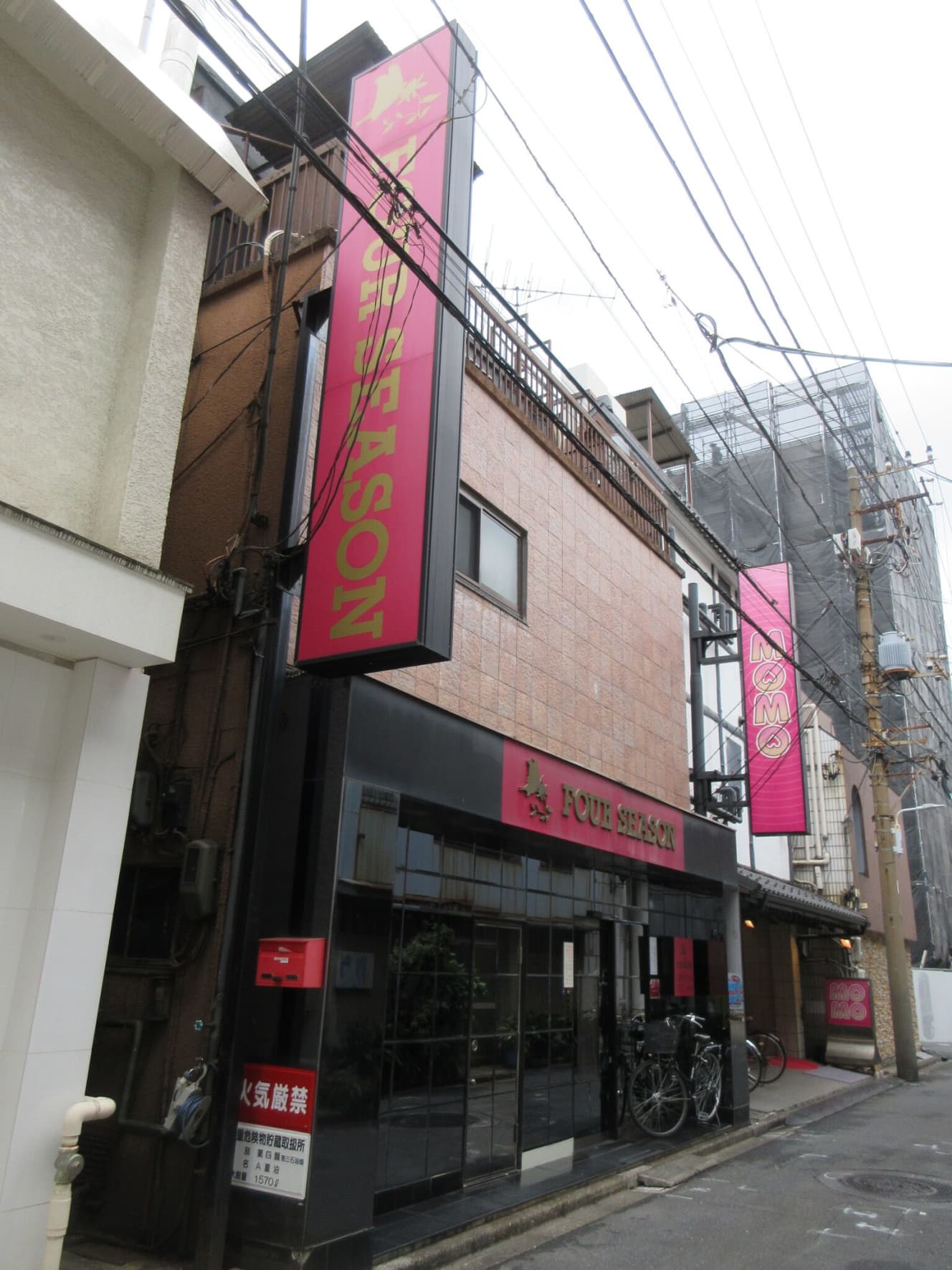
In Tokyo’s Yoshiwara district, there is also a men’s esthetic soapland: Four Season, which combines oil massage and soapland services at a high level.
Founded 20 years ago as a soapland offering esthetic services, it was unusual for such an innovative establishment to endure in Yoshiwara, a red-light district with deep history and conservatism. At the time of its debut, many thought, “How long can it last?”—but contrary to expectations, it thrived, even opening a sister shop, Sakura Spa, in Yoshiwara in February 2020. In recent years, both Four Season and Sakura Spa have begun promoting themselves as men’s esthetic soaplands. This reflects how many establishments have been aligning themselves with the booming men’s esthetic trend of the past several years—momentum that now seems to be accelerating even further.
Behind this shift is the stricter enforcement brought by the revised law. With an increase in crackdowns expected on apartment-based men’s esthetics, many therapists have migrated to fuzoku esthe establishments out of concern for their safety.
Numerous fuzoku esthe shops now advertise themselves with phrases like “Earn safely and securely at a law-abiding establishment” or “Work here without fear of crackdowns.” Some workers even promote them on blogs, writing things like, “You can earn more than at men’s esthetics, and you don’t have to live in constant fear of raids, so it’s reassuring.” With messages such as “Better to work at a safe, regulated fuzoku esthe than at an illegal men’s esthetic,” these shops have become a new refuge for therapists leaving the unlicensed sector.
The revised Adult Entertainment Business Law specifically targets conventional men’s esthetics
With the revision of the Adult Entertainment Business Law, it’s not only therapists who are shifting from men’s esthetics to fuzoku esthe (adult-oriented esthetics). Customers who used to frequent men’s esthetics are also expected to migrate, since stricter crackdowns make fuzoku esthe a safer choice. Many will follow their favorite therapists.
Unlike men’s esthetics—where sexual services are officially prohibited even if some shops secretly offer them—fuzoku esthe openly structures its sessions with ejaculation as the endpoint. For clients who found the unresolved tension of men’s esthetics frustrating, this format is highly appealing.
Men’s esthetics originally boomed because earlier legal revisions made it impossible to open new licensed brothels. As a gray-area industry, they have now been explicitly targeted by the latest revision. Unlicensed operations, renting out business licenses, and operating men’s esthetics in prohibited zones are all subject to harsher penalties. The maximum corporate fine has been raised from 2 million yen to 300 million yen.
This has sparked comments such as, “If fines can reach 300-million-yen, extreme operators will all shut down,” and even some therapists declaring, “I’m retiring from men’s esthetics now that the law has changed.”
Indeed, immediately after the revision took effect, four operators in Ōita City were arrested in late June, and on July 10, two men’s esthetic operators in Shizuoka City were arrested, all on suspicion of violating the law. While police raids on apartment-based men’s esthetics have long existed, enforcement appears to be intensifying under the new rules.
As a countermeasure, some men’s esthetic businesses have formally registered under the new framework, with plans to switch to a dispatch system—effectively becoming outcall fuzoku esthe. Moves like this are further fueling the boom. With the stricter crackdown accelerating the decline of conventional men’s esthetics, there is a strong sense that an unprecedented fuzoku esthe boom is on the horizon.
Sex-related esthetic salons are spreading even in regional areas
The so-called “hybrid fuzoku” of the Reiwa era—taking the best of men’s esthetic salons and sex-related businesses—is now attracting major attention both inside and outside the industry. And this trend is spreading to regional areas as well.
In Osaka’s Namba district, the storefront sex-related esthetic salon Rich Spa promotes itself on listing sites as a sensual men’s esthetic salon that’s more than men’s esthe, but less than health. Meanwhile, in Sapporo’s Susukino district, the storefront sex-related esthetic salon Bellflora is operated by the nationwide major YES Group and is also marketed as a men’s esthe.
Similarly, in Nagoya’s Ikeshita district, the storefront sex-related esthetic salon Ane-Esthe Fragrance—where clients can choose women by viewing them through a magic mirror—introduces itself as the Tokai area’s largest-scale men’s esthe.
In Takamatsu’s Joto district, the storefront sex-related esthetic salon Esthe & Health Kyunkyunn has newly launched as a “Men’s Esthe Health,” pursuing the best aspects of both men’s esthe and health services, incorporating customer voices such as “I couldn’t get this at men’s esthe” and “Health services left me unsatisfied.”
The backdrop to the opening of these new establishments one after another is growing demand. Unlike other sex-related businesses that mainly provide sexual services, these salons are rooted in relaxation, helping to restore mind-body balance and delivering deep satisfaction. In recent years, increasing numbers of sex industry users have become hooked on sex-related esthetic salons for this reason.
Although most of these establishments prohibit clients from touching or making advances on the therapists, there are surprisingly many men who say, “I find it bothersome to take the lead” or “I just want to be on the receiving end.” Clients who become obsessed with the pleasure of being thoroughly pampered by women at these esthetic salons are endless.
Also popular among beginners in the sex industry
One of the reasons sex-industry users get hooked on fuzoku esthe is the strong emphasis these establishments place on the esthetic (spa-like) services. Technically, they are sex-related businesses, but their thorough dedication to maximizing customer satisfaction rivals that of standard men’s esthetic salons.
For example, Tokyo’s Yoshiwara-based men’s esthetic soapland Four Seasons uses only high-quality oils. The interior and private rooms are unified in an Asian style, complemented by fragrant herbal tea, soothing music, relaxing aromatherapy scents, and professional massage from the therapists. The shop offers a unique, ultimate service that combines aromatherapy massage, erotic techniques, and soap-play—making it highly popular. Inspired by this, more shops are adopting similar concepts. One such example is BaliSpa, a Balinese-style aroma esthetic & soap establishment that opened in Tsuchiura, Ibaraki, on July 4.
Fuzoku esthe is also well-received among beginners in the sex industry. For men with little experience or low confidence in their skills, the appeal lies in not being forced to take the lead—the esthe format suits them perfectly.
Additionally, compared to other types of sex businesses, the play content is lighter and easier to work in, which attracts highly attractive therapists. Since the services are generally softer, many shops also set more affordable base fees than soaplands or health establishments, making them an ideal choice in today’s era of rising prices. In particular, store-based operations save customers hotel fees and allow spontaneous visits without reservations, increasing convenience.
With the revised Adult Entertainment Law bringing stricter crackdowns on apartment-based men’s esthetics, fuzoku esthe is expected to gain even more popularity going forward.
 Sakura Spa in Tokyo’s Yoshiwara, a sister establishment of Four Seasons.
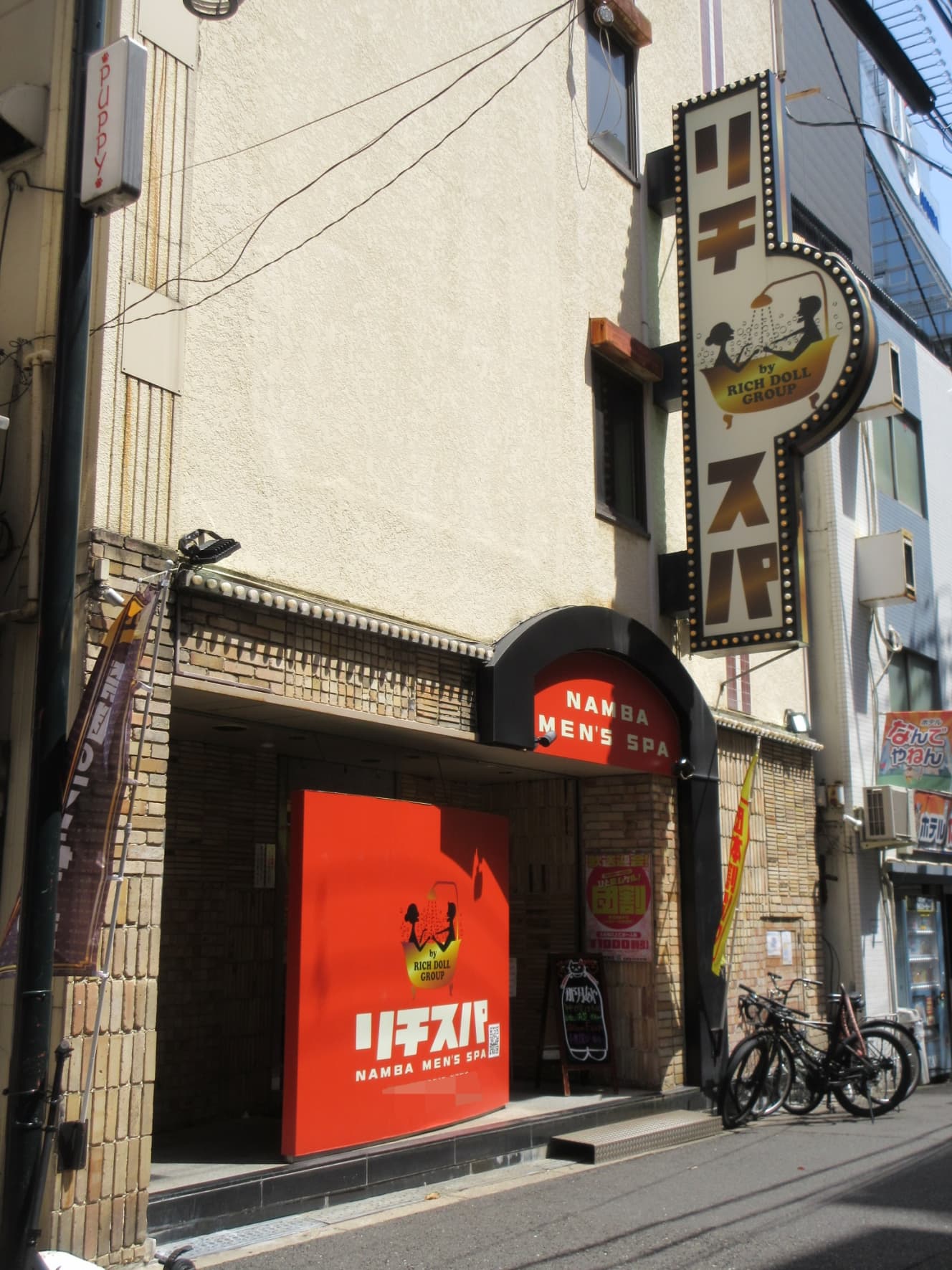 Rich Spa in Osaka’s Namba, promoted on listing sites as a sensual men’s esthetic salon that’s more than a men’s esthe but less than a health service.
Interview, text, and photographs: Akira Ikoma