Kyon meat is “sold out the moment it arrives” and is a “luxury food” in China and Taiwan! The future envisioned by the hunter who led the boom


Only 2 kg of meat per animal is edible.
Kyon meat seems to be popular.
Many readers may be familiar with the kyong, which has become a topic of discussion in the media, including Friday Digital, as an invasive alien species that has proliferated mainly in Chiba Prefecture and has begun to appear in human villages. The kyong is about the size of a deer, and is characterized by its yelping sound like a gaaaah.
I heard that the meat of the kyong, which was even considered a vermin, is very popular, so I contacted Mr. Yusuke Harada, a hunter and representative of “Hunter’s Workshop,” known as an “authority” on the kyong, for an interview. Mr. Harada is the one who spread the word about the deliciousness of kyong meat. Although kyong is exterminated as an invasive alien species, it is a luxury food in China and Taiwan, he said.
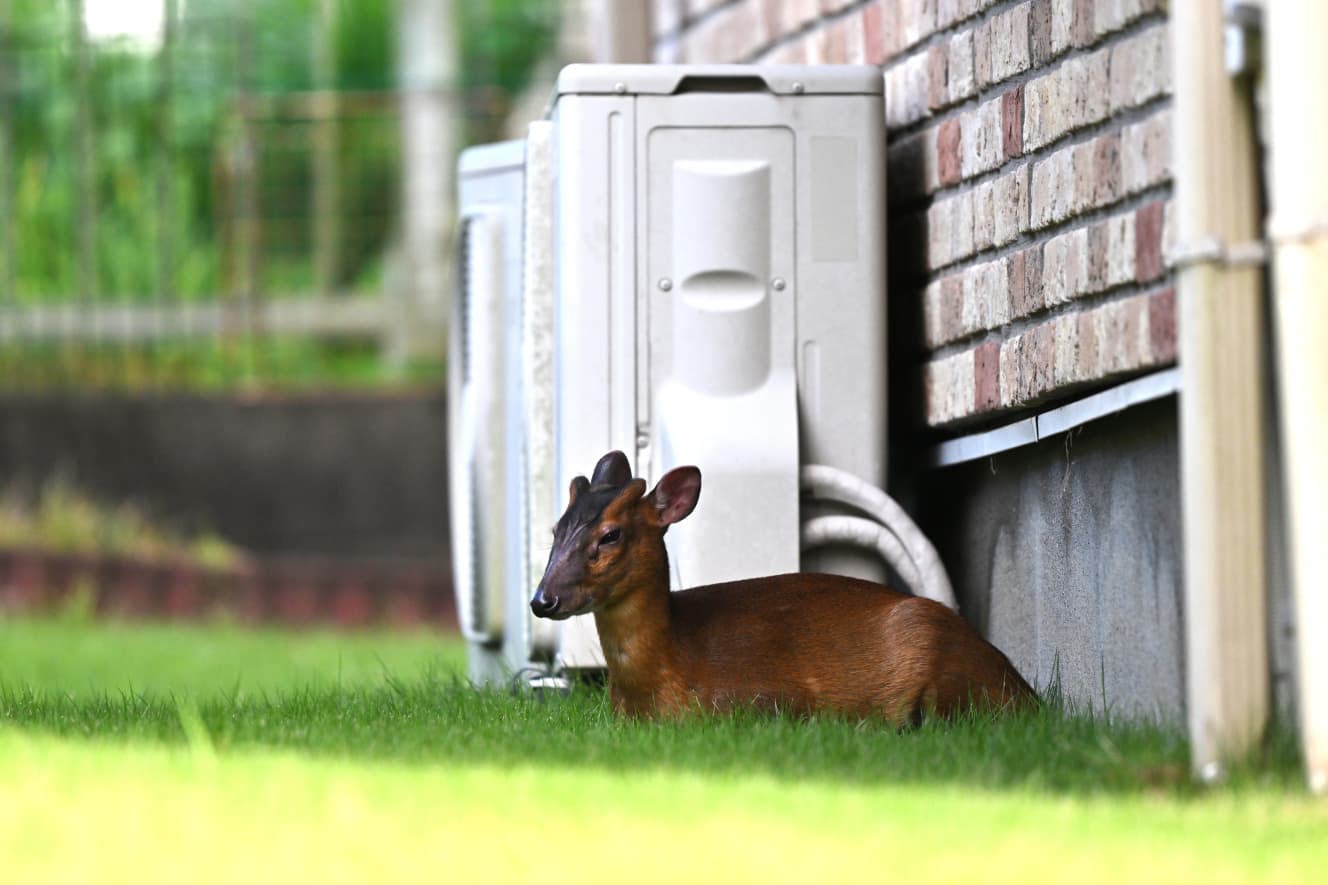
It is heartbreaking to know that these animals, which are living creatures just like us, are being discarded as “trash” after having their lives taken away. Mr. Harada, who has a slaughterhouse license (……) and a memorial service for the animals, began selling kyong meat about seven years ago . But “it has recently become so popular that it sells out as soon as it comes in,” says Mr. Harada.
Mr. Harada is concerned that if kyong meat becomes a commodity, “we will have to consider stable supply even though it is an invasive alien species that must be exterminated,” and he has been strongly advocating this. It is complicated when you think about it. ……
I am thinking of doing something else from now on,” he said. Now that I’ve uncovered the demand for kyong meat, I’m thinking of secondary uses for the meat of small and medium-sized beasts like kyong that have been exterminated and discarded.
That’s an interesting story. I asked Mr. Harada if I could interview him. Mr. Harada readily agreed to allow me to accompany him on his hunting trip.
On the day of the interview, I visited Mr. Harada’s base of operations, the “hunter’s studio” in Kimitsu City, Chiba Prefecture, at 7:00 in the morning. The store, which is housed in a closed old elementary school, allows visitors to touch the fur of small and medium-sized beasts, deer, and wild boar, and sells goods such as key chains made from deer antlers, as well as meat from the beasts.
On this particular day, meat from a black bear from Nagano Prefecture, which was captured by a friend of Mr. Harada’s, was for sale. The grassy space that used to be the schoolyard is now used as a dog run and solo campsite.


After a quick hello, I accompanied him on his hunting trip.
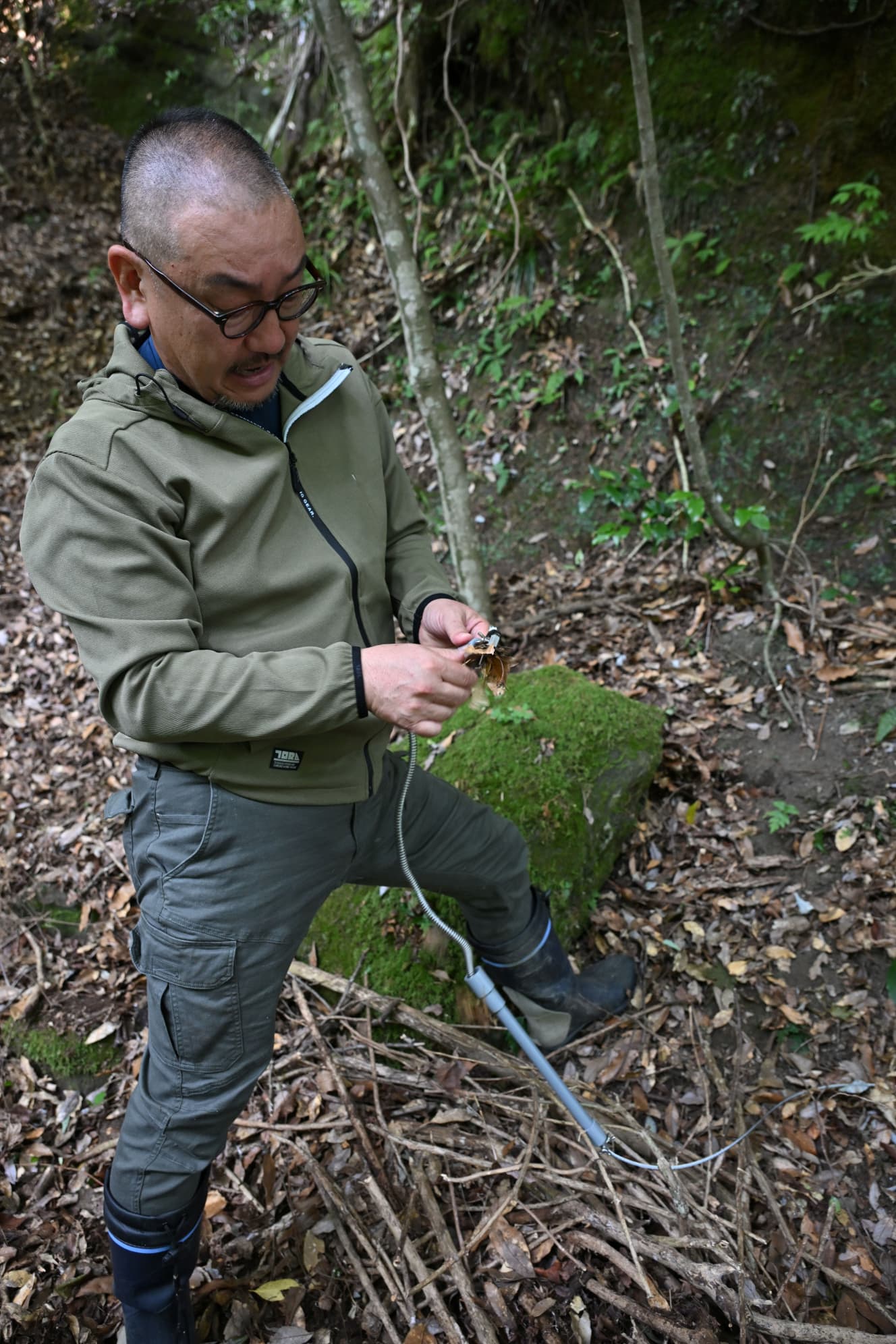
Mr. Harada mainly hunts with traps, not guns. Mr. Harada used to work in the apparel industry. When he first started going hunting, he used to do leisure hunts in the mountains with several people carrying guns. However, as he came into contact with problems such as the increasing number of vermin due to the aging of hunters who were responsible for extermination, he began to think about the efficiency of trapping vermin and shifted to trap hunting.
Dealing with the animal before it comes out to the fields
Usually, from around 6:00 a.m., Mr. Harada goes around to check on the 25 “snare traps” and 2 “box traps” that have been set. After hearing about the current conditions of the mountain and the beasts, we headed for the trapping sites. We thought we would be walking deep into the mountains, but this was not the case. The trap was set close to a well-defined road with heavy traffic and guardrails on both sides.
There was originally a toll road here,” he said. There is a wide roadside strip. There are drivers who stop their cars there and throw garbage away. The worst drivers would throw it out the window while driving. We pick up the trash every few days, but the animals come to scavenge the trash.
Once you get deeper into the area, the trees are so overgrown that there is not enough light and grass does not grow on the ground because there is no human intervention. There are no insects. There is not much food. But along this road, we have relatively good light, grass, insects, and trash.”
A kukuri trap is a trap in which, when a beast steps on a disk-shaped plate, a steel wire tied to a nearby tree is tightened and its legs are tied around it. Mr. Harada set the traps on a slope a few meters from the road. Apparently, that is the animal trail.
From the viewpoint of animal welfare, “tiger scissors” with jagged edges are prohibited. In addition, it is also a rule that the traps must be visited once a day to ensure that the animals caught in the traps do not suffer. We looked around several places, but did not “harvest” anything in this area.
The beast first comes out to the fields in the mountains, and then to the town. We have to do something before they come out to the fields to prevent damage.

We also went to check a trap we had set up a short distance away. A female deer was caught in a trap in the woods by the side of a mountain village. It was in the woods right across a field and a narrow road. The deer was moving around and struggling.
I had heard from a neighbor that deer were destroying a vegetable garden near here. Thank goodness.”
Mr. Harada called the demolition office, and staff arrived immediately. The worker, ignoring the deer’s resistance, bunched up the hind legs in two or three seconds as if he were cutting grass, and while holding the deer by the neck with his foot, he struck it on the forehead with a small hammer.
The deer let out a small “coo” and fainted. The staff member inserted the knife into the deer’s heart through the collarbone. The whole thing took less than 10 seconds. Nothing was caught in the “box trap,” and only one deer was captured that day.


Landslides can also cause landslides.
We interviewed Mr. Harada again at the “hunter’s studio.
I give lessons on life to elementary school students and teachers. I teach elementary school students and teachers about life. I tell them that they can’t eat meat unless they kill a living creature. The children who attended the class were able to understand the meaning of “Itadakimasu! when they eat a meal. I also tell them what is happening in the mountains now and why we have to catch vermin.
Not only will they destroy the crops, but if the number of beasts increases and the mountains are ruined and the animal trails become deeply gouged, a landslide may occur. If the sediment flows into rivers and then into the ocean, the muddy seawater might prevent photosynthesis, ruining the blue-green algae or coral, for example. Since kyongs share the same diet as deer, precious mountain plants would be further eaten. The ecosystem would collapse.
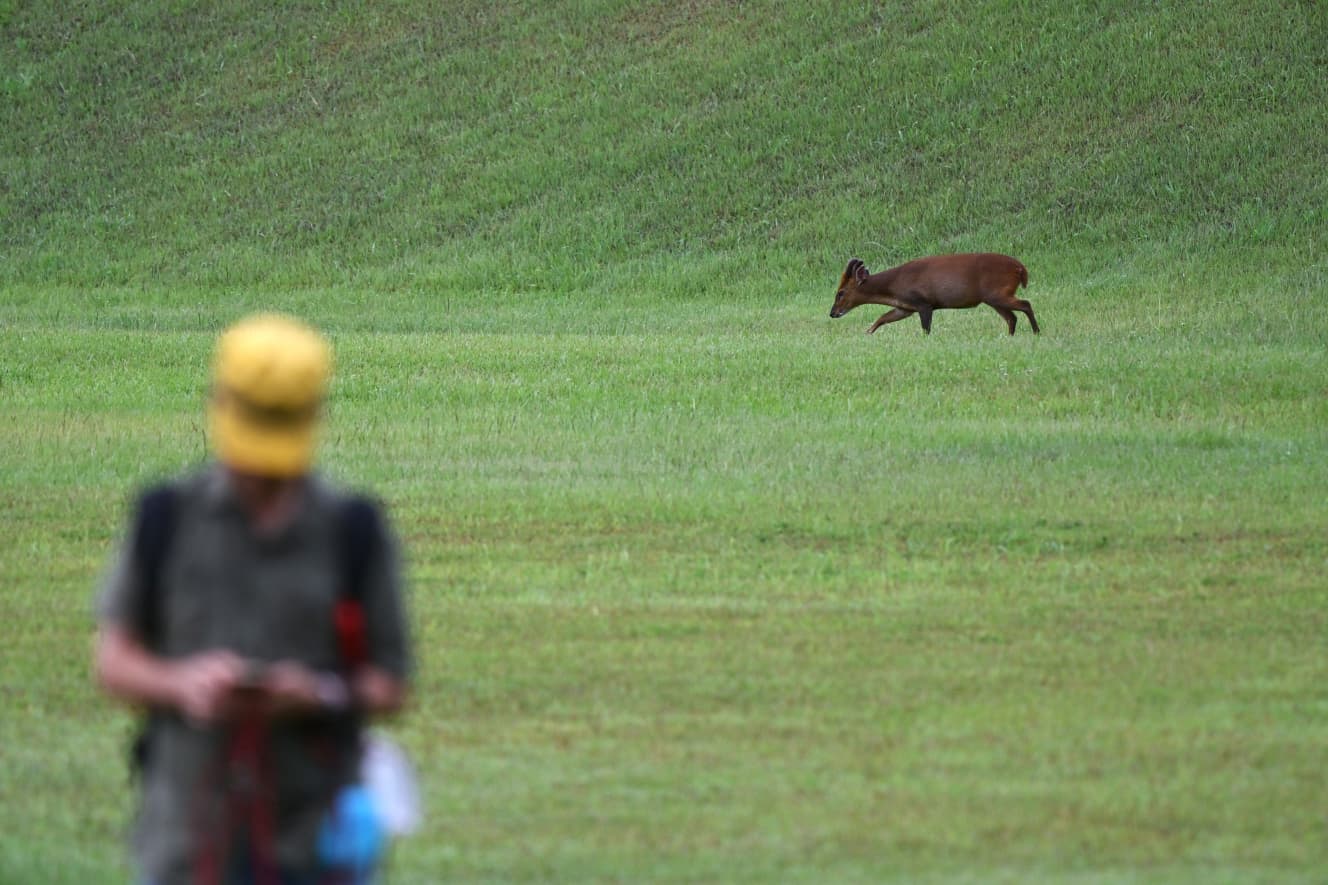
1.2 to 1.3 million beasts are killed annually throughout Japan. They are killed out of necessity to reduce agricultural damage and protect the natural environment. Of these, only about 10% are used as gibier or animal feed. They are simply exterminated and treated like garbage.
Although they are required to be buried, many of the beasts are actually illegally dumped at …… and hidden under leaves. Some vermin eat the carcasses and store up nutrients. I still think that secondary use is necessary so that the life we have taken is not wasted.
I don’t know how I really feel about it, but there are new people who are selling Kyong’s meat, saying, “It’s not for business, but to not waste that life …….” To some extent, I think we have created a path. In the future, I plan to do the same thing with raccoons, civets, Formosan ground squirrels, and other small and medium-sized beasts.
We are also considering routes to bring in animals from other sources, but first we are thinking of doing it with our own catch. This should be possible in the future when we have our own dismantling facilities. I would like to protect nature and create a cycle in which captured vermin are not wasted but used for secondary purposes, and if this becomes an industry, I would like to do it at …….
Currently, “Hunter’s Workshop” is selling Tsukinowaguma meat.
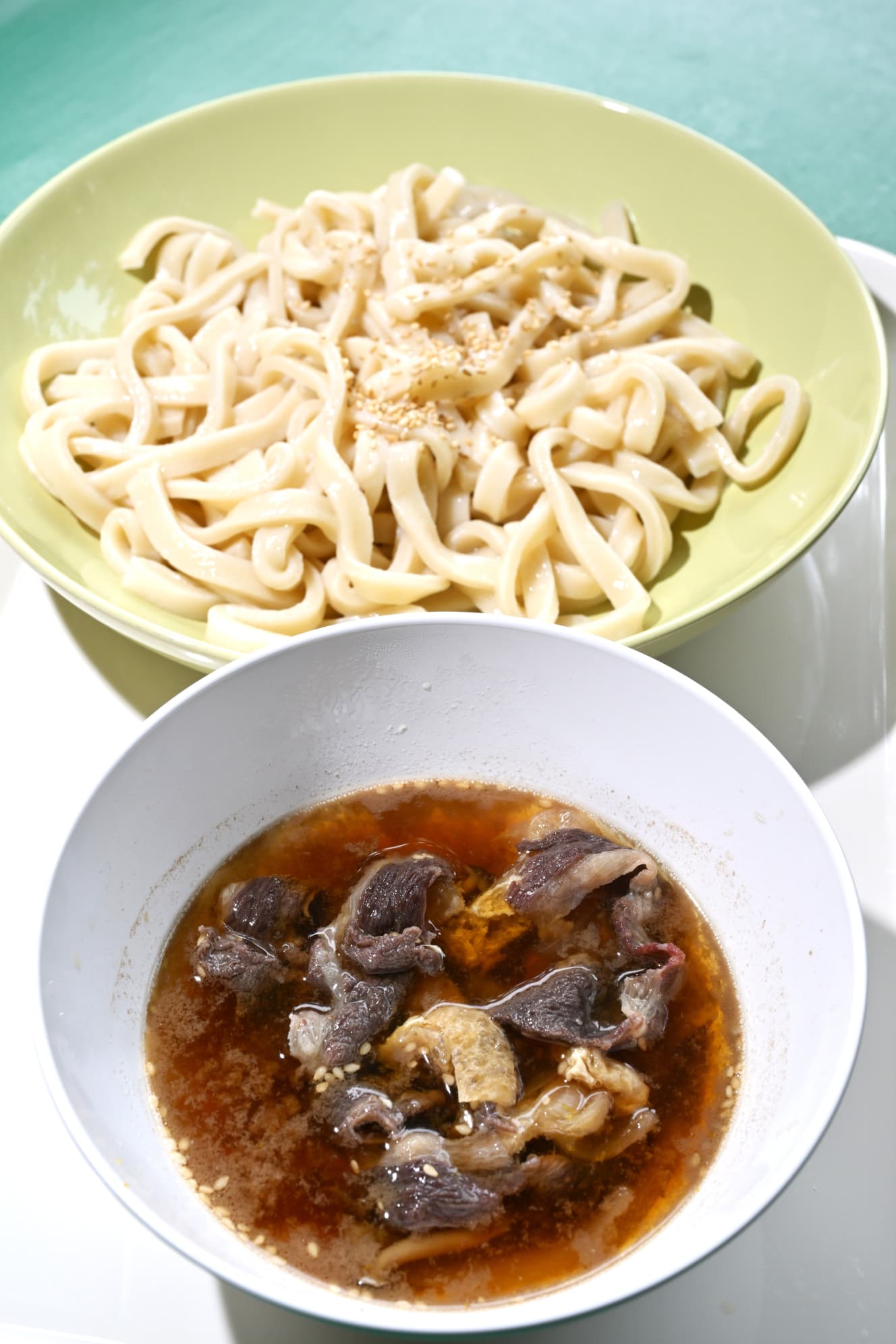
(The meat and dishes offered change depending on the season.) As is typical of Mr. Harada, who hails from Saitama Prefecture, the udon is served with a slightly brownish Musashino-style noodle and black bear meat in a soy sauce broth with a hint of yuzu (Japanese citrus fruit). It was very tasty.
Interview and text: Takeshi Nodo PHOTO: Takero Yui