Former Troussier’s famous interpreter, Davadi, analyzes “Moriyasu Japan’s current position.


A famous interpreter reveals how he met Troussier.
Moriyasu Japan has set a grand goal of winning the North and Central American World Cup in 2014. However, the 2002 Japan-Korea tournament was marred by a single set piece by Turkey, and the 2010 South Africa tournament was lost in a penalty shootout against Paraguay. In the 2006 World Cup in Russia, Japan took the lead against Belgium, only to be turned back by a high-speed counter-attack in “14 seconds in Rostov,” and in the 2010 World Cup in Qatar, Japan suffered a penalty shootout loss against Croatia. On June 27, Japan’s 2002 World Cup coach Philippe Troussier, 70, visited Japan for the first time in many years for a legendary match hosted by the royal family of Monaco,
Japan’s national team has yet to break through to the top 16 when I was in charge. I am proud of that, but we must surely surpass it.
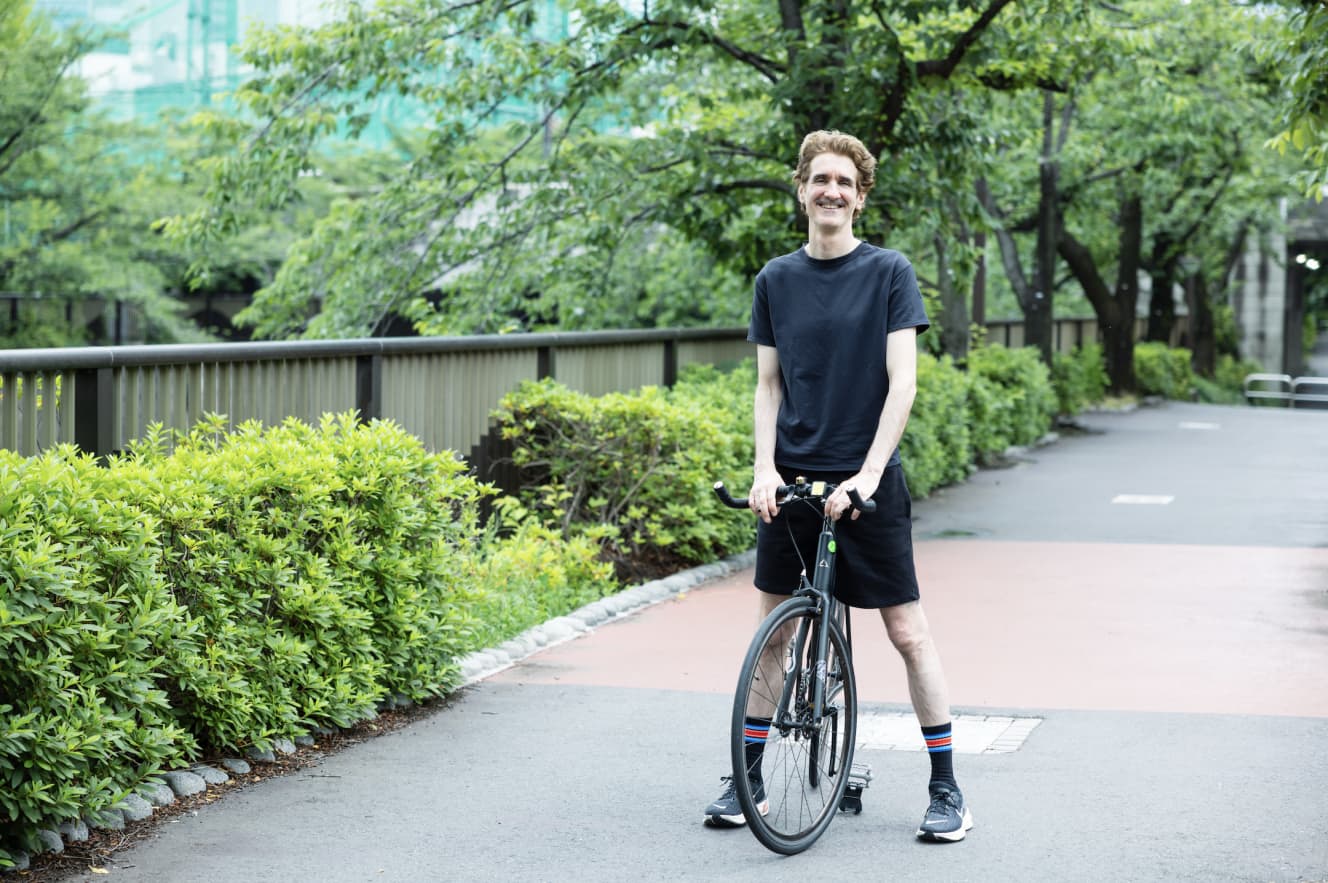
I am proud of that, but we have to go beyond that. Troussier’s interpreter is Florent Dabadie, 50, a native of France. At the end of Troussier’s 1998 visit to Japan, he was only 24 years old when he applied through an acquaintance for the position of interpreter and personal assistant to the coach. He was only 24 years old at the time, and had just started working in Japan as an editor for the Japanese edition of Premier, a film magazine.
Kuniya Ohito (former president of the Japan Football Association) and Philippe interviewed me, and they were very critical of my Japanese, saying, ‘To be honest, your Japanese is not good enough. But Philippe was trying to work on a wider range of things, including organizational reform, not just soccer. He saw my educational background and the education of my parents, who were a French scriptwriter and journalist, and thought, ‘This kid can do it,’ so he selected me.”
He thought, ‘I think he can do it,’ so he selected me,” recalls the handsome 50-year-old interpreter with nostalgia. Mr. Davadi continues to be involved in soccer, mainly as a commentator for DAZN’s Ligue 1. His first job as a member of the national staff was at a training camp in January 1999 at J-Village in Fukushima. It must have been a tremendous pressure to suddenly be in front of nearly 100 members of the media, delivering a passionate speech in French, sometimes using the “nonsense” word, from a coach who was speaking in French. He still remembers the interview of 26 years ago, when he was so stiff that he could not get it right. Nevertheless, he became accustomed to it over time, and his style of communicating with overacting, using gestures and hand gestures, became well known.
In the three and a half years leading up to the World Cup, Mr. Dabadi faced a variety of events, but the one that had the greatest impact on most people was the omission of Shunsuke Nakamura (47, coach of Yokohama FC) from the Japan-Korea World Cup team.

Why Shunsuke Nakamura was not selected for the Japan-Korea World Cup
At the time, the lefty prodigy, who was scheduled to participate in the World Cup in his home country wearing ace number 10, was positioned as a “billboard star,” and a huge advertisement was placed at the scramble crossing in Shibuya. The criticism of the team leader was tremendous because of the loss of a “symbol,” so to speak.
Philippe had affection for Shunsuke and Tatsuhiko Kubo (49). I am really sorry that I didn’t convey that to him, but I am not good enough. I am really sorry, but Philippe did not make his decision based on likes and dislikes. At that time, there were many players on the left side in Japan. There were several choices, including Atsushi Miura (50), Shinji Ono (45), and Alex (Alessandro Mitochu, 47), so it was difficult to make a selection.
Philippe’s 3-5-2 was a system without number 10. The top part of the team was shaped with a shadow striker like Morishima (Hiroaki, 53) in the bottom part. There was the idea of, ‘We don’t need a player like Shunsuke to receive the ball and make plays,’ so we took him to the left side and tried to use him somehow. I tried to persuade him by saying, “Rivaldo (former Brazilian midfielder) is doing the same thing at Barcelona,” but I think he didn’t fully understand. Besides, I wanted to have a propulsive player on the left. I think that’s why he finally chose Alex, who had just become a Japanese citizen.
After a long, long time, Dabadie reiterated the background to the big incident, but Troussier, rather than explaining this at the press conference to announce the members, unexpectedly cancelled the meeting. Instead of explaining this at the press conference, Troussier unexpectedly cancelled the press conference. He remained in Paris and did not return to Japan, leaving Kozo Kinomoto, Deputy General Manager of the Reinforcement Headquarters, to read the 23-member list by himself, an unusual situation. I guess Philippe didn’t want to be asked so many questions,” said Dabadie, with mixed feelings.
Although the 70-year-old “Red Devil,” who is sometimes unpredictable and has a nervous side, seems to have lost some of his venom and become calmer, it must have been a constant struggle to support a commander who has violent emotional ups and downs and a straightforward way of speaking up up. “A foreign director should have a good interpreter,” he said. It is often said that “a foreign director can be successful if he has a good interpreter,” and his case may have been a typical example of this.
In Philippe’s case, I think he was a typical example of this. But in Philippe’s case, I think it was good that someone like me was nearby (laughs). If you think so, I am happy for you. Now that I think about it, an interpreter is not only a language interpreter, but also a cultural coordinator and bridge-builder. To be a good interpreter, it is not enough to just learn the language, but it is also necessary to understand culture, people, and the psychological aspects of people.
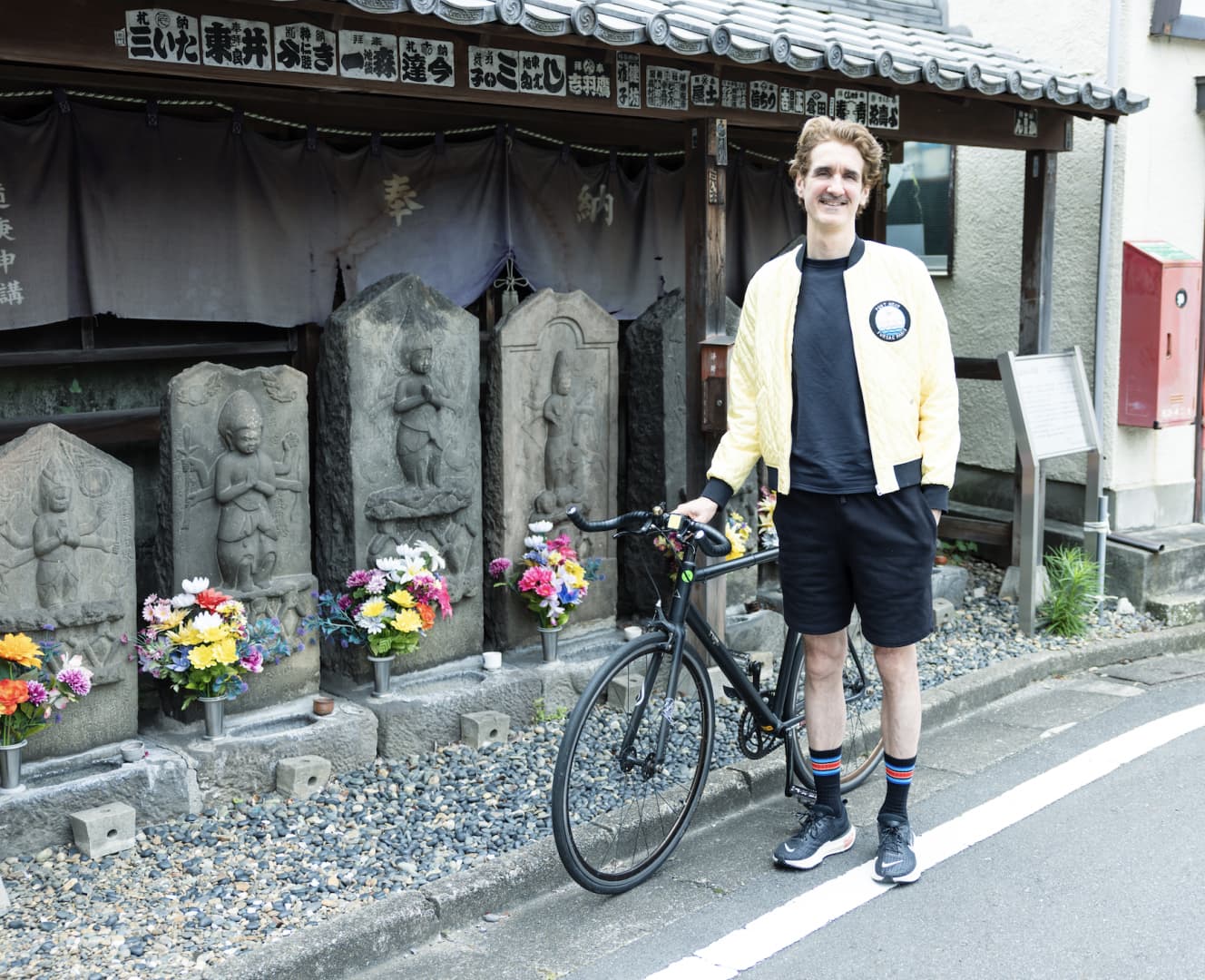
Since then, I have lived in Japan for more than 25 years and have done a lot of business interpreting work, but there are many situations where Japanese people get hurt because foreigners tend to say things straight out. I enjoy the mission of merging two cultures that are so far apart to prevent that from happening.
Moriyasu is a key player in the “evolution” of Moriyasu Japan.
Moriyasu’s ties to soccer remain deep, as he now has the opportunity to commentate on the French league for DAZN. In particular, he is often in charge of Monaco, where Minamino is a member, and is eager to gather information. How does Davadi, who knows the world’s top standards so well, view the current Moriyasu Japan team? Does it really have a chance to win the World Cup in a year’s time?
I don’t like the “strongest ever,” whether in Japan or abroad,” he said. I think the current national team is strong, but I have my doubts about whether it is really stronger than Philippe’s team. It is natural that they are getting better technically, but soccer is more than that. I don’t think we can say that their organizational skills and mentality are stronger now than they were in the past, and I don’t have any confidence that such a team can break the barrier of the top 8. If we are blessed with the right combination of draws, success might be possible, but it’s hard to say for sure.”
Dabadi is cautious because he is aware of the current state of the team’s main players.
Captain Wataru Endo (32) plays for Liverpool, but he is not an absolute mainstay of the team. It is the same with Hide (Hidetoshi Nakata, 48) in 2001. Hide also could not win the competition with (former Italian national team player Francesco) Totti. I hope Endo can win a regular position in the next season, but I don’t know yet.
It is important for Kubo (Kubo Takefusa, 24), Mitsuzumi (Kaoru, 28), and Doan (Ritsu, 27), who are now considered aces, to step up another level to a higher club and see if they can become regulars. It may be difficult for Kubo to go to Real Madrid or Barcelona and become a mainstay, but I wonder if he will go to a higher ranked club than the current Real Sociedad. Unless there are many examples like that, I cannot be sure that Japan can make it to the top eight. That is my honest feeling.”
Mr. Davadi is not the only one to make such a statement. Marcel Desayeux, defender of the 1998 French W champion who participated in the aforementioned Monaco Legends Match, also commented, “Japanese soccer is steadily growing and is excellent as a team, but there are no special individual names. Mitoma or Kubo? I’m sure they are good players, but we need to see a number of talents playing at a higher level,” he said.
I think that Takumi Minamino (30) has the potential to break through in this situation. I’ve had many opportunities to watch Monaco’s games, so I understand the team’s situation well, but he is a regular at a top club in the first division of the French League. (Swiss national team player Denis) Zagaria may move to Monaco this summer, and if that happens, there is a possibility that Minami will be given the captaincy. If that happens, he is the top player in both name and reality.
Turning to other French players, Stade Reims, where Junya Ito (32), Takato Nakamura (24), and Daiki Sekine (22) are all from, has been forced to relegate to the second division, and their departure is attracting attention. It is important for them to win a position like Minamino’s. That will be the key to Japan’s success at next year’s World Cup.
Davadi’s statement is spot on. Troussier once said, “If 50 or 100 Japanese players go abroad, the Japanese national team will become stronger,” and now, 25 years later, he is truly right, but it is still not enough to reach the top. I hope that Moriyasu and the players will push forward with even higher aspirations.
Interview and text by Etsuko Motokawa: Etsuko Motokawa PHOTO: Hiroyuki Komatsu