Earthquake swarms in the seas near the Tokara Islands in Kagoshima Prefecture are a premonition…Nankai Trough Earthquake “Risk of Occurrence is Certainly Increasing!
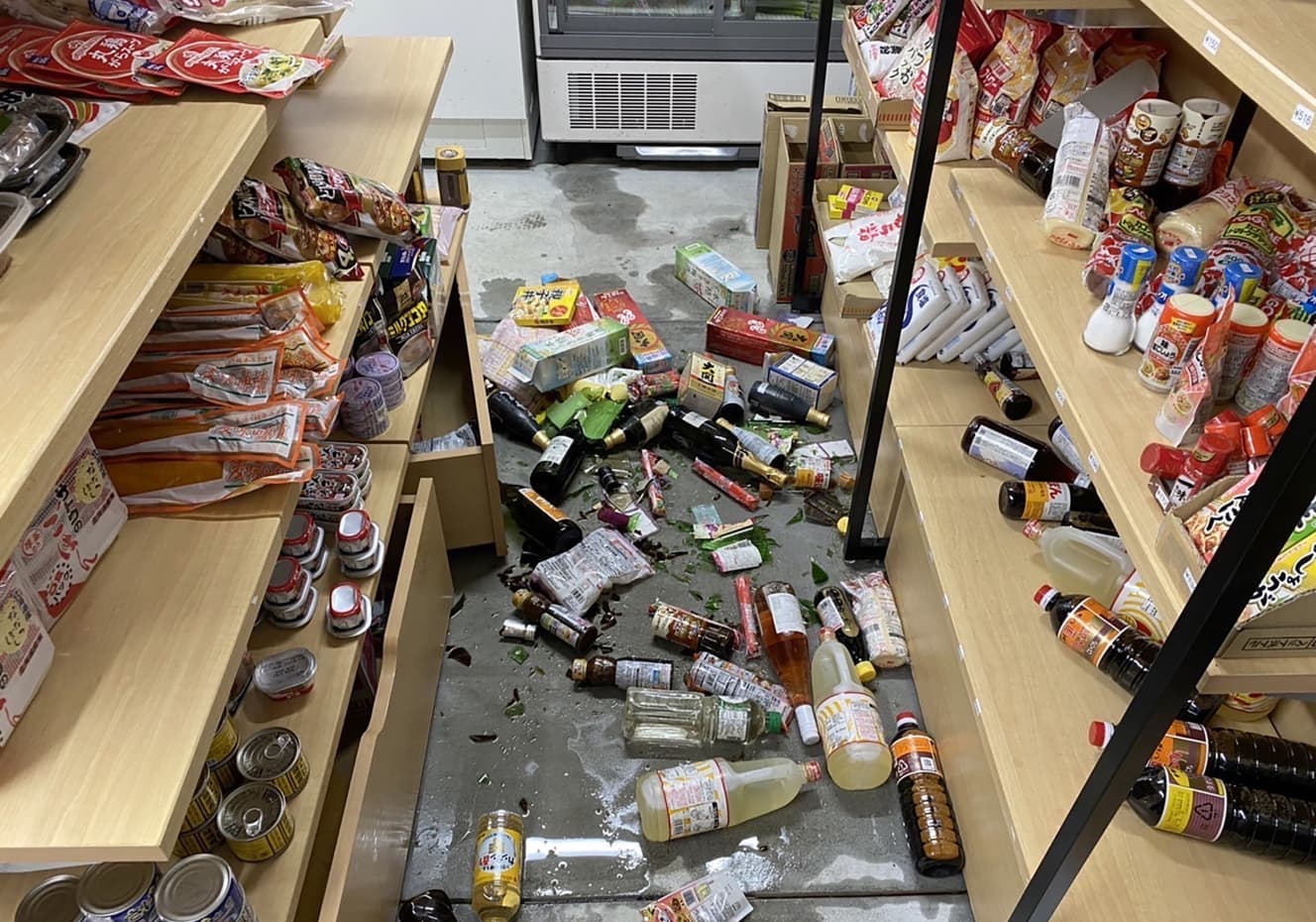
Since June 21, there have been more than 2,000 tremors of intensity 1 or higher in the seas near the Tokara Islands. There is no way that this is unrelated to--.


We can’t say for sure that this has nothing to do with the earthquake.
The residents are really exhausted by the repeated earthquakes that have been occurring day after day. We have been refusing to allow the media to interview them.
A staff member at a clinic on the island of Kareishi in the Tokara Islands of Kagoshima Prefecture said.
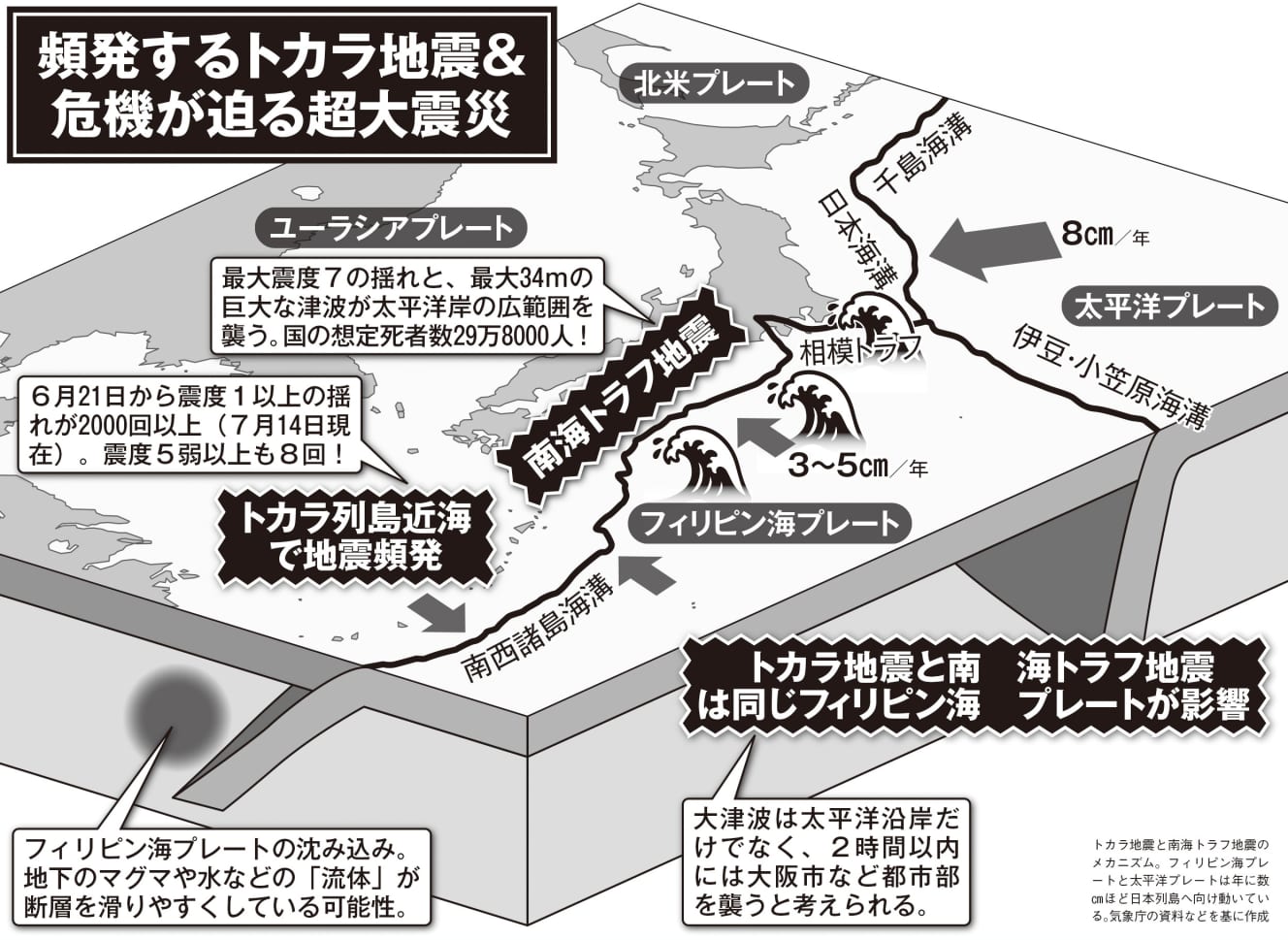
Earthquakes have been occurring frequently in the seas around the Tokara Islands, with more than 2,000 tremors of intensity 1 or higher occurring since June 21. As of July 14, there have been eight epicenters of intensity 5 or lower. It is no wonder that the residents are exhausted. Junzo Kasahara, professor emeritus at the Seismological Research Institute of the University of Tokyo, said, “The Tokara Archipelago is located in the Philippines.
The Tokara Islands are located on the upper western side of the boundary where the Philippine Sea Plate subducts beneath the Eurasian Plate. The Philippine Sea Plate is topped by sediments containing seawater (tuff). Due to the increase in subsurface temperature and pressure caused by subduction, the water released from the sediments mixes with the rocks of the Eurasian Plate and turns into magma at a lower temperature than normal. It is thought that the magma in the subsurface rises through fractures near the seafloor and moves the Tokara Islands in a north-south direction, pushing them apart.”
Submarine water and magma are called “fluids” and have been implicated in the occurrence of major earthquakes in the past. Junichi Nakajima, a professor of seismology at Tokyo University of Science, explains.
When fluid enters an active fault or plate boundary, it can cause a major earthquake. It acts like a lubricant, making it easier for faults and plates to move. Just before the Great East Japan Earthquake in March 2011, “slow slip” (a phenomenon in which plates move slowly), which is thought to be caused by fluid, was observed. The earthquake swarm that was active before the Noto Peninsula earthquake last January is also thought to be caused by the fluid.
The eerie Tokara quake swarm. The Japan Meteorological Agency’s Nankai Trough Earthquake Evaluation Study Group has stated that the quakes are “unrelated” to the Nankai Trough earthquake, which has a maximum seismic intensity of 7 and is expected to occur within the next 30 years with a probability of about 80%. However, Yoshiaki Kawata, a disaster prevention specialist and specially appointed professor at Kansai University, questions the government’s opinion.
Both earthquakes are caused by the subduction of the Philippine Sea Plate and the buildup of strain energy. It is impossible to say that they are unrelated. In fact, if the movement of the Philippine Sea Plate is interpreted as becoming more active, the risk of a Nankai Trough earthquake is definitely increasing.
Professor Emeritus Kasahara of the University of Tokyo continues.
We cannot deny the possibility that the probability of a Nankai Trough earthquake is increasing. It is safe to be more vigilant than in normal times.
In March of this year, the government’s Central Disaster Prevention Council released damage estimates for the Nankai Trough earthquake, which is expected to hit the Japanese archipelago with a tsunami of up to 34 meters high. According to the council, up to 298,000 people could be killed. Kawata twists his head.
The government has assumed that a huge tsunami would hit the Pacific coast within 30 minutes of the quake, causing major human casualties,” Kawata said. But the tsunami will also hit urban areas. Within two hours of the occurrence, tsunamis reach urban areas like Osaka and Nagoya. Evacuation drills for tsunamis in urban areas are not sufficient, and the damage will be enormous. It is unlikely that residents will be able to evacuate quickly, as the tremors will be severe enough to last more than one minute, something that has never been experienced even in coastal areas of the Pacific Ocean. Including disaster-related deaths, the death toll could reach 500,000 to 600,000, more than double the government’s estimate.
If the Tokara Archipelago earthquake swarm is dismissed as “irrelevant,” the emergency response will be delayed. It is important to have a sense of crisis that huge earthquakes could occur at any time.
From the August 1, 2025 issue of FRIDAY
PHOTO: Kyodo News Agency Jiji Press, Inc.