Illegal Video Shoot with Fake Plates on Tokyo Expressway—MLIT Outraged
Kumiko Kato, an automotive journalist who follows the front lines of automobile troubles. She looks into the reality of the "illegal shooting of videos with temporary license plates" by Chinese media and manufacturers, which she says has been on the rise in recent years.


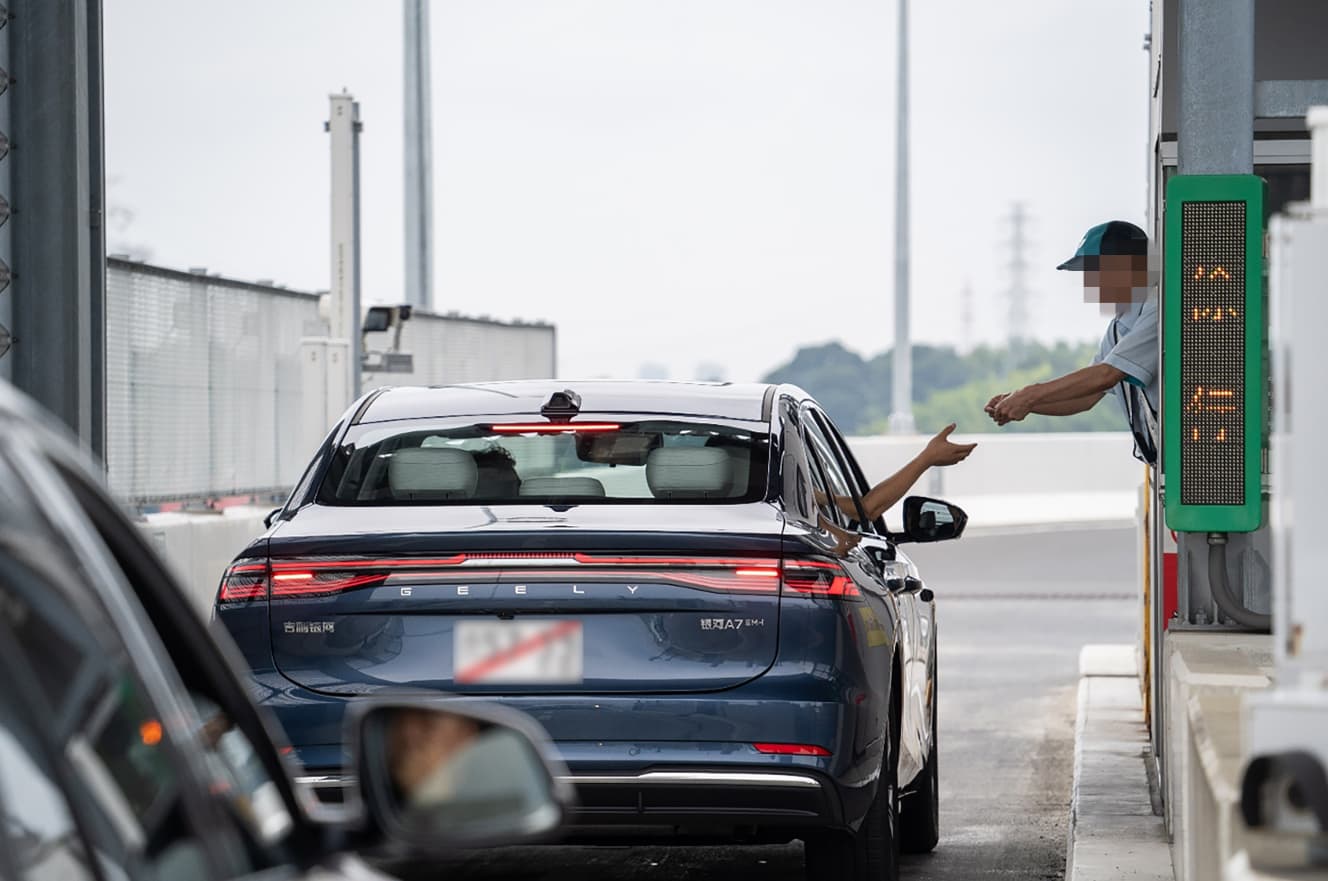
Unregistered vehicles or those with expired inspections are, in principle, not allowed to operate on public roads. However, did you know that with a “temporary license plate” (provisional operation permit plate), such vehicles can be driven under certain conditions?
There are two types of license plates referred to as temporary plates. One is the provisional operation permit plate with a red diagonal stripe, issued by city or ward offices. The other is the dealer transport permit plate, bordered in red, issued by local transport bureaus of the Ministry of Land, Infrastructure, Transport and Tourism, and used by dealers or sellers. The former can be applied for by regular individuals at municipal offices, but its use is strictly limited to vehicle inspections, transport to inspection centers, or moving a vehicle to have license plates reissued after theft. Using it for other purposes violates the Road Transport Vehicle Act and can result in up to six months of imprisonment or a fine of up to 300,000 yen under Article 108, Clause 1. Moreover, if false information is provided regarding the intended purpose or route, it may lead to up to one year of imprisonment or a fine of up to 500,000 yen under Article 107, Clause 1.
Naturally, using it for filming videos or test drives is strictly prohibited. However, Chinese automaker Geely Automobile and popular Chinese video media outlet 30 Second Car (Dong Che) committed a serious traffic violation in early July.
A fuel efficiency comparison contest held using temporary license plates
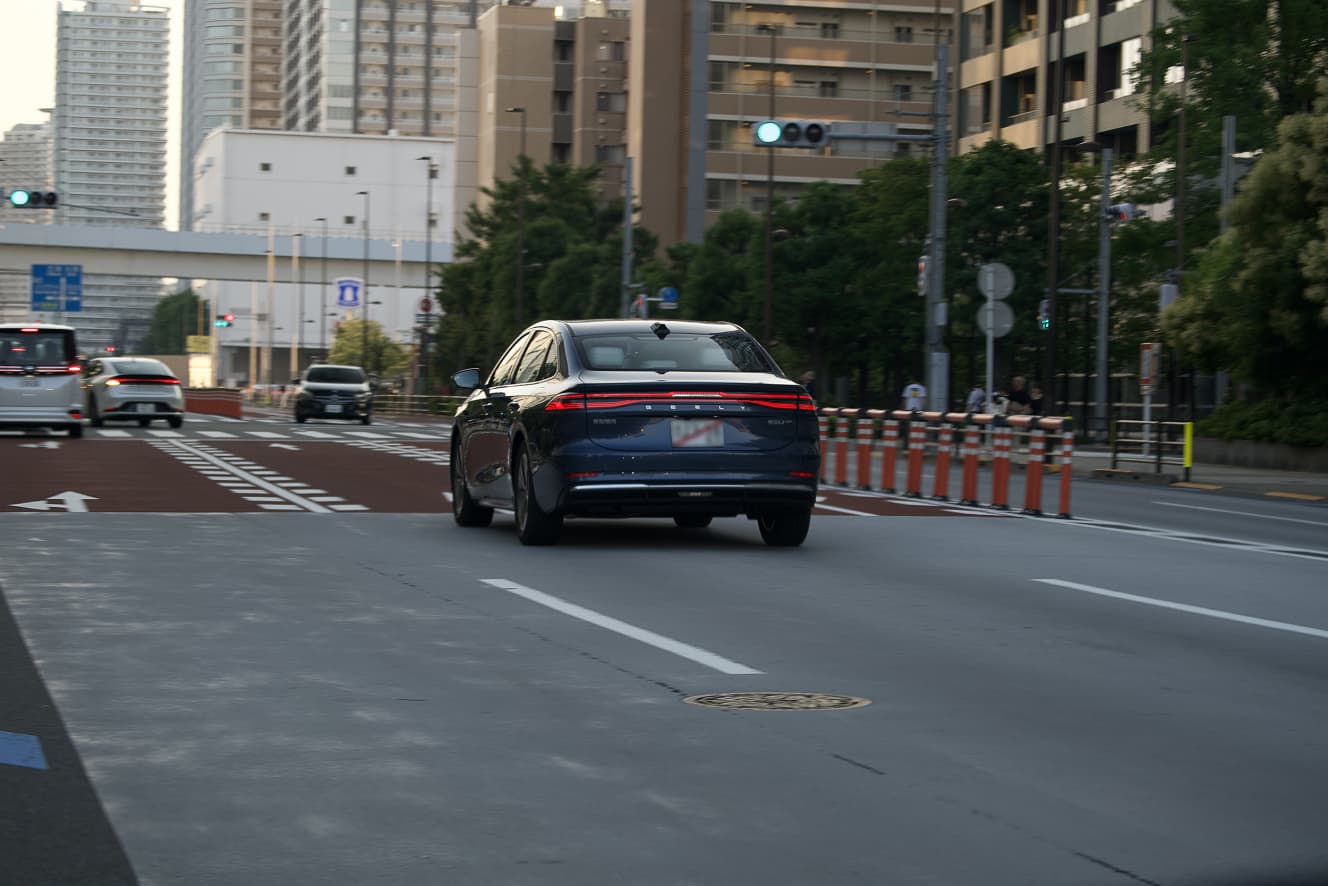
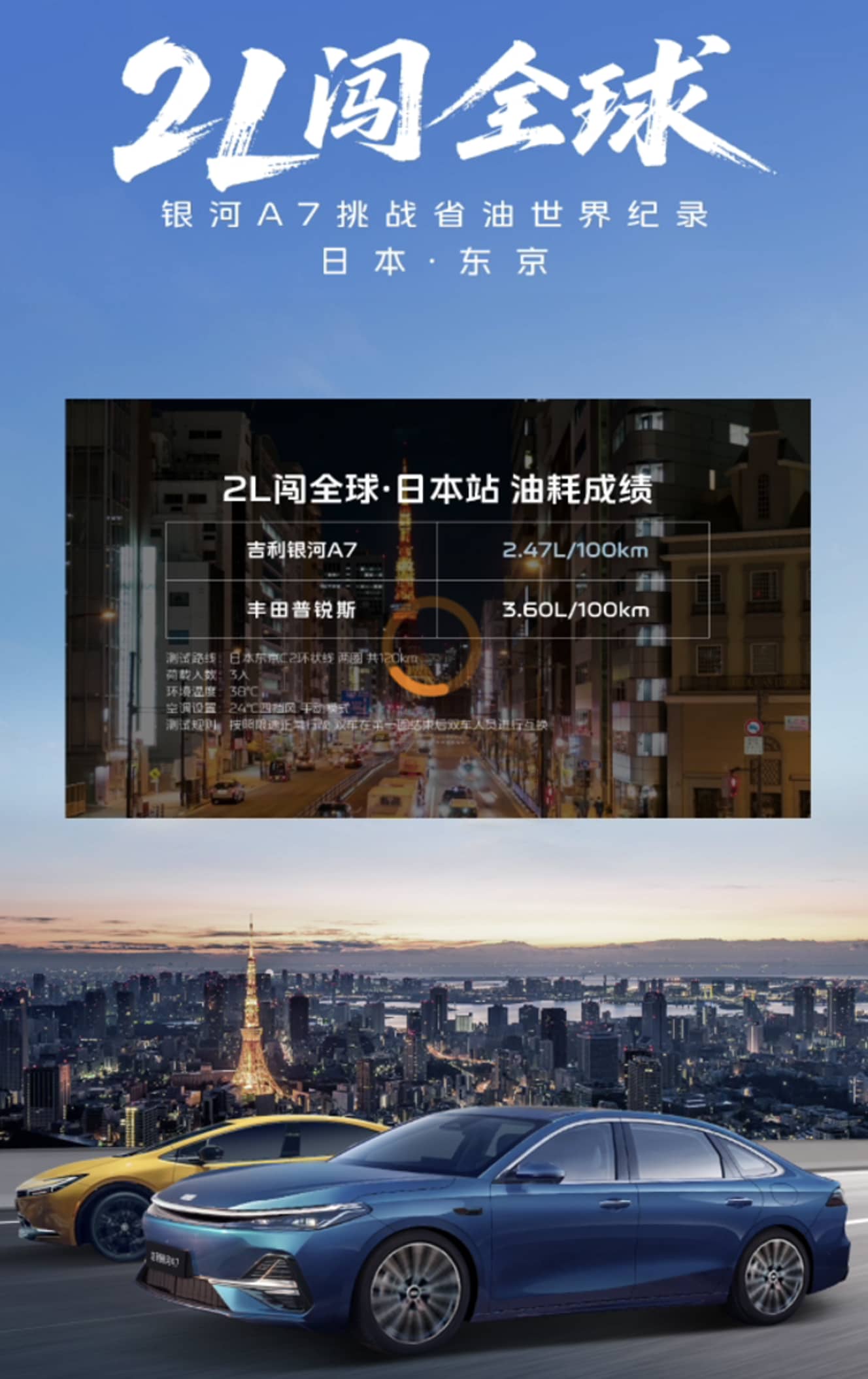
The illegal act committed by Geely and 30 Second Car was as follows: They planned a fuel efficiency contest on the Shuto Expressway between Geely’s latest model, the Galaxy A7, and the Toyota Prius, which set a Guinness World Record last year for the highest fuel efficiency on a transcontinental U.S. drive at 39.6 km/L. However, as previously mentioned, the Geely vehicle used in this test was operating under a temporary license plate (provisional operation permit), making the fuel efficiency contest clearly outside the permitted scope of use—and therefore illegal.
Even the planning of the contest itself is questionable. According to 30 Second Car, the idea stemmed from a sudden flood of Japanese-language replies on social media claiming, “Toyota and Honda are better than Geely!”—which they said prompted the need for a verification showdown. However, upon investigation, the author found that most of these accounts had no other posts and were likely throwaway accounts, suggesting a high probability of an elaborate self-staged act.
Nevertheless, when 30 Second Car announced the fuel efficiency contest on Chinese social media platform Weibo on June 18, the post was reposted over 1,300 times, and many comments supporting Geely—some even containing discriminatory remarks toward Japan—flooded in.
They had committed the same violation in the past as well
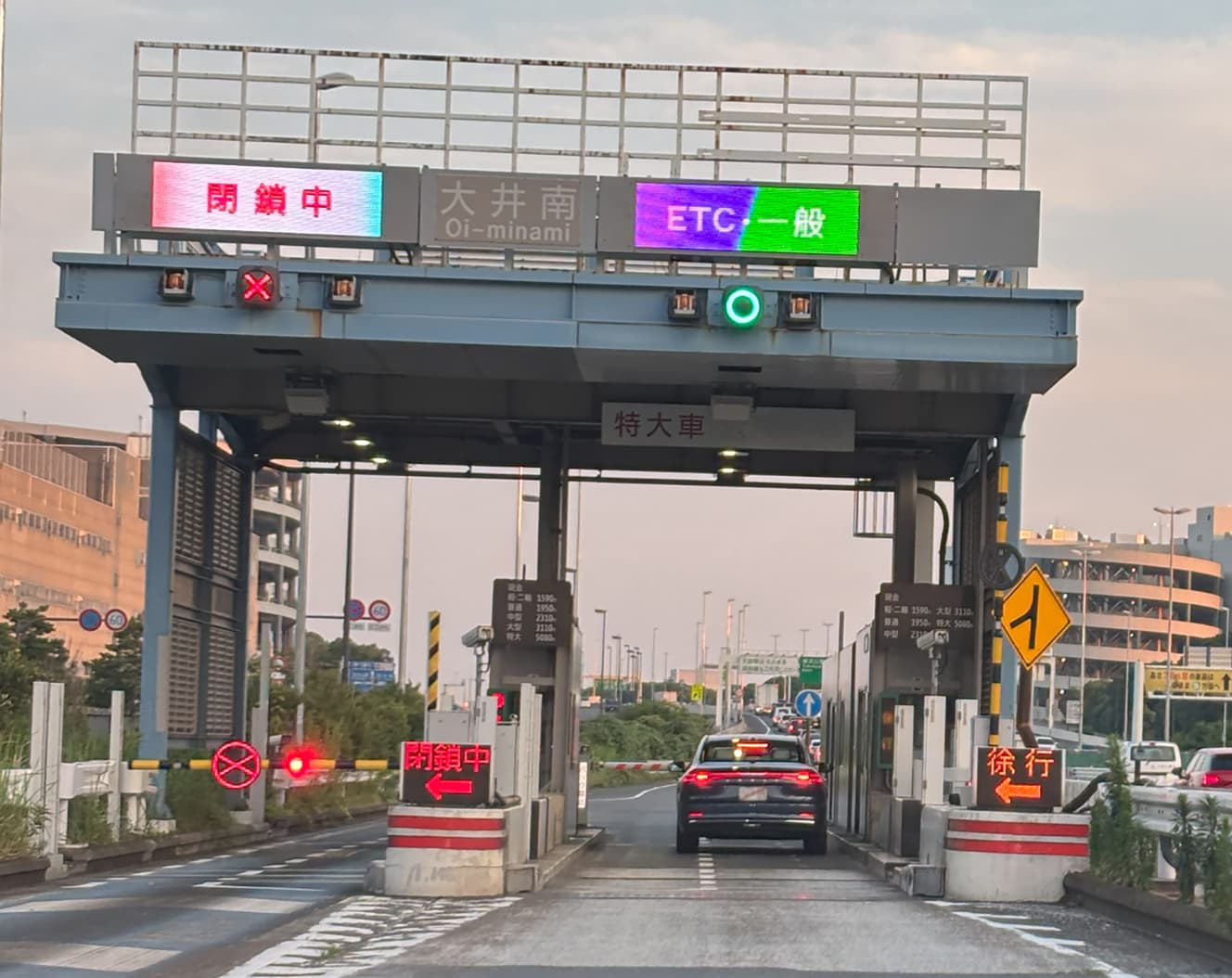
On July 2, a Galaxy A7 fitted with a temporary license plate drove 100 kilometers on the Shuto Expressway’s Central Circular Route, and the journey was filmed. According to the description of the published video:
“The challenge course is Japan’s famous Shuto Expressway Loop Line C2, which is 50 km per lap. This time, we drove two laps for a total of 100 km. In the end, we surpassed the Prius in fuel efficiency and broke the best fuel economy record.”
However, the Galaxy A7 is a PHEV (plug-in hybrid electric vehicle), while the Prius uses a gasoline hybrid HEV powertrain, making their powertrains completely different. From the moment these two vehicles are compared, it can be said that the premise of the project is fundamentally flawed.
In fact, this was not the first time these two entities committed such an illegal act. The same thing had occurred in late May last year. The latest HEV models, “Xingrui L” and “Xingyue L”, were brought to Japan for test drive events at “Tsukuba Circuit” in Ibaraki Prefecture and Mount Haruna in Gunma Prefecture. Promotional videos were also filmed on expressways such as the Tomei Expressway. Naturally, at that time as well, the vehicles were fitted with temporary license plates. This later became a major issue, and the Japanese repair shop that arranged the temporary plates received administrative punishment from the Kanto District Transport Bureau of the Ministry of Land, Infrastructure, Transport and Tourism.
Did Geely, 30 Second Car, and the repair shop that was also involved in providing temporary license plates this year recognize the illegality of their actions? When interviewed, the following responses were given:
“All video filming in Japan is handled entirely by the media outlet (30 Second Car).” (Geely)
“We don’t know about license plates permitted for filming in Japan. They were arranged by the repair shop.” (30 Second Car)
“This year, we prepared three Galaxy A7 vehicles for filming. We only provided dealer plates for vehicle transport, and those cars weren’t driven on public roads — they were moved by carrier truck. The other two temporary plates (from Yokohama and Ota Ward) were applied for by another company, and I don’t know the details.” (Repair shop)
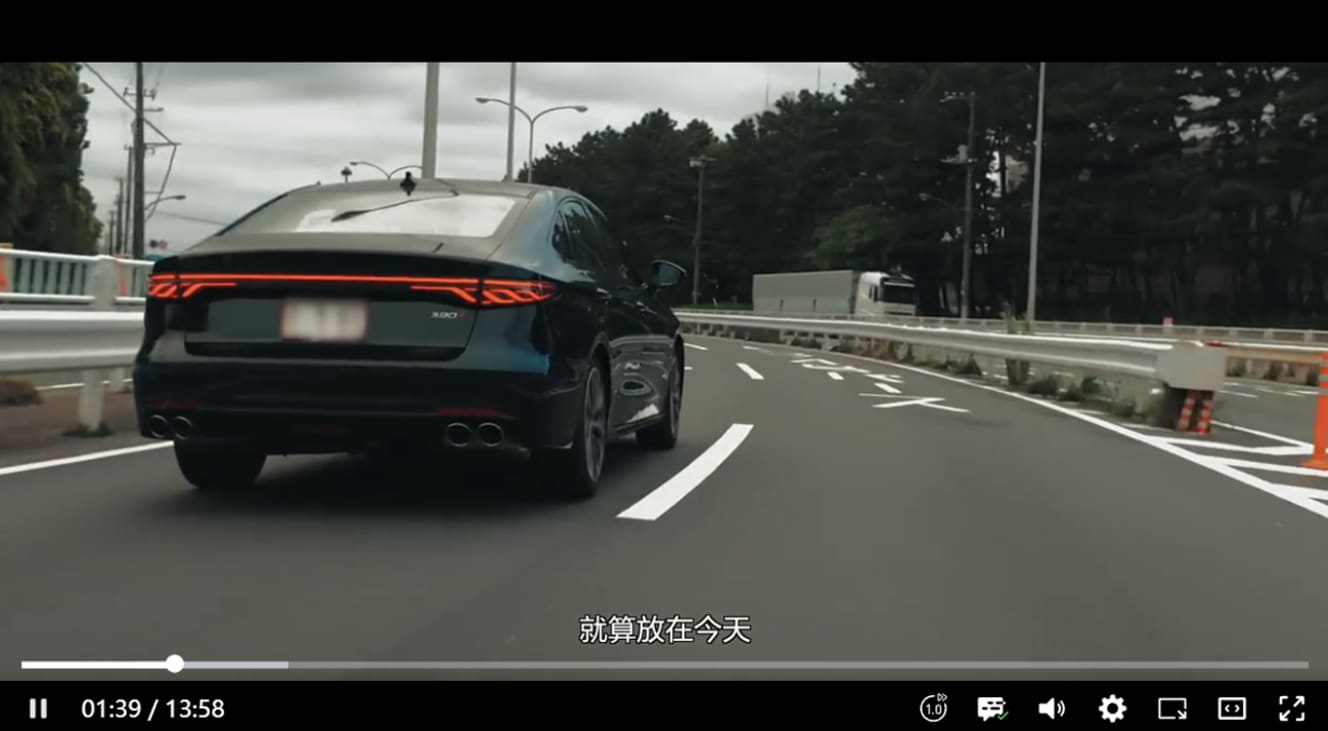 In a video published by another automotive media outlet, Yiche, a Chery Automobile vehicle is shown driving on public roads with a temporary license plate. Although the license plate was blurred out, it is clearly an illegal act.
They even went so far as to cover their tracks to avoid being identified
Geely, 30 Second Car, and the repair shop all claim, “We are not at fault,” and none of the three parties took responsibility. Meanwhile, what does the Ministry of Land, Infrastructure, Transport and Tourism (MLIT) think about the fact that illegal acts involving temporary license plates have once again occurred this year? When an inquiry was made to the Automobile Information Division, the following response was given:
“Since this involves a temporary operation permit plate issued by the City of Yokohama, we plan to provide the city with the relevant information and inquire about the lending status of the specific plate. However, as our ministry does not have the authority to impose penalties or administrative sanctions regarding the misuse of temporary operation permit plates issued by municipalities, we intend to advise the City of Yokohama to consult with the Kanagawa Prefectural Police.”
Bringing vehicles into Japan, illegally attaching temporary license plates, and filming videos — such acts are not limited to Geely and 30 Second Car. A few years ago, another automaker, SAIC-GM-Wuling, and the automotive media outlet Yiche carried out similar activities.
On July 5 this year, Yiche released footage of a collaboration with Chery Automobile, showing a car being driven on expressways with a temporary license plate. In this case, a red-bordered dealer plate was used, and the plate was blurred to avoid revealing identifying information.
Unfortunately, the reality is that illegal driving by Chinese media outlets and automakers is becoming commonplace. One could even say that Japan is being taken lightly. Will the Ministry of Land, Infrastructure, Transport and Tourism issue some form of punishment again this year? To what extent is the police aware of these illegal acts? Before a serious accident occurs, the police, the ministry, and the transport bureaus must urgently strengthen enforcement.
PHOTO: Kumiko Kato, Keiichiro Ikeda