Why Gong cha Still Has Long Lines—and 10x Job Applicants


The momentum of Gong cha, known as a tapioca (bubble tea) chain, shows no signs of slowing down.
From 2021 to 2024, the number of its stores has doubled. The company aims to reach 400 domestic locations by 2028.
Traditionally, the main product of café chains has been coffee. Amid this, Gong cha has defined itself as a tea café chain and continues to thrive—making it a unique presence. Moreover, its signature product, tapioca (bubble tea), is typically seen as a fad drink, which would normally lose popularity once the trend ends and yet.
So, what exactly is the reason behind Gong cha’s continued popularity?
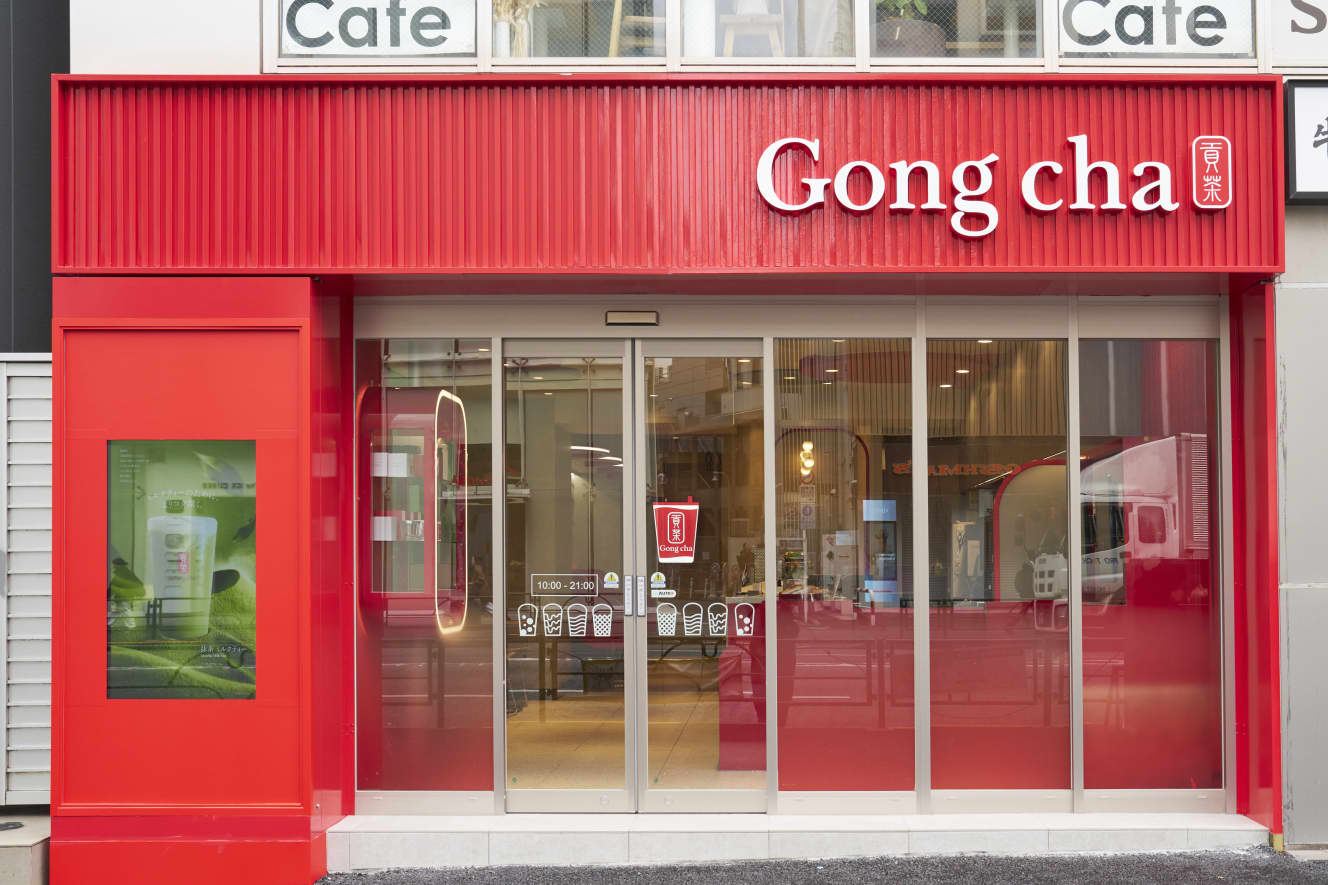 This year marks the 10th anniversary of Gong cha’s entry into Japan. The photo shows the concept store that opened in Harajuku, Tokyo, where the first Japanese branch was located (from Gong cha Japan’s press release).
A wave of non-coffee chains is on the rise
Jun Sakai, Head of Corporate Planning at the company, cites one reason for Gong cha’s success as the expanding tea market, including bottled tea beverages (from PRESIDENT Online’s article: “College students now prefer working part-time at ‘Gong cha’ over ‘Starbucks’ the strategy that achieved 10x hiring competitiveness and 1.5x sales after the bubble tea boom”).
As mentioned earlier, coffee has traditionally been the mainstay of café chains, but in recent years, the growth of the overall café market has plateaued, giving rise to new business models that focus on tea as their core offering.
For example, Starbucks opened its 2,000th store as a tea specialty shop. Over the past few years, Starbucks’ tea-focused model has been gradually expanding. Tully’s has also been increasing the number of stores under its tea-centric brand “&TEA,” while Komeda Coffee is operating a Japanese-style café chain called “Okagean.”
In any case, the non-coffee market has been growing especially rapidly in the past few years, and Gong cha’s ability to ride this wave has been a significant factor in its success.
What seems important for non-coffee chains is the sense of space. One thing these chains have in common is a spacious in-store layout. While Gong cha originally focused on takeout shops, it has been increasing its number of café-style locations in recent years, with many stores offering spacious, well-designed interiors.
This trend may also be influenced by the traditional image of tea as associated with Afternoon tea. It’s about enjoying tea in a leisurely way, forgetting the time. Such relaxing spaces are expected of tea cafés. And as “nun-katsu” (afternoon tea outings) have become a trend, there’s a noticeable demographic looking for a more casual way to enjoy this experience. These tea-focused cafés are meeting that demand through their ambience and atmosphere.
Incidentally, a MyVoiceCom survey from July 2024 found that 10% of respondents said they never drink coffee. That’s 1 in 10 people who either don’t or can’t consume coffee. In the same company’s 2012 survey, that figure was 5.6%, showing a clear increase over time. While it may sound slightly exaggerated, if this trend continues, a further shift away from coffee is possible. In this environment, the tea business model enjoys a tailwind—and Gong cha is well-positioned within it.
Gong cha turns into a “oshi-katsu” (fan activity) spot
However, one question remains: “Why Gong cha?”
One key to answering that may lie in fan marketing.
Previously, I interviewed Jun Sakai about how Gong cha differentiates itself. At that time, Sakai mentioned two main points:
① Enhancing the employee experience
② Gong cha’s transformation into an “oshi-katsu” (fan activity) brand
These two are actually closely connected.
Let’s start with Gong cha’s “oshi-katsu” transformation. Gong cha has always had many repeat customers, especially young women, and many enthusiastic fans. By skillfully leveraging that passion, fans and stores work together to build the “Gong cha” brand.
Sakai said, “In fact, we sometimes change company actions based on comments from receipt surveys, and we also change operations based on feedback from staff at our stores. Because Gong cha is not yet a huge brand like Starbucks or Tully’s, I think that actually makes it easier for people to feel that connection.”
In addition, since May of this year, Gong cha has launched its fan program called “My Gong Cha.” While it’s a point-based system through an app, it’s also explicitly branded as a fan program. The more you visit, the higher your rank becomes, and with that, your loyalty to Gong cha increases as well.
And from this growing fan base, part-time staff and employees are born. In the past, when talking about popular part-time jobs among college students, Starbucks was the top choice. Starbucks still remains popular today, but in recent years, Gong cha has been rising to take that spot.
From fan to part-time worker
In the interview, Sakai stated, “Almost everyone who becomes a crew member is a fan of Gong cha. At times, we receive 300 applications for just 30 openings. Also, our staff tend to stay longer. This leads to lower recruitment and training costs, which is a major advantage in the medium term.”
Gong cha crew members enjoy high flexibility, making the job popular. Perks include the crew drink (a free drink during shifts), and freedom in hairstyle and hair color.
As for employee comfort, Sakai views it this way:
“When designing a store, having more seating for customers generally boosts sales. But if you do that, the workspace shrinks and it becomes harder for staff to work comfortably.
What we’ve learned through our business experience is that higher employee satisfaction leads to higher customer satisfaction and increased sales. In the short term, it may slightly hurt sales numbers, but in the long run, stores where employees work comfortably and provide great service perform better.”
(Sakai, from Money Gendai article: “Why Gong cha bets on tea cafés and even dares to stay analog in a digital world.”)
By doing this, fans who become Gong cha crew members end up loving the brand even more due to the comfortable work environment. That further enhances the brand’s image, attracts more fans, and creates a positive cycle.
Those who support the store are not only consumers, but also the people who work there. Gong cha is successfully leveraging the power of its fans to create this virtuous cycle.
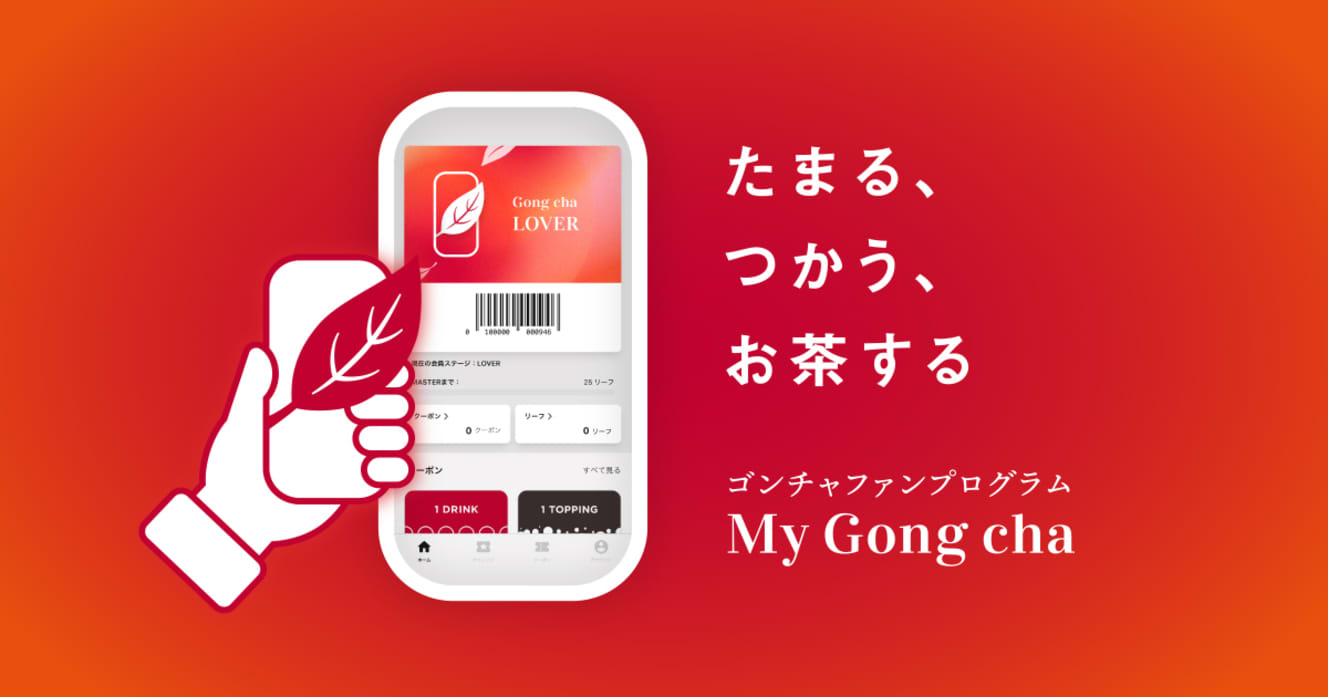 My Gong cha, launched this May, integrates features such as mobile ordering and a point program (from Gong cha Japan’s press release).
Is valuing fans the secret behind Gong cha’s success?
One renowned book on fan marketing is Marketing Lessons from the Grateful Dead (Nikkei BP, 2011). It analyzes the American band “Grateful Dead” from a marketing perspective. One chapter is titled “Give the Front Row Seats to the Fans,” and it includes the following passage:
“The Grateful Dead teaches us to treat customers and consumers with consideration and respect. However, many companies, while trying to attract new customers, ignore their longtime loyal ones instead of prioritizing them. Growing a business is great, but it should not come at the expense of existing customers’ feelings.”
In other words, the key is to satisfy the brand’s fans first. While it’s often assumed that reaching beyond the fanbase is essential for expanding a store’s reach, the true priority should be the brand’s passionate fans.
In that sense, Gong cha can be said to value its fans—not only in how it designs its stores and builds fan communities but also in how it approaches work culture. That’s where the secret to Gong cha’s continued success may lie.
Reporting and writing: Kazuki Tanigashira
Urban journalist and chain store researcher.
He has been actively writing articles and conducting interviews on "current cities" such as chain stores, theme parks, and urban redevelopment. He is known not only for his "now" approach, but also for his examination and critique of cities based on their "past. His books include "Niseko-ka suru Nippon" ("Niseko-ka suru Nippon") and "Why Are There Penguins in Donki? Currently, he writes articles and interviews for Toyo Keizai Online, Gendai Business, Bunshun Online, and various other media. Media appearances include "Mezamashi 8" (Fuji TV), "Day Day" (NTV), "Abema Prime" (Abema TV), and "STEP ONE" (J-WAVE).