“One Home Run Changed My Life” — Terry Ito’s Heartfelt Tribute to Late Shigeo Nagashima


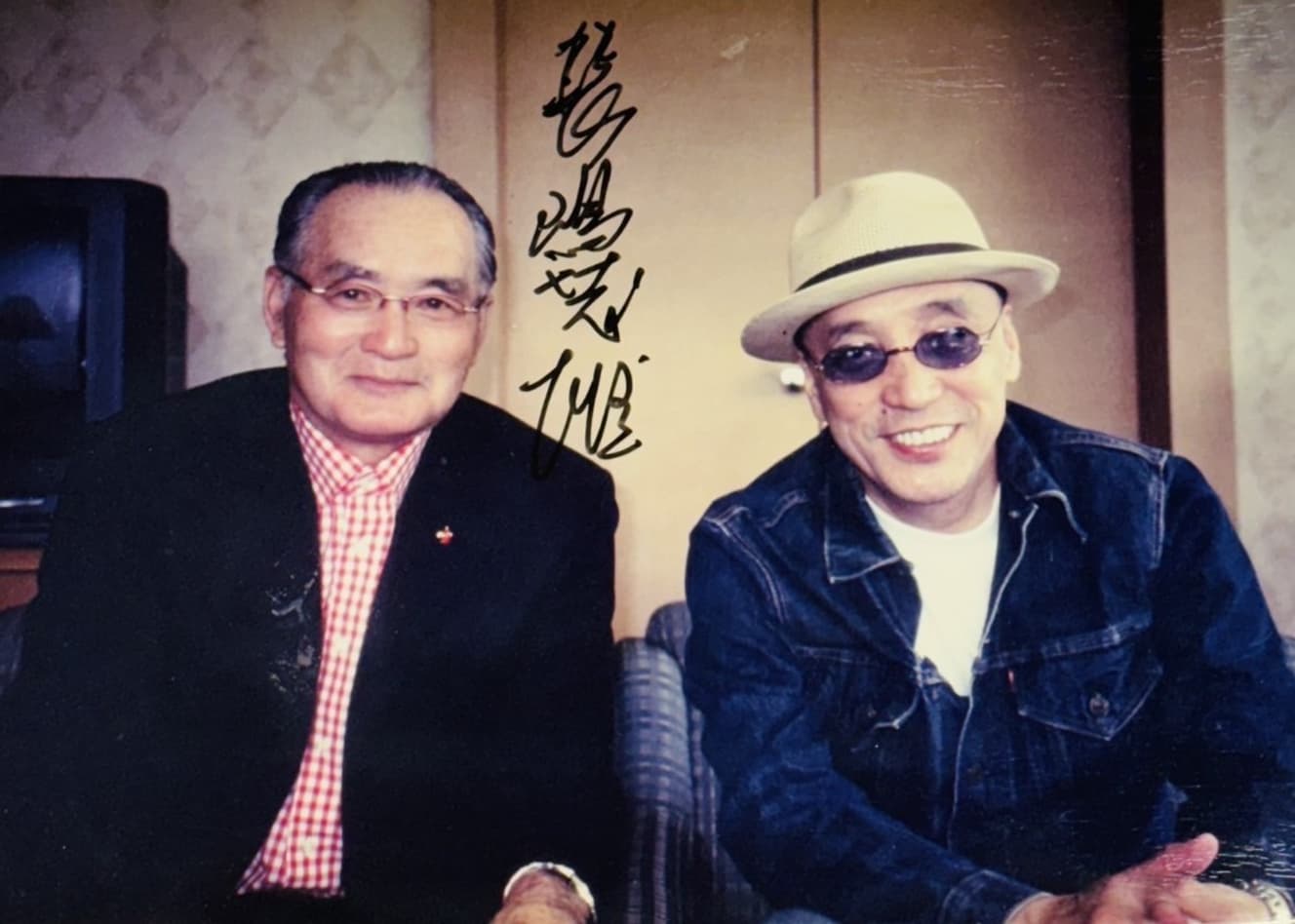
“All the messages said was ‘Nagashima-san’ — just that. It didn’t even say he passed away. But I knew instantly. There were no words after that. I thought, ‘Ah Mister is gone.’”
So recalls TV director Terry Ito (75), known for creating numerous legendary variety shows. On June 3, he was en route to a location shoot and got the news while on the bullet train: Shigeo Nagashima had passed away at the age of 89. Once he arrived, calls for interviews flooded in, and the atmosphere around him changed dramatically. Yet, he says, what settled in his heart was an odd sense of calm.
“Of course I felt lonely and sad. But then it hit me — Nagashima-san always gave so much to us. In the end, I just want to say thank you.”
A devoted fan since childhood, Terry’s words overflowed with deep gratitude for Nagashima.
Terry’s full emotional interview appears in “Memorial Special Extra: Shigeo Nagashima — We Will Never Forget Number 3” (Kodansha), now on sale.
“It was as if there was color only around him.”
“When Nagashima joined the Giants, Tokyo’s air itself was gray,” Terry recalled. “Even at the ballpark, the stands were full of men in white open-collared shirts and suits—it was like stepping into a monochrome photograph. Color didn’t really exist in daily life. But amid all that, there was one person who shone with a different brilliance. That was Shigeo Nagashima.
He alone was in color. It looked like there was color only around him in the scenery—like he was the sun itself. Even his stance was different. It felt like a Major Leaguer had somehow found his way into Japanese baseball. Back then, the sport still had the rigid discipline of the military, and I never imagined there could be a player who moved so freely.”
At the time, Terry idolized Tetsuharu Kawakami and his number 16. But when he saw Nagashima playing for Rikkyo University at Jingu Stadium—and then later wearing number 3 for the Giants—something inside him changed forever.
“Mr. Nagashima made you feel like, ‘Maybe I could be like that too if I try hard enough.’ It wasn’t logical—it just made you believe. He was the kind of figure a young boy would want to entrust his life to.”
In 1968, during the height of the student protest movement, Terry was hit by a thrown rock and injured his left eye. The doctor warned, “You might develop strabismus if this continues.” At just 18, Terry faced the possibility of losing his sight. He was devastated and lost all hope.
 Terry Itō, a devoted fan of Shigeo Nagashima, has also authored several related books—including Kimi wa Nagashima Shigeo to Shineru ka! (“Could You Die with Shigeo Nagashima?”)—that reflect his deep admiration for the baseball legend.
“Please hit the ball”
“Why me?” I sulked, hanging my head in my hospital bed. That night, a broadcast of a Giants game came on the hospital radio. It was a Giants vs. Hanshin game, and in the fourth inning, the Hanshin pitcher hit Sadaharu Oh in the back of the head with a pitch. Oh collapsed and couldn’t get up. As he was taken away on a stretcher and the stadium was in an uproar, Shigeo Nagashima stepped into the batter’s box.
“Please, now of all times, hit it.” I listened, praying—and then he blasted a three-run homer into the left stands! It felt like electricity ran through my entire body. Nagashima was giving it his all, and here I was, doing nothing. It’s not like he encouraged me or said anything to me. But with that one swing, I felt, “I want to stand up again.” It felt like he hit it just for me. But I think back then, people all over Japan felt the same way.
In March 2004, just before the Athens Olympics, Mister suffered a stroke. Everyone thought, “There’s no way he can appear in public again.” But Mister made a miraculous recovery and showed himself to the fans.
He could barely speak, and he was unsteady on his feet. But even so, Mister kept standing in front of the camera. That sight saved me again. When I was young, Mister gave me a push with his home run. This time, he taught me how to live after a fall. I’m getting older too, starting to feel weakness and decline. But seeing him continue to step forward like that—just that alone made me feel, “I can still do it.”
He once said, “Playing Shigeo Nagashima is exhausting,” didn’t he? But I think that was his way of serving others. I believe he actually liked performing that role. For him, living as Shigeo Nagashima was a mission he was meant to carry on. A man who had once been a god deliberately showed his weakness. Even so, he looked cooler than anyone else. That’s exactly why his presence still lights the way for people today.
If Mister is doing it, then we can just follow him. Mister taught us how to live. But I was just always on the receiving end—his autograph, his uniform, his home runs. So, at the end, I just want to say thank you. Thank you, Mister. Thank you for being Shigeo Nagashima.
In the currently available “Memorial Emergency Extra Issue: We’ll Never Forget Number 3, Shigeo Nagashima” (Kodansha), Terry also shares the shock of meeting his idol Nagashima for the first time, and the story of receiving a uniform from Mister, which he still treasures to this day.
PHOTO: Courtesy of Terry's office