Are they willing to meet the expectations of the people… “Renho, Shiori Yamao, and Genki Sudo” oozed out their true identities at their press conference to run for the Upper House election.


Various candidates held their runoff interviews before the Upper House election…

The Upper House election will be held on July 20. Each candidate held a runoff press conference, but the format varied. I wonder if “those three” who were questioned about their own words and actions in the past were sincere in their responses. ……
On June 10, Yamao held a press conference to announce his candidacy for the National Democratic Party of Japan’s proportional representation in the Upper House election, but he was heavily criticized for slurring his words, saying, “I ask for your forgiveness for spinning new words,” and “I may cause trouble if I talk about something new,” and his unofficial candidacy was withdrawn on the following day (June 11). Shiori Yamao, 50, a former member of the House of Representatives.
Following the cancellation of his official recognition, he submitted a notice of resignation to the KDP, saying that he had serious doubts about the party’s ability to govern itself, while blabbing about the circumstances behind his decision. Just when it was thought that Yamao would not be seen in Nagata-cho for some time to come, he filed a notice of resignation with the KDP, saying that he had serious doubts about the party’s ability to govern,
I have decided to run as an independent.”
On July 1, he announced his surprise entry into the Tokyo Upper House election, using a former warehouse of a general store near JR Kichijoji Station as his campaign office, where, as at his June press conference, he spoke alone with a microphone on a folding table, the kind you might find in an outdoor setting.
I have my doubts about the KDP’s ability to govern, but I am not running for office out of anger. I don’t intend to make the dysfunction of the KDP an issue in the election, and I don’t intend to make this an election that I will win by making accusations.”
The Tokyo electoral district is a “merged election” in which a total of seven seats are up for grabs, including the six seats up for election plus one non-elected vacancy, and two new candidates from the KDP have announced their candidacies. Since the two KDP newcomers and Mr. Yamao’s supporters overlap, he was asked if he is running as a “shot in the dark” to prevent the KDP candidate from winning,
Yamao stated, “I have no intention of taking revenge on the KDP.
I have no intention of taking revenge on the KDP.
Compared to members of the House of Representatives, whose constituencies are based on a single-seat constituency system, members of the House of Councillors have constituencies in all prefectures. Compared to the lower house members, the upper house members have a much wider campaign area. In addition to the 23 wards, the Tokyo electoral district includes the Tama region and islands. The candidate must cover all of these areas, and must also gather the 600,000 votes needed to win the election.
He has no backing from a large organization and relies on the personal connections he has cultivated over the years.
I think I have a chance to win. As a result, we may lose one of the two candidates.
In preparation for the Upper House election, Yamao held two press conferences to announce his candidacy. He turned his attention to his office, where a new poster had been put up, labeled “non-partisan,” after his official decision by the KDP had been rescinded.
I have no choice but to do it. I’m going forward.
Genki Sudo and Renho of the People’s Democratic Party of Japan for a few minutes after their speeches.
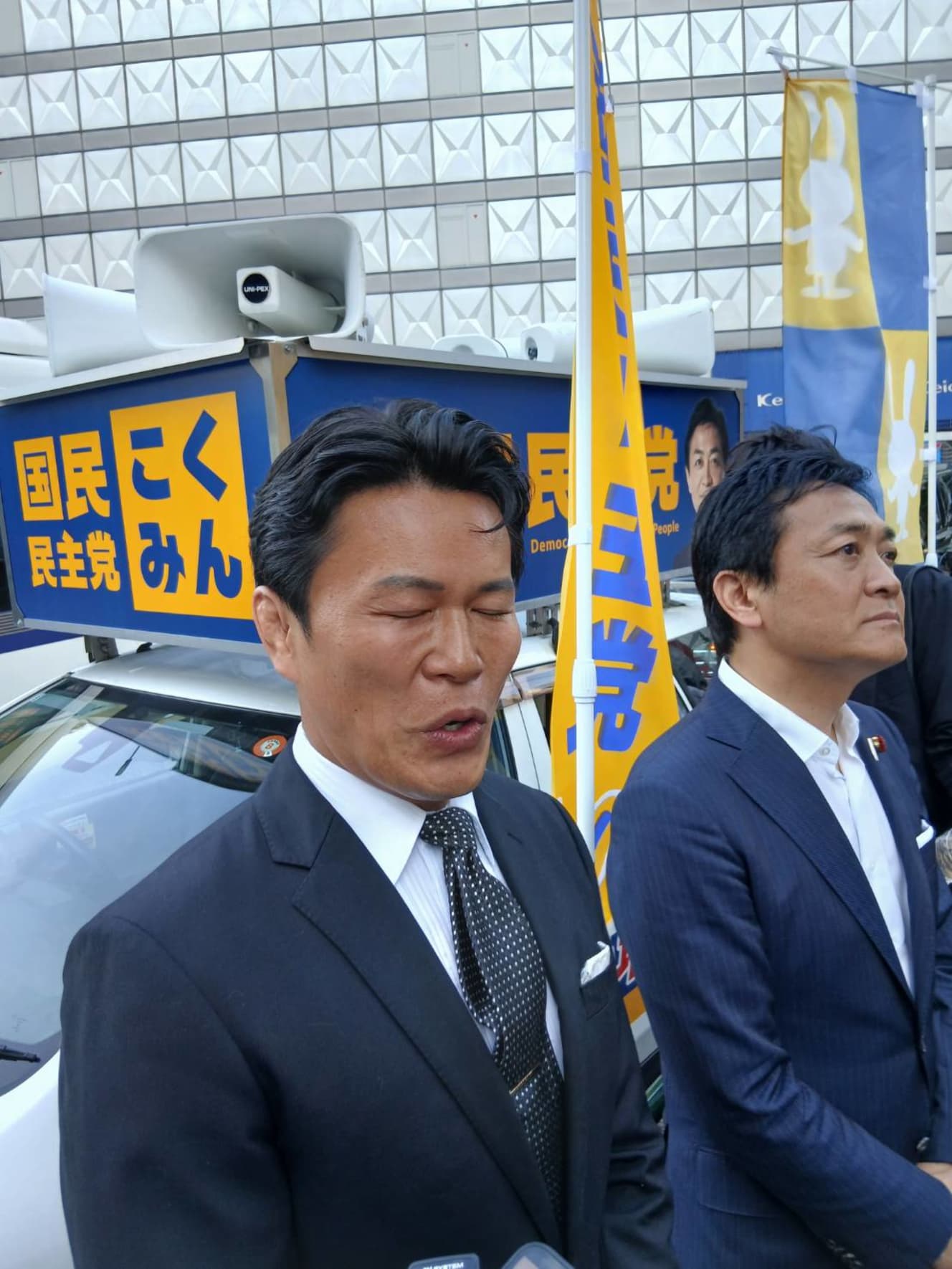
June 30, the day before Yamao’s press conference. Genki Sudo, 47, a former fighter and former member of the House of Councillors and an official candidate for the KDP’s proportional representation, apologized in front of the press for his past comments about the new coronavirus vaccine, saying that they were contrary to the facts after hanging out with Yuichiro Tamaki, 56, a representative of the KDP, in a speech in West Shinjuku.
He said, “I was pointed out that the scientific basis for the vaccine for the COVID-19 crisis is poor. I deeply regret that. I sincerely apologize for the great burden, both physically and mentally, that my statement caused to the medical professionals who were working so hard at the time.”
Mr. Sudo closed both eyes tightly as he delivered his apology. He retracted words he had sent out on SNS when he was a member of the House of Councilors of the Constitutional Democratic Party of Japan, such as “The number of deaths has increased dramatically since the vaccine started” and “There is no reason to keep promoting vaccination any longer, is there?
As a member of the Diet, I should have remained neutral. I was aware of the risks and benefits, and I was quoting news articles and quoting scholars, but I regret once again that my words were insufficient and that some of them were not true. I regret once again that my words were insufficient and that some of them were untrue.”
I can tell that he deeply regrets what he did, but when asked why the press conference in this manner?
As a member of the party, I will do my best to protect the health and lives of the people.
He left with a determined “Oshinushi! and left.
At his June press conference, Yamao attended alone, without party officials present, and was questioned for two and a half hours about his alleged infidelity.
Meanwhile, Mr. Sudo was surrounded by reporters who had come to interview him after giving a speech on the street, and he was only able to give a hanging interview for less than 10 minutes, with Representative Tamaki by his side and able to offer a helping hand.
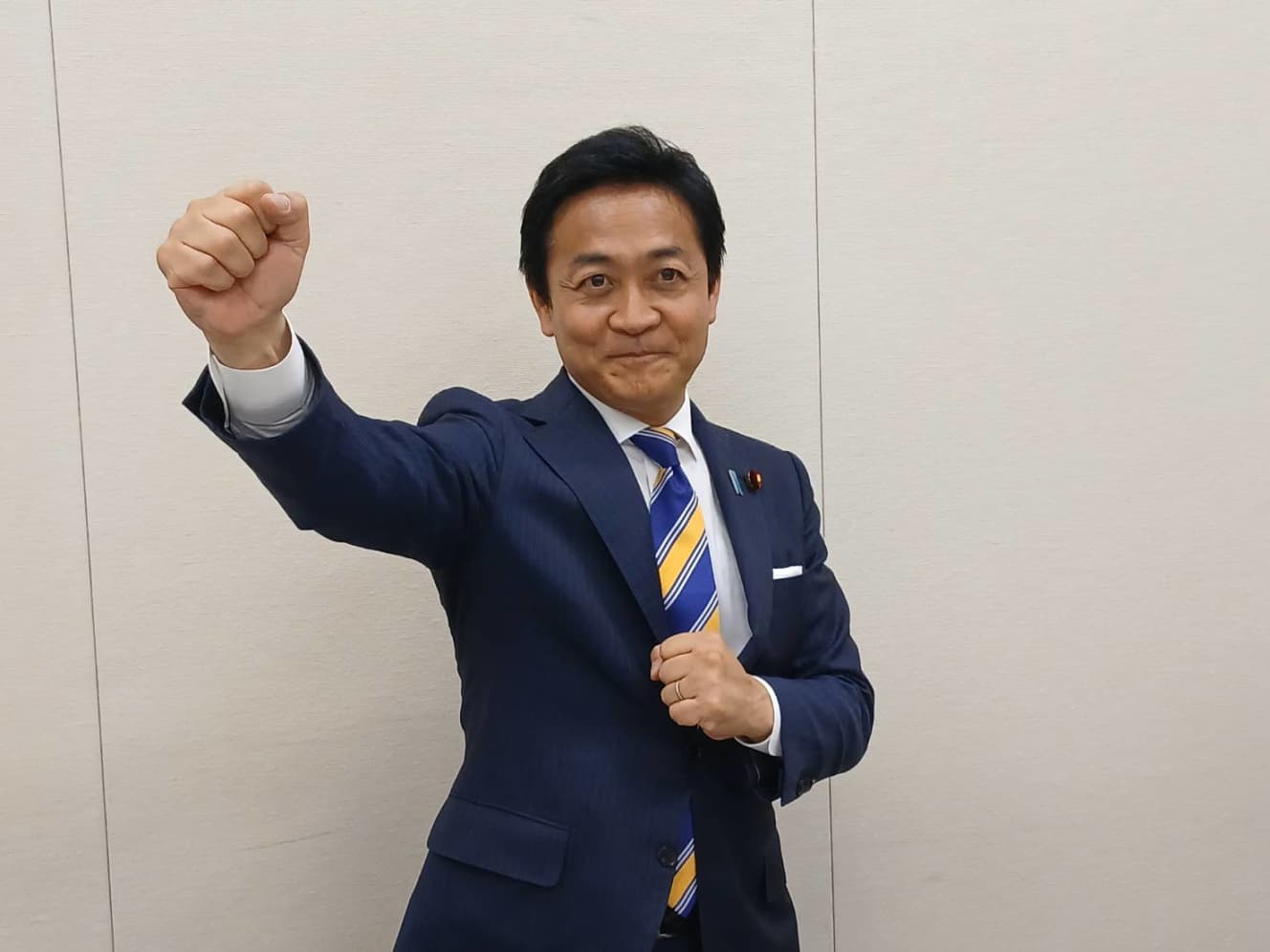
On July 1, when we asked Tamaki, who appeared for a joint interview with sports newspapers and weekly magazines for the Upper House election, about how he had announced his candidacy, he replied.
When I asked him about the way he announced his candidacy, he replied, “Yesterday’s (Sudo’s press conference) ended more quickly than I had expected. I wondered if there were any additional questions. The questions naturally subsided. On the other hand, I wondered why Mr. Yamao’s press conference went on so long.
There are various forms of press conferences, such as sitting or standing, but the questions can be asked in the same way, and I responded sincerely. There is no difference between a hanging or seated press conference. I have always tried to respond sincerely to the questions I have received. I don’t make any difference depending on the format.
The KDP’s party support rating has plummeted in the wake of the troubles surrounding the election of Yamao and Tamaki’s comment that stockpiled rice was “food for animals. However, it appears to have bottomed out after winning nine seats in the recent Tokyo metropolitan assembly election. Mr. Tamaki said, “There were many things that happened.
I’ve been through a lot, but I have no choice but to work hard for the Upper House election. We will do our best anyway. Every day is a critical moment, a battle for survival.”
The Upper House election will be announced on July 3. Until July 2, the day before the election, there were various forms of press conferences for the runoff election. On June 27, former House of Councilors member Renho, 57, the proportional representative of the Constitutional Democratic Party of Japan, also announced her candidacy at a hanging press conference following a street speech in front of Jiyugaoka Station.
When the coordination for retaining Renho began, he said on SNS after his defeat in last year’s gubernatorial election, “I’m not thinking about national elections anymore. If I go back, I’ll be like a migratory bird,” he wrote on social networking sites, which was viewed as problematic. He also raised objections from the Rikken Democrats’ support group, the Coalition for Constitutional Democracy. Did he decide to announce his candidacy at a hanging press conference after his speech to avoid being questioned by many reporters in his seated position?
When asked about Sudo’s press conference style at Yamao’s runoff press conference on January 1, he declined.
I am afraid to hold a press conference alone. I am tempted to end it by hanging around or run away without giving a press conference. I’m sure Mr. Sudo has his own ideas, but I will take questions and answers without running away.
On June 10, I took questions about my personal life until I ran out of them. I believe that how I approach the press conference will be conveyed to the voters. My style is to go it alone until I run out of questions.”
After the various runoff press conferences, who will survive in the crucial mid-summer race?


Tokyo Election Candidates
Keizo Takemi (73) LDP
Daichi Suzuki (58) LDP
OKUMURA Masayoshi (47) RPP
Shiomura Fumika (47) LDP
OTOKITA Hayao (41) Restoration
Yudai Kawamura (41) New Komeito
Ushida Matomo (40) National
OKUMURA Yoshihiro (31) Nationals
Yoshiko KIRA (42) Communist Party
YAMAMOTO Joji (62) Reiwa
Saya (43) Councillor
KOSAKA Eiji (52) Conservative
NISHI Miyuka (53) Social Democratic Party
SAKAI Tomohiro (55) Minna
ISHIMARU Yukito (52) N Party
YOSHIDA Aya (40) Rebirth
MINEJIMA Yuya (35) Mirai
CHIBA Hitoshi (62) Seishin
Takeshima ICHIKAWA (57) Reform
FUJIKAWA Hiroaki (53) Reform
TSUJI Kentaro (39) Muren
KUWASHIMA Yasufumi (64) Moroha
Shibuya Riko (40) Various Factions
Mikio Hayakawa (77) Various Factions
Yasuhiro Fukumura (68) Faction
Doi Kenshin (53) None
Hirano, Amaryu (31) No.
Noboru Masuda (47) No.
YAMAO Shizuri (50) No
Yoshizawa, Eri (55) None
Ai Yoshinaga (50) None
Kenji TAKAHASHI (54) None
Interview, text, and photos: Daisuke Iwasaki