Playback ’95] “The Murder of an Elderly Suginami Asset Owner” – The life of a fugitive criminal who ran a snack bar and used guns and methamphetamines…


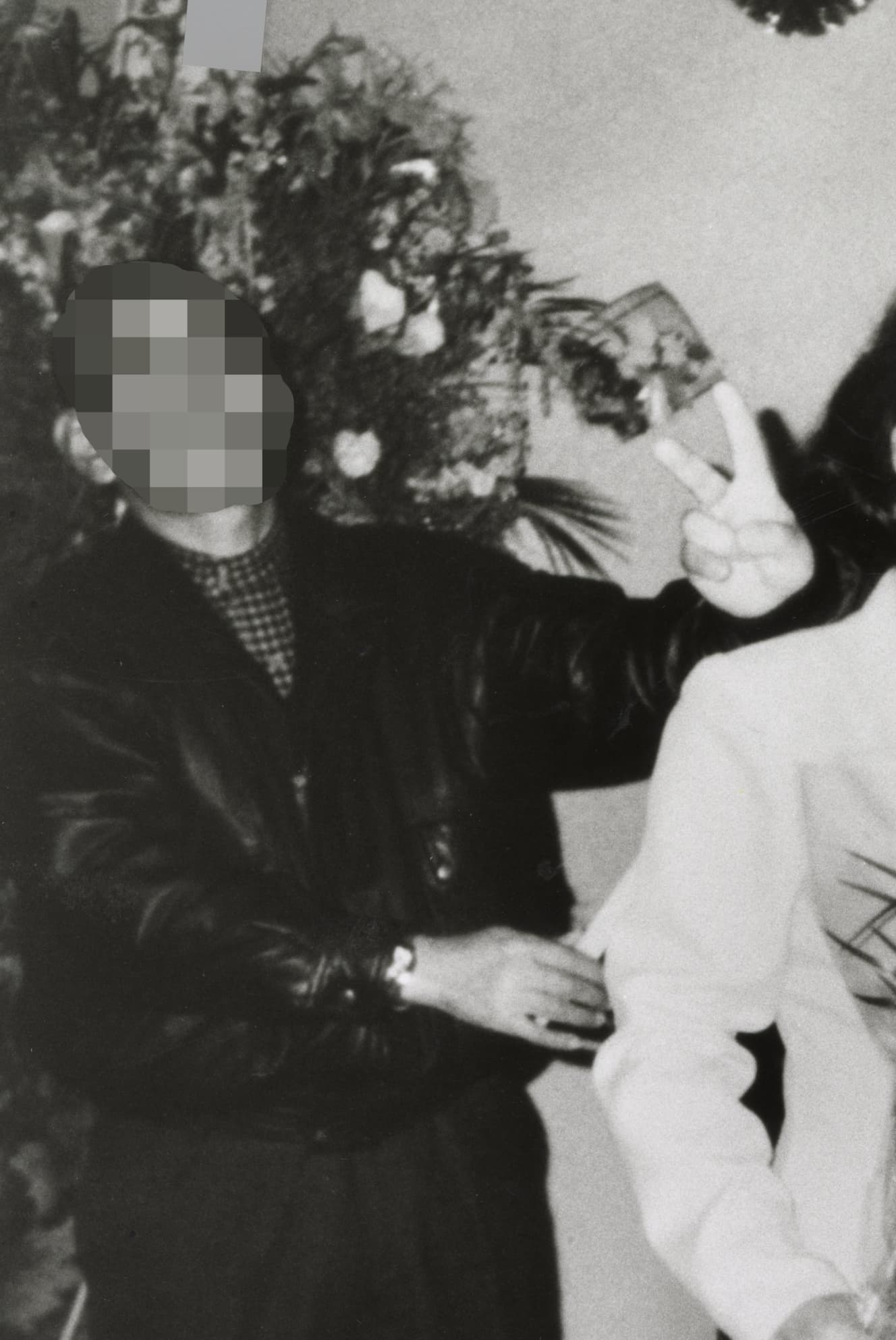
What did “FRIDAY” report 10, 20, or 30 years ago? In “Playback Friday,” we revisit the topics that were popular at the time. This time, we will introduce a story from the July 21, 1995 issue, which was published 30 years ago : “Suspect in the Murder of an Elderly Woman of Property in Suginami, Tokyo, on the Run: ‘Bold Life’ for Six Years.
In October 1989, the eldest son of Shige Sasaki (pseudonym, 82 at the time), who lived in Suginami Ward, Tokyo, reported that his mother, who lived alone, was missing and that her land was being sold without permission. The following January 1990, Ms. Sasaki’s body was found stuffed in a trunk on the side of an expressway in Kanagawa Prefecture. The Metropolitan Police Department wanted A, his mistress B, and another male accomplice C (38 at the time), who had sold the land belonging to her. However, in July 1990, C was found dead in Gifu Prefecture with a skeleton. After that, the whereabouts of A and B were unknown. (All ages and titles are current at the time of writing.)
Six years on the run… finally his bad luck ran out.
“The man was taking a bath when we raided his house. When we searched the room, we found a gun and drugs. …… So we caught them red-handed for violating the Firearms Control Law and the Methamphetamine Control Law, and when we caught them, we found that they were, well, A and B.”
The Ibaraki Prefectural Police investigators were amazed at the “big-name arrests. The two suspects are A (48) and B (52), who were wanted in connection with the “Suginami property owner’s elder daughter’s murder. After six years on the run under the guise of husband and wife, their bad luck has finally run out.
Just before Mr. Sasaki disappeared, suspects A and B sold a 250 m2 plot of land owned by Ms. Sasaki without permission, using forged seals and other forged documents. They had swindled her out of approximately 200 million yen. The Tokyo Metropolitan Police Department believed that they held the key to Ms. Sasaki’s murder, and had been tracking them down, but they had changed their names to “Nobutora and Tomoko Nakamura” and continued to flee.
In the fall of 1990, A and B began working as live-in workers at a poultry farm in Shimotsuma City, Ibaraki Prefecture, and the following August 1990, they moved to Chiyoda Town (now Kasumigaura City) in the same prefecture, where A was working for a septic tank cleaning company. Although his resume at the time stated that he was “from Kitakyushu City, Fukuoka Prefecture,” he was actually from Hiroshima Prefecture, and after an affair, he and B abandoned their home and moved to Tokyo.
A policeman also came to the snack bar
“His wife said, ‘We came here as a married couple because our children were married and we didn’t have much to do. But when they moved in, I didn’t think they were a normal couple because they had no household goods of any kind” (landlord of the rented house they were living in at the time).
While A went to work, B worked at a ramen store. While A went to work, B worked at a ramen shop. She had a reputation as a “serious and nice part-timer. Although they were living modestly and out of the public eye at the time, in December 1993, they took the bold step of opening a snack bar. Their friendships gradually became more flamboyant.
The place was packed to capacity with 20 people, and at times there were as many as 15 women, including Filipinos and Thais, in the bar. There was a bouquet of flowers for the opening celebration that said “Kyushu, all my brothers,” but I guess he put that out himself to pass off as a lie” (acquaintance).
A A. was a business-minded person who held karaoke contests and golf competitions, and the restaurant thrived. However, no one thought that the master was a wanted suspect. A detective in charge of gangsters was also said to have visited the restaurant, but again, he could not spot the two. The following year, B The following year, B started another snack bar, but “Danna was generous and good-natured, so he had customers, but his wife’s bar was not so popular” (customer).
While he became known locally as a snack bar owner, it seems that he also had his share of nerves.
There was a time when the police came because of a fight in the bar, and when I came to, the master was hiding in the shadows,” said a hostess.
He always wore sunglasses and a hat when he went out, and he had several wigs at home. When I asked him what was so funny as he intercepted the police radio, he would laugh and cover it up” (acquaintance).
What triggered his arrest, however, was that A was reported for drugging a woman he met at a teleclub with methamphetamine at a hotel. As mentioned above, when investigators raided A’s home, they also found a gun. There was also testimony that “he had a Thai hostess work as a prostitute in his restaurant” (an acquaintance). It was probably inevitable that the case would eventually be exposed.
He even got married under false pretenses in order to acquire assets.
A was also an officer of a local snack bar association and had started selling used cars about a month before his arrest. It was around this time that he began acquiring guns and getting involved in methamphetamine.
Armed with gambling debts and moving from place to place in Chiba Prefecture, A came to know Ms. Sasaki, who was the landlord of the apartment where B lived, around the spring of 1989, and approached her after learning that she lived alone and was an asset with over 250 square meters of land.
As he and B took Ms. Sasaki to health resorts and Kinugawa hot springs, Ms. Sasaki began to take an interest in them and started calling them “brother” and “sister. They also arranged a fake marriage between Mr. Sasaki’s eldest daughter and C, who was an acquaintance of Mr. Sasaki. He killed Mr. Sasaki and C, who was also his accomplice, because he feared that it would be discovered that he had sold the land without permission.
A was charged with murder and fraud, etc., and B was charged as an accomplice to fraud; B was sentenced to five years in prison in March 1999, but A fought the case to the second trial and was sentenced to death in March ’05. The sentence was carried out in April 2008.
In March 1993, while A was still on the run, a commercial TV program dramatizing the case with the characters’ real names was canceled on the day of broadcast. At that time, A had seen the TV column for that day and later wrote, “I thought I could no longer escape and broke out in a cold sweat.
While his life seemed daring, he may have always felt the pressure of those who were being pursued.

PHOTO: Masaharu Uemoto, Shuichi Masuda