The Increasing Number of “Campus-Born” Professionals in Women’s Golf Speak Out on the Good Points of Being in College


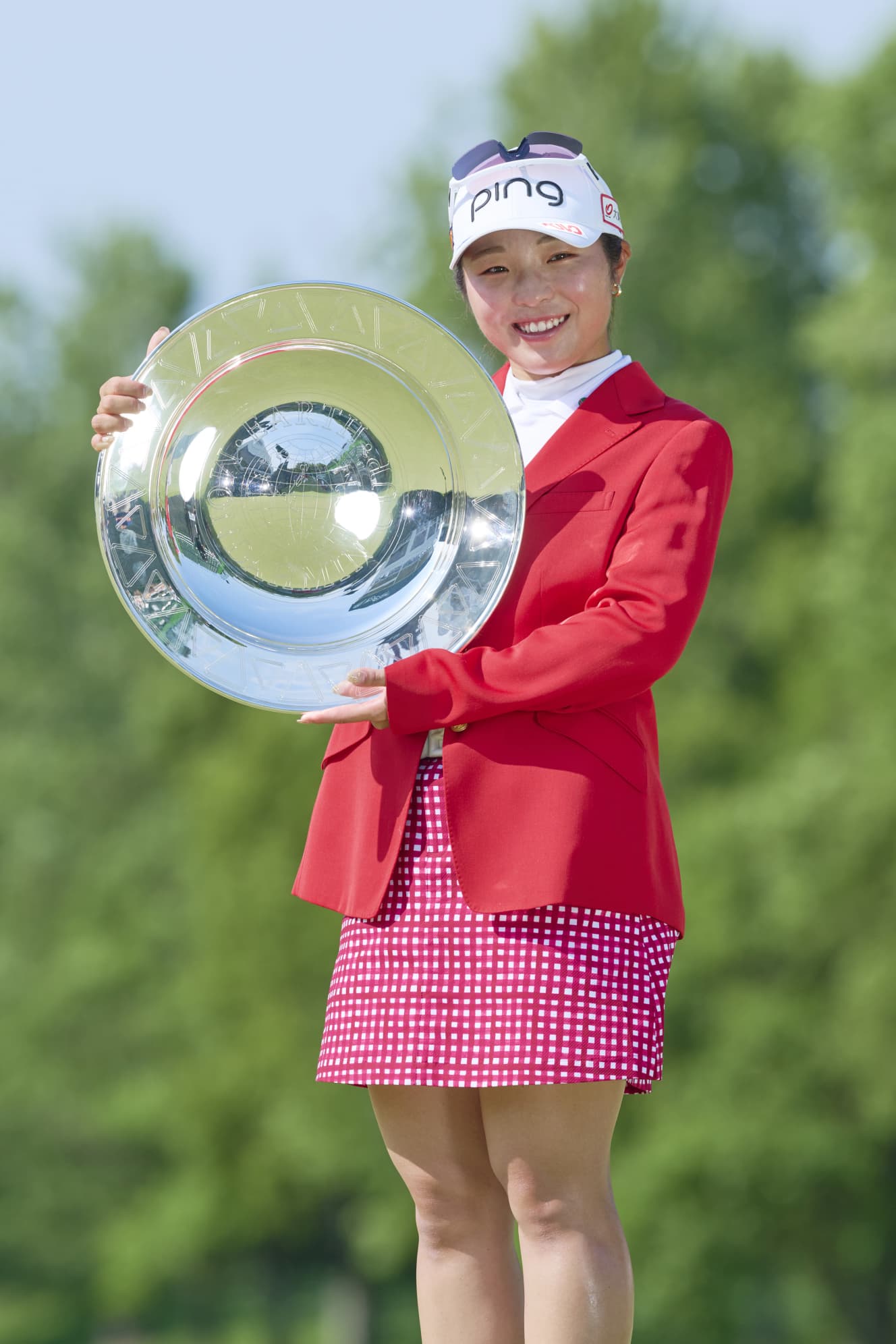
The final day of the “Earth Mondamin Cup” (Camellia Hills CC, Chiba) was held on June 29, and Akari Sakuma (22), who started the day one shot off the lead, shot a 70 with four birdies and two bogeys to win the tournament with a total of 11 under par and her third victory on the tour.
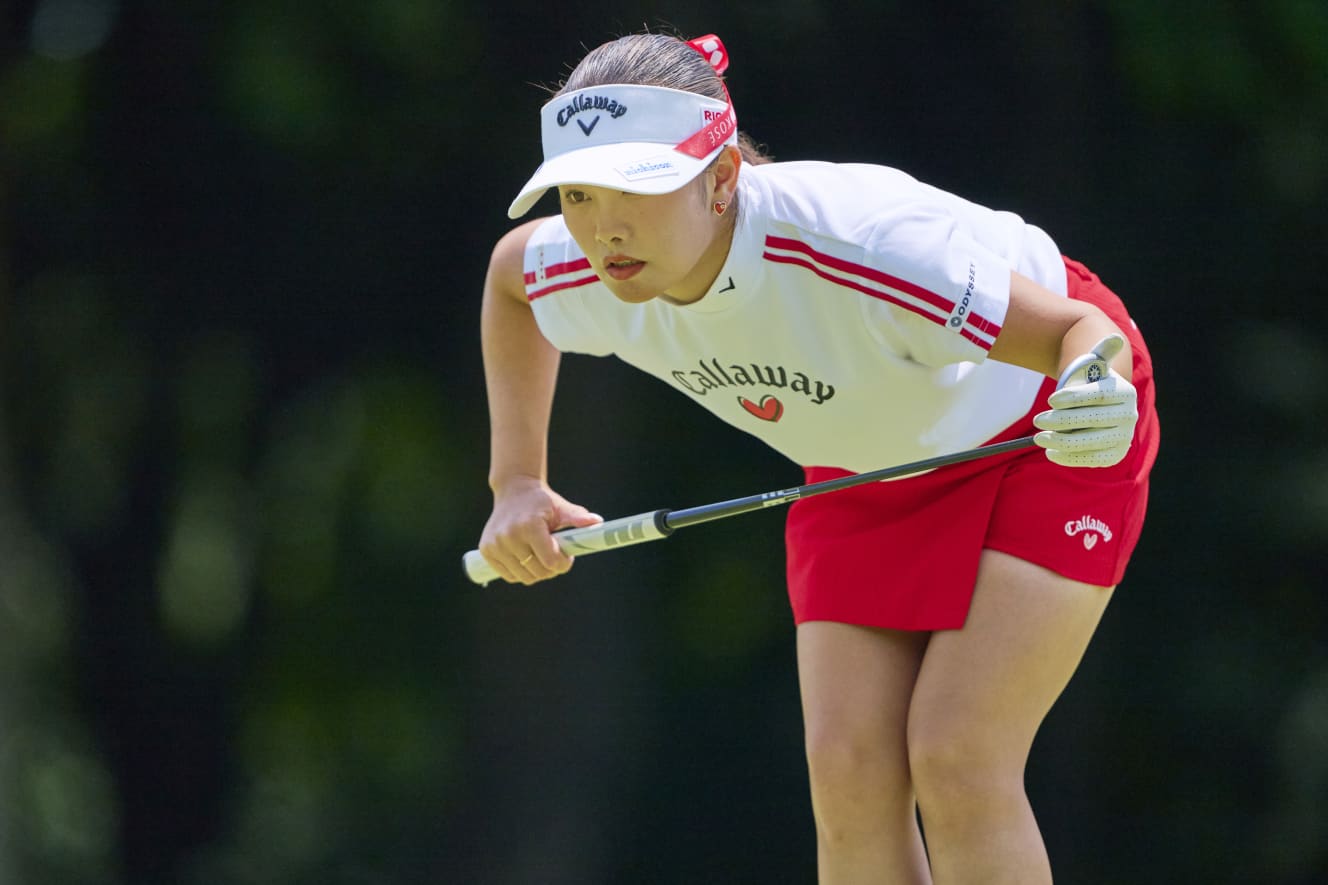
Yui Kawamoto (26), who was in the lead until the third day of the tournament, narrowly missed out on victory on the final day. She passed the pro test in 2006, and at the time was a student at the Japan University of Health and Sport Sciences while competing as a tour pro, attracting attention as a so-called “two-sport professional.
In recent years, the number of college graduates and professionals currently enrolled in college has been increasing in the world of women’s professional golf. Twenty-two years ago in 2003, Ai Miyazato won the Miyagi Television Cup Dunlop Women’s Golf Tournament. She declared herself a professional and became the first high school pro golfer in history. At that time, the mainstream for top amateur players was to go to a strong high school and pass the professional test to become a professional.
Now, players are showing their presence on the tour stage through the “college” option or by wearing two pairs of shoes. This is due in part to the fact that the passing rate for the professional test is now in the low 3% range, making it difficult for even those with good high school records and national team membership to pass the test on the first try, and many talented players have to take the test several times.
This season’s winners include Chirei Iwai (Musashioka Junior College graduate) at the Daikin Orchid Ladies, Yuri Yoshida (Japan Wellness Sports University graduate) at the V Points✕ SMBC Ladies, Nanako Inagaki (Waseda University graduate) at the Resort Trust Ladies, and Hibiki Iriya (Asahi University student) at the Nichirei Ladies. About half of the other Tour winners went on to college.
The sense of danger of not being able to work at golf is also a reason.
When we asked Kawamoto about the advantages of going to college, he replied, “There’s no end to it. I have nothing but good things to say about it,” he answered immediately.
“It expands my friendships. The world you see changes. Golf is not the only thing in life. You can meet many people, have many experiences, and experience many different feelings. You can’t do that if you only play golf.
Reika Usui, 26, who passed the pro test in 2006 and has a tour victory to her credit, went to college the year after turning pro.
She said, “Some people may only play golf, but I want to do something else besides golf. When that happens, I think graduating from college will give me more options.”
With this in mind, she voluntarily applied to college. Usui chose Japan Wellness Sports University, which has faculties and departments specializing in sports. There are many graduates from this university in the golf world, including Mone Inami Monei, Yoshida Yuri, Saigo Mao, Takahashi Ayaka, Rokuguruma Hinano, and Yoshida Suzu (currently enrolled).
I am glad I graduated from university. After all, an athlete is only as good as his or her body, and I have a sense of crisis that I don’t know when I won’t be able to work in golf.
Touring by day, watching classes at a hotel by night
Yumu Ono (Hiromu, 27), who graduated this year after completing a correspondence course in health and welfare sciences in the School of Human Sciences at Waseda University, said that when he was in high school he seriously wondered whether to take the professional test or go to college.
I thought that if I went to college, I would quit the pro game. But I knew I wanted to take the pro test because of what I had done so far, so I took it. So, when I became a professional, I found that Waseda University had an entrance examination system through the JLPGA. I was able to take it with just an essay and an interview.
(At the entrance exam site) I was with teaching professionals and others. Also, there were people from the J-League soccer team. The university’s classes were not online, but videos were delivered, and I had to watch them by myself within a week and submit a report if there was an assignment.”
Although distance learning may sound like an easy way to learn, the assignments were quite hard. At the time, he was traveling from place to place on the regular and step-up tours that he played every week.
He said, “As much as possible, I watched the videos at my hotel on the night of practice rounds and worked on my assignments. It was hard work. It was hard.
But the time he spent studying was also a time when he could return to being a college student after his golf-soaked life. During his five years as a student, which included a year overtime for his graduation thesis, he says that golf and submitting assignments have helped him grow mentally.
He said, “I know it’s tough, but I think the experience will definitely come in handy. There are all kinds of people in communications, and they are very dedicated and inspiring.”
In the professional world, results are everything. In such a demanding arena, the place of learning seems to have provided him with mental support.
Giving back the knowledge gained from her studies to golf
Nanako Inagaki (24) went on to the School of Sport Sciences at the same Waseda University and joined the Athletic Club’s golf club. In her rookie year, she won the “Resort Trust Ladies” for the first time this season. Her decision to go to college was motivated by the fact that she was often injured, and in her third year of junior high school she suffered a back injury, lumbar spondylolysis, so she wanted to learn more about back pain as an athlete. He looked back on his four years at the university as follows.
In my first and second year, I learned a lot of basic things, so I was able to learn a lot of things in general, and in my third and fourth year, I studied in the laboratory of Professor Kanaoka, who studies back pain.
There were kids from various sports, such as tennis and swimming, not just the cases I knew, and I got to know various cases of back pain in various sports. I learned a lot about their conditioning methods and preventive measures, so I learned a lot.
This was the first time for a six-university graduate to win a women’s golf tour title.
I think the alumni of the Athletic Association’s golf club were very happy, and I think everyone at the university was very happy as well. Rather than becoming a professional right out of high school, I have met many people around me and have had many experiences, which has been a great source of support for me and has helped me a lot. Waseda color (dark red) is one of my favorite colors. I would like to wear it like Hideki Matsuyama wears yellow.
The commonality of the players who chose to go on to university is that they did so with a clear purpose in mind. For these women, whose lives have been centered around the world of golf since their junior and amateur years, university life seems to be a place where they can broaden their relationships and explore themselves.
In recent years, universities have also been developing systems to support competitions, offering flexible learning styles such as correspondence courses and individual tutoring. This has made it possible for athletes to balance competition and study. Among those who have passed the professional test, there is a noticeable increase in the number of students who are enrolled in or have graduated from universities, and it can be said that this is a trend of the times.
It seems that the “college-educated” path, in which players take time to reflect on themselves and broaden their horizons before becoming professionals, will become more and more mainstream in the world of women’s professional golf in the future.

Interview, text, and photos: Shinji Tokari