[Emergency Warning Report] Japan Faces Unprecedented Killer Heat This Summer
The number of heat stroke sufferers is sure to increase. How high will the temperature rise?


Record-breaking heatwave due to triple high-pressure system
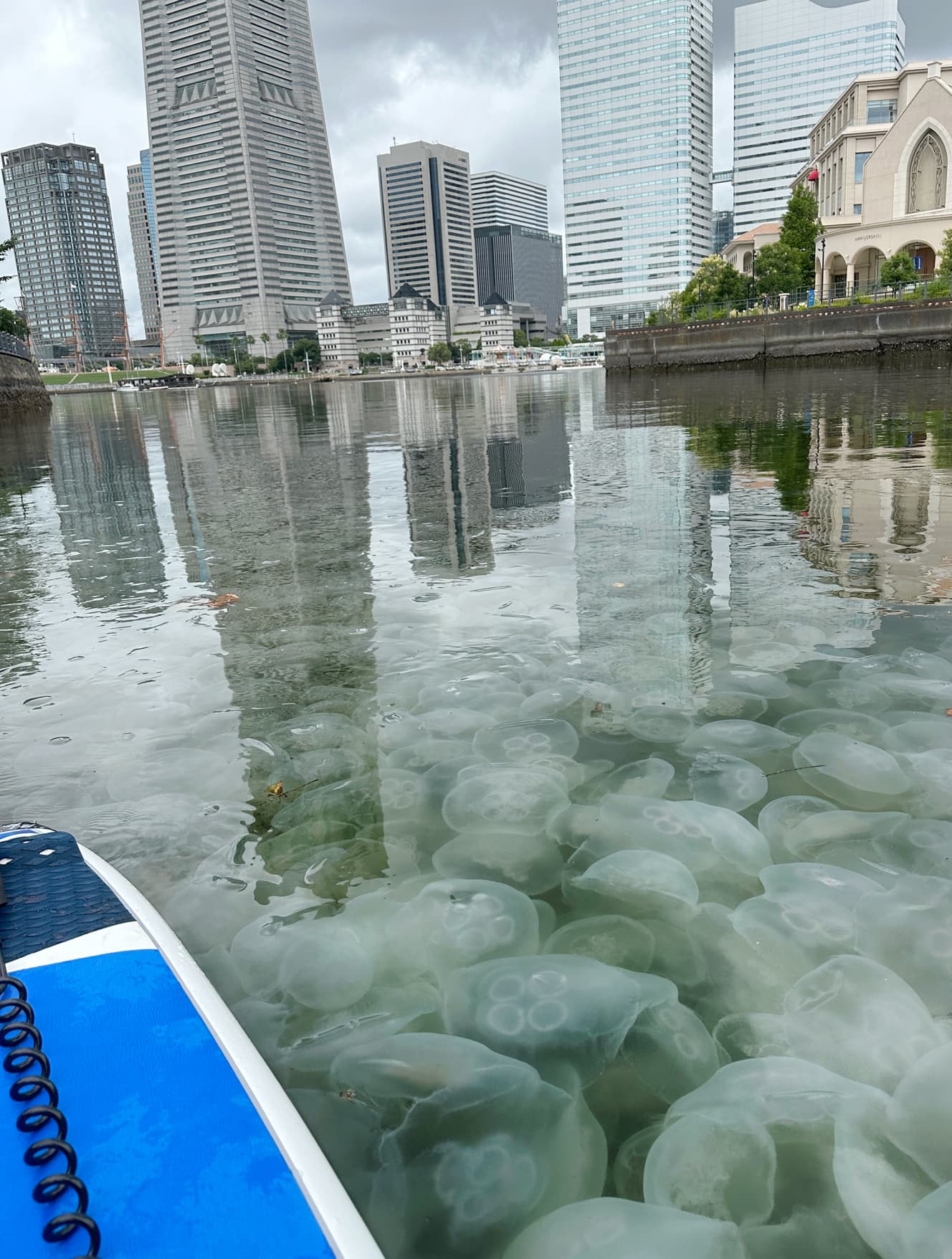
An eerie white mass spread out across the surface of the sea—
What’s pictured is a massive jellyfish bloom in Yokohama’s Minato Mirai district. The photo was taken in mid-June this year. Due to the effects of global warming, rising sea temperatures are believed to have caused a surge in plankton—jellyfish’s favorite food—leading to the bloom. A man in his 60s living nearby shares:
“Jellyfish have been appearing at the river mouths in Yokohama every summer for the past two or three years. There are so many of them, it’s chilling. When I first saw them, I thought it was a sign of some natural disaster. It feels like the hotter the summers get, the more frequently they appear.”
This year again, unbearably hot days have continued. According to the Japan Meteorological Agency, on June 30, 118 out of 914 observation points nationwide recorded extremely hot days with temperatures of 35°C or higher. In Tokyo, there were 13 days in June with temperatures exceeding 30°C—the most ever recorded for that month. The cause is believed to be the heat dome phenomenon, where high-pressure systems create downward air currents that trap hot air near the ground. Meteorologist Masamitsu Morita explains:
“Japan’s summer heat is heavily influenced by the behavior of the Pacific high-pressure system. This year, sea surface temperatures to the south are higher than usual, causing moist air to evaporate and rise, which strengthens the Pacific high. Because of this strong Pacific high, the seasonal rain front that would normally move south is being pushed north. As a result, the rainy season ends earlier, and the hot air remains trapped over the Japanese archipelago.”
It’s not just the Pacific high-pressure system turning Japan into a heat dome. Professor Yoshihiro Tachibana of Mie University, an expert on extreme weather, explains:
“Riding the westerlies from western China, the Tibetan high-pressure system is approaching Japan, while a meridional (north-south) high-pressure system is arriving from the north of Hokkaido. This year, all three systems, including the Pacific high, are extremely powerful. This triple high-pressure system has brought record-breaking heat in June. If the seasonal rain front disappears, the heat will become even more intense. It will be an unusually severe summer. With rising sea temperatures sending hot air in from the ocean, the unbearable heat is expected to continue through August.”
The era of global boiling has arrived
Currently, a temperature of 35°C or above is considered an extreme heat day and labeled as abnormal, but in the near future, that may become the new normal. Professor Tachibana continues:
“If global warming progresses, temperatures exceeding 40°C will become a daily reality during Japanese summers. It wouldn’t be surprising to see it rise to 45°C. Japan, being surrounded by ocean, receives a constant stream of humid air, making it one of the most uncomfortable places in the world during heatwaves. Even at the same 40°C, Japan feels hotter than dry inland countries.”
According to the Fire and Disaster Management Agency of the Ministry of Internal Affairs and Communications, 8,603 people were hospitalized due to heatstroke nationwide during the week starting June 16—a surge of 7,637 from the previous week.
“Roughly 1,000 people die from heatstroke annually. But many others lose their lives due to extreme heat weakening vital organs like the heart or brain. If you include related deaths, the number of fatalities caused by extreme heat may reach several thousand per year. Prolonged abnormal heat will also make it harder to grow staple crops like rice. With Japan’s low food self-sufficiency, this could quickly lead to food shortages. The nation would face a crisis akin to being at war.” (Tachibana)
Japan isn’t alone in suffering through deadly heat. On June 29, Portugal recorded 46.6°C—the country’s highest-ever June temperature. In France, 84 out of 96 departments issued high-temperature alerts under the warning that “lives are in danger.” In Germany, water levels in the Rhine River fell, disrupting cargo transport.
At a press conference in July 2023, UN Secretary-General António Guterres issued a grave warning to humanity:
“Climate change is here. It is terrifying. And it is just the beginning. The era of global warming has ended—the era of global boiling has arrived. We must stop profiting from fossil fuels. Every country must protect its people from searing heat, unbreathable air, deadly floods, drought, and wildfires. Avoiding the worst is still possible.”
According to the UN, disasters caused by global boiling are responsible for 500,000 deaths each year worldwide, with 2.7 billion people exposed to life-threatening risks.
Unprecedented days of scorching heat now threaten all of humanity—and the time left to stop global boiling is rapidly running out.


From the July 18-25, 2025 issue of “FRIDAY”
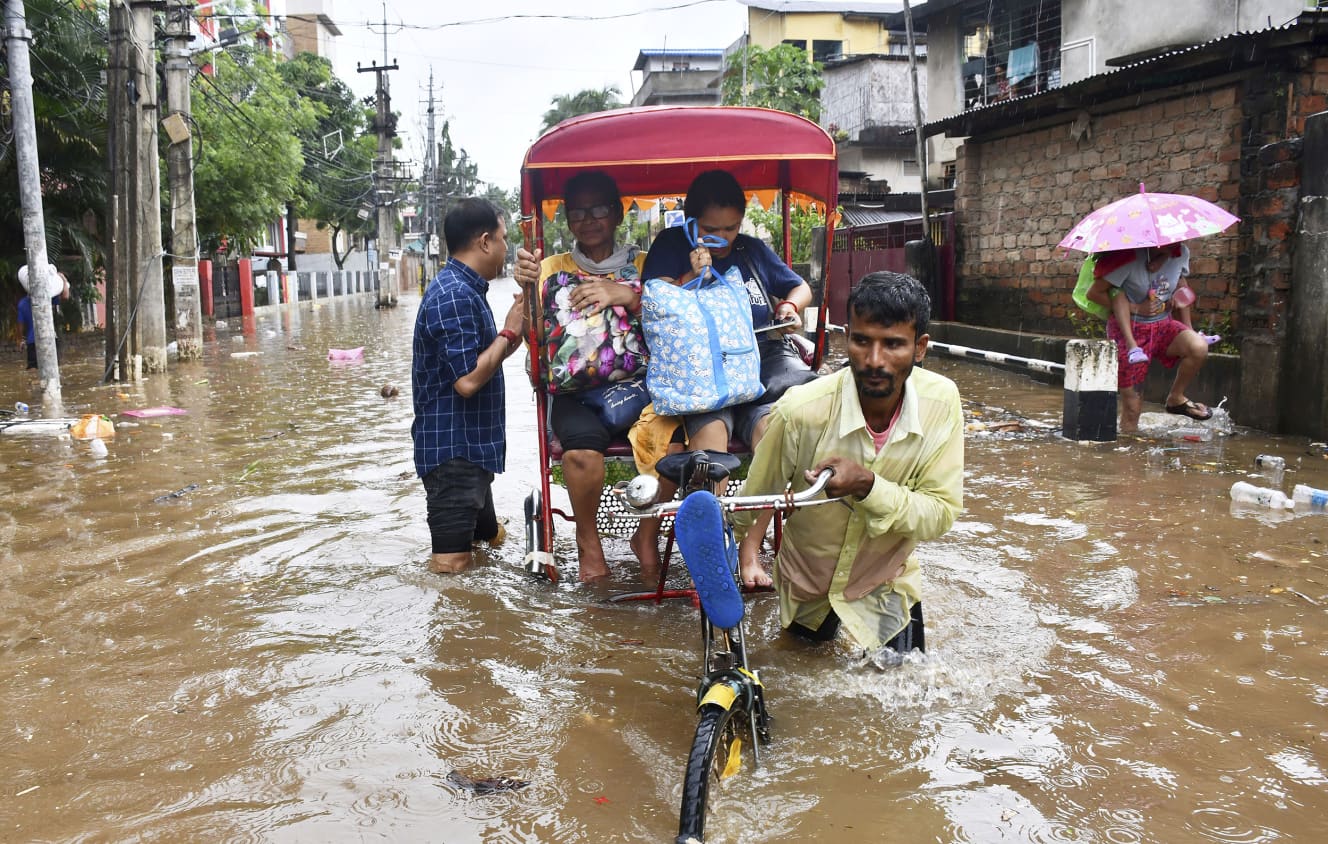
PHOTO: Courtesy of reader (1st photo) Reuters/Afro AP/Afro