SoftBank’s Revival Fueled by 4 Men — Behind the Scenes of Imai’s Lights-Out Pitching
Pro Baseball Wide, Part 2: The Sorrowful Exchange Games


A man with 2,000 gags
Although Hanshin, the top team during interleague play, lost momentum with seven consecutive defeats, second-place DeNA was unable to close the gap as their once-vaunted machine gun lineup went silent. However, this season, it’s the pitching staff—not the offense—that’s striking fear into the hearts of rival teams. Sportswriter Yamato Fujimoto comments, “In addition to the three foreign starting pitchers, including Trevor Bauer (34), the biggest factor has been the solid establishment of Taisei Irie (26) as the team’s closer.”
“With a blazing fastball in the upper 150 km/h range, he’s shown outstanding consistency, posting an ERA in the low 1.00s. He was the team’s first-round draft pick in 2020 and was actually more highly anticipated than Shugo Maki (27), who went in the second round. Irie calls himself a man with 2,000 gags and has declared, ‘I do one gag a day.’ I think it was when he first joined the team that he performed a bit like, ‘A-B-C-D, nice back muscles~♪’—and totally bombed (laughs). These days he’s changed his hairstyle and revamped his image, but he probably still has over a thousand jokes left. If he performs a gag every time he gets a save, it could become a team tradition to rival Destarsya.”
Chunichi, which will celebrate its 90th anniversary next season, has been gaining momentum during interleague play under new manager Kazuki Inoue (53), who replaced Kazuyoshi Tatsunami (55) after three consecutive last-place finishes.
“Veteran pitchers Hideaki Wakui (39) and Takahiro Matsuba (34) have been standout performers. Wakui, in particular, says, ‘I’m feeling better than I have in years. I’m confident I can pitch like I did in my prime,’ and his velocity has been increasing. On the other hand, ace Hiroto Takahashi (22) has been underperforming. Some say the change in atmosphere under Inoue has caused the team to loosen up. Overall, training has become more relaxed, and Takahashi isn’t doing as much running. Inoue is more of a big-brother type motivator, so to some extent, that’s unavoidable,” says a veteran beat reporter.
Young slugger Takaya Ishikawa (24), who has been the cleanup hitter since Opening Day, is also struggling with a batting average in the low .100s. To help him, Nobuhiko Matsunaka (51)—the team’s hitting coordinator and the only Triple Crown winner in the Heisei era—played a special card.
“Since he’s a left-handed hitter and couldn’t coach Ishikawa effectively himself, he asked Koji Akiyama (63) to step in during their road trip to Fukuoka for a series against SoftBank. Akiyama gave Ishikawa some direct instruction for about 15 minutes. Ishikawa was extremely grateful. Matsunaka hasn’t been rated very highly by the players due to his tendency to impose his own style, so I’m sure he’s also deeply thankful to his former senior teammate from the SoftBank days,” the same source says.
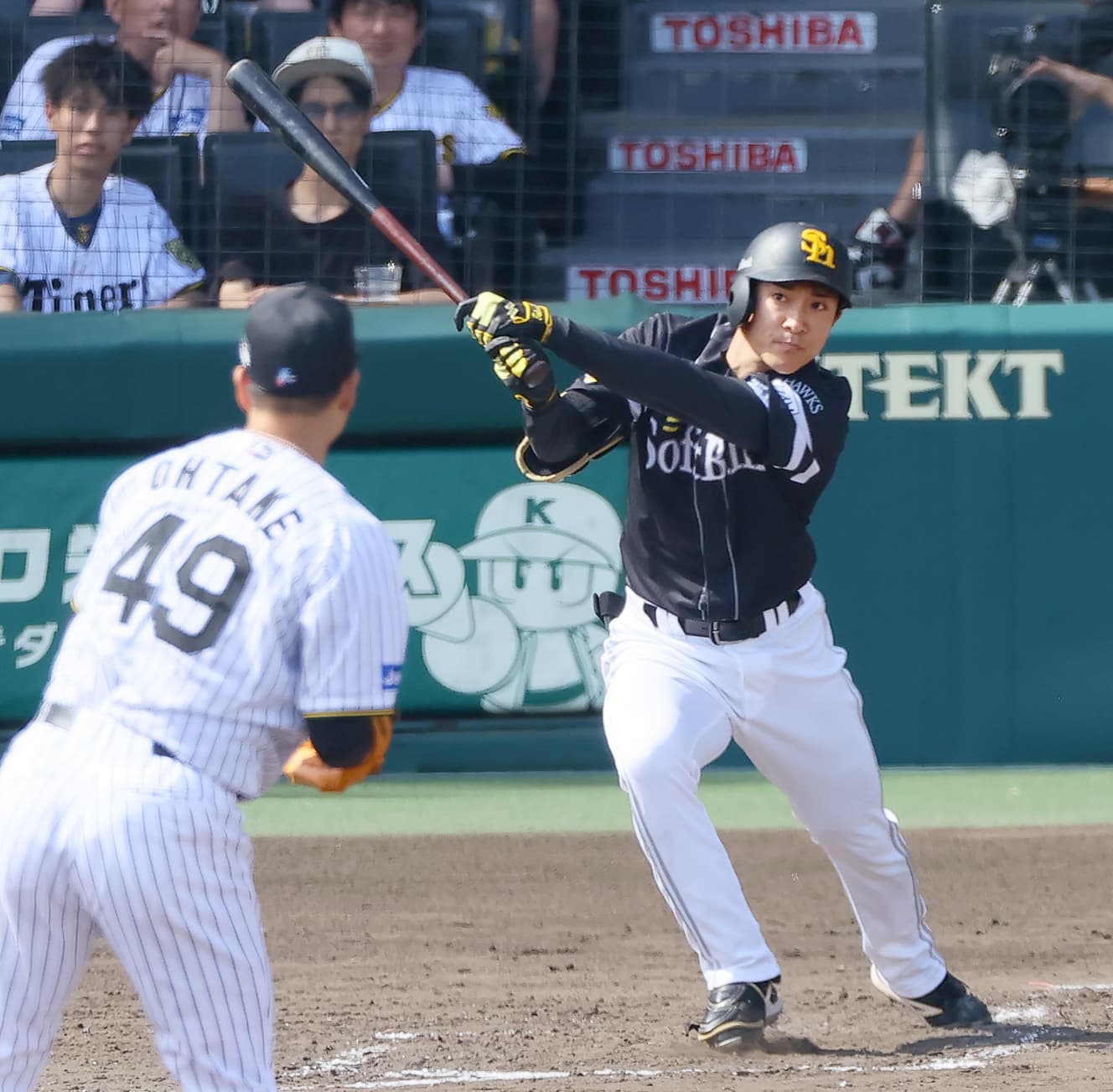
As for SoftBank, key players like Kensuke Kondoh (31), Yuki Yanagita (36), and Ukyo Shuto (29) all dropped out of the lineup early in the season. By the end of April, the team had slumped to 9 wins and 15 losses, placing them at the bottom of the Pacific League. However, they’ve steadily gained ground during interleague play—an area they excel in—and climbed back into the top three. Manager Hiroki Kokubo (53) smiles and says, “The young guys who were hungry for a chance are really stepping up.” Behind their success lies the support of four men.
Mental strength is a skill
A team official analyzes, “The turnaround began once the three skill coaches—Yuya Hasegawa (40), Kenji Akashi (39), and Takuto Kikuchi (32), all batting coaches—and mental performance coach Motohiro Ban (40) were officially registered and allowed to be on the bench.”
“This season, SoftBank introduced a new system of skill coaches. Under this structure, the traditional batting coach no longer provides technical instruction—instead, their roles involve creating practice menus, deciding batting orders, and so on. The idea is that first-team players don’t need skill instruction—but as you can see, the current roster is filled with young players.
Among them, Coach Ban is especially well-regarded by the players. Young talents like starting pitcher Tomohisa Ōzeki (27), breakout outfielder Tatsuru Yanagimachi (28), and Isami Nomura (28) frequently gain insights through their conversations with him. For example, Ōzeki consulted Ban during a game about how to calm himself when things weren’t going as planned. Nomura said that talking with Ban helped him organize what he needed to do next. According to Coach Ban, ‘Mental strength is a skill. It’s essential not only in baseball but in all sports.’”
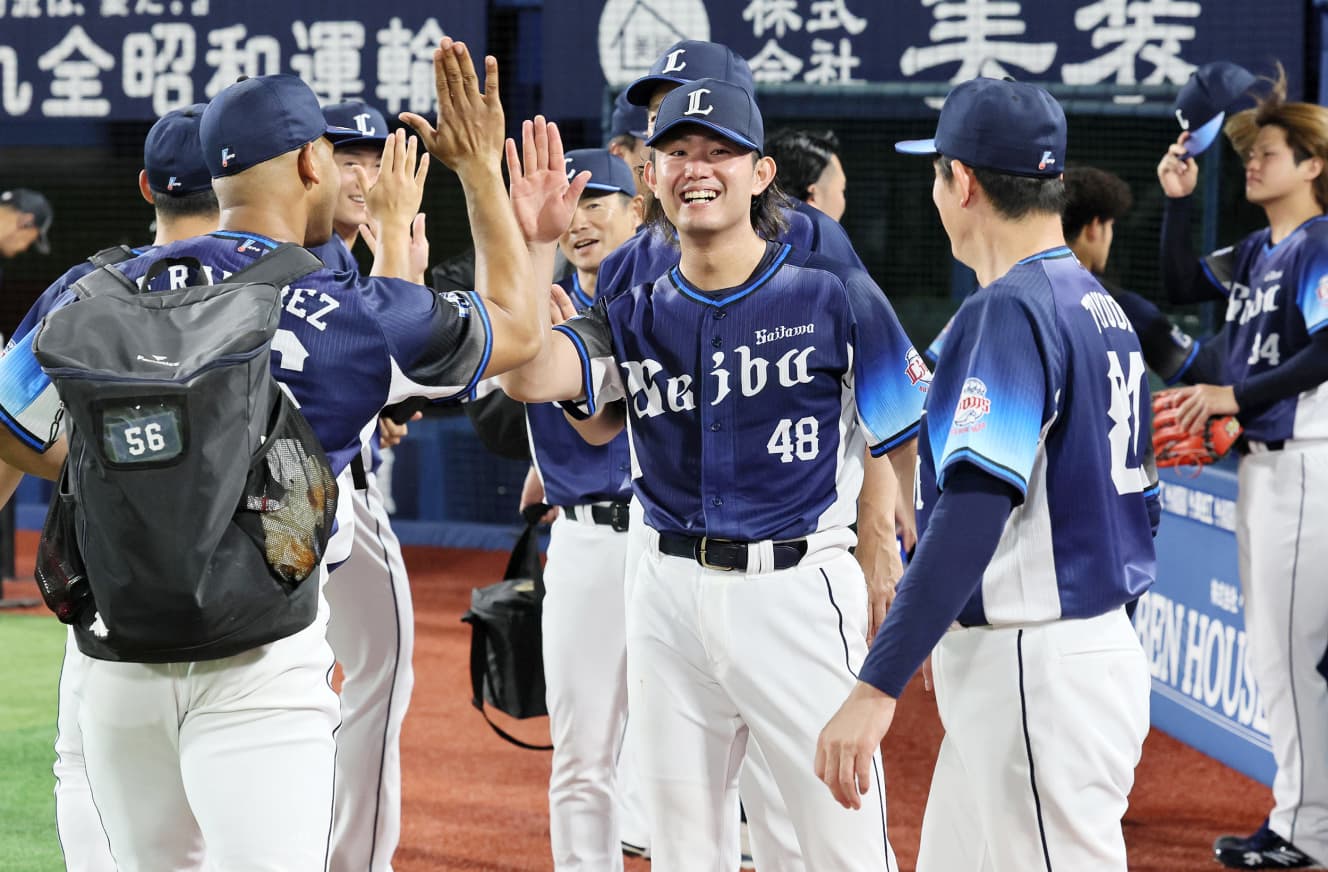
Last season, Seibu Lions suffered a disastrous 91 losses and ran away with the bottom spot in the league. They replaced nearly the entire coaching staff, and this season they’ve climbed into contention for a top-three (A-Class) finish. Leading the charge for the revamped Lions is Pacific League’s “Doctor K,” Tatsuya Imai (27).
Behind his dominant performances—an ERA in the low 1.00s and over 100 strikeouts—is a charismatic trainer trusted by MLB pitchers like Kodai Senga (32), Tomoyuki Sugano, and Olympic athletes.
“Since voluntary workouts in 2023, trainer Toshiharu Hongoe has been helping Imai with his pitching form. Hongoe categorizes players into arm types and leg types and teaches movement patterns tailored to each type. Imai used to frequently change his form, mimicking pitchers like Yu Darvish (38) and Takayuki Kishi (40). But after meeting Hongoe, he finally found a style that suits him. Walks were a big issue for him last season, but this year, his form has stabilized. He and Chihiro Sumida (25), another student of Hongoe, play catch daily and check if their movement is aligned,” said a team insider.
Whenever Imai pitches, MLB scouts line up in the stands. While Kaima Taira (25) and Kona Takahashi (28) from Seibu have expressed interest in moving to the majors, Imai is reportedly viewed as the pitcher with the best-quality stuff in Japan.
“Imai has never publicly stated any intention to go to the majors, but during an interview, a staff member accidentally let it slip, saying, ‘Well, Imai wants to go to MLB, after all.’ They quickly tried to hush it up, but the players and media already knew about his ambitions. Even back when Yoshinobu Yamamoto (26) was still in Japan, Imai would say things like, ‘I want to take at least one title from Yamamoto.’ A move to the U.S. seems imminent,” said a sports reporter covering Seibu.
Meanwhile, Rakuten surprised rival teams by acquiring back-to-back major leaguers: former Padres player Gosuke Katoh (27), followed by 2020 MLB home run king Luke Voit (34), formerly with the Mets’ Triple-A affiliate.
“Due to hundreds of billions of yen in deficits at Rakuten Mobile, the team’s player acquisition budget had been very tight for the past few years. When someone suggested signing Dayán Viciedo (36), who left Chunichi in the 2024 offseason, the team reportedly replied, ‘The best we can manage is Haruka Yamada (28), with his estimated salary of 8 million yen’ (laughs). But things have changed drastically. Rakuten Mobile has reduced its deficit and is back on track, and Rakuten Group posted its first profit in five years in the 2024 fiscal year. That positive momentum from the parent company has likely boosted the baseball team’s reinforcement budget as well,” explains Fujimoto.
Rakuten finished interleague play with 9 wins, 8 losses, and 1 tie. Manager Hajime Miki (48) smiled and said, “Katoh’s addition made a big difference,” as Katoh hit .271 with two home runs and eight RBIs during the series.
Indeed, outside the interleague fields, countless human dramas were unfolding.
For the first part, see: [The Untold Stories Behind the Bench—What Sparked Hanshin’s Sato’s Breakout and Giants’ Tanaka’s Failed Overhaul That No Newspaper or TV Will Tell You]

From the July 11, 2025 issue of “FRIDAY”