Japan Launches First Smartphone Dementia Clinic and Why So Many Young People Are Visiting


Forget people’s names, forget tasks, make more careless mistakes
Smartphone dementia refers to a condition in which excessive smartphone use leads to decreased memory and concentration, resulting in symptoms similar to dementia. On June 14, Japan’s first smartphone dementia outpatient clinic was opened at Kanamachi Ekimae Neurology Clinic in Katsushika Ward, Tokyo.
“About ten patients visit the clinic each day, and many of them are in their 30s,”
says Dr. Katsuyuki Uchino, the director of Kanamachi Ekimae Neurology Clinic.
“Most people come in troubled by memory issues like forgetting people’s names, forgetting things they need to do, or making more careless mistakes. If you’re elderly, you can go to a dementia clinic, but it’s harder for younger people to do so. I opened this clinic to provide a place where even younger people can feel comfortable seeking help.”
Smartphones are treasure troves of information—videos, TikTok, YouTube, Instagram, and more.
“When you mindlessly scroll through your smartphone, your brain becomes overloaded with information. Time spent zoning out is important for organizing memory, but with no time for that, the brain becomes cluttered with random information, making it difficult to retrieve memories. It’s like your brain turns into a messy house, leading to things like forgetting names or appointments.”
While people often use computers and smartphones for work all day,
“If the information is gathered with a clear purpose and intention, it can be processed by the user. So there’s no need to worry when using devices for work.”
Some people visit the clinic concerned about memory loss even if they only use their smartphones for about an hour before bed.
“The clinic was established to ease such concerns, so if you ever find yourself thinking maybe this is happening to me, I encourage you to feel free to come in.”
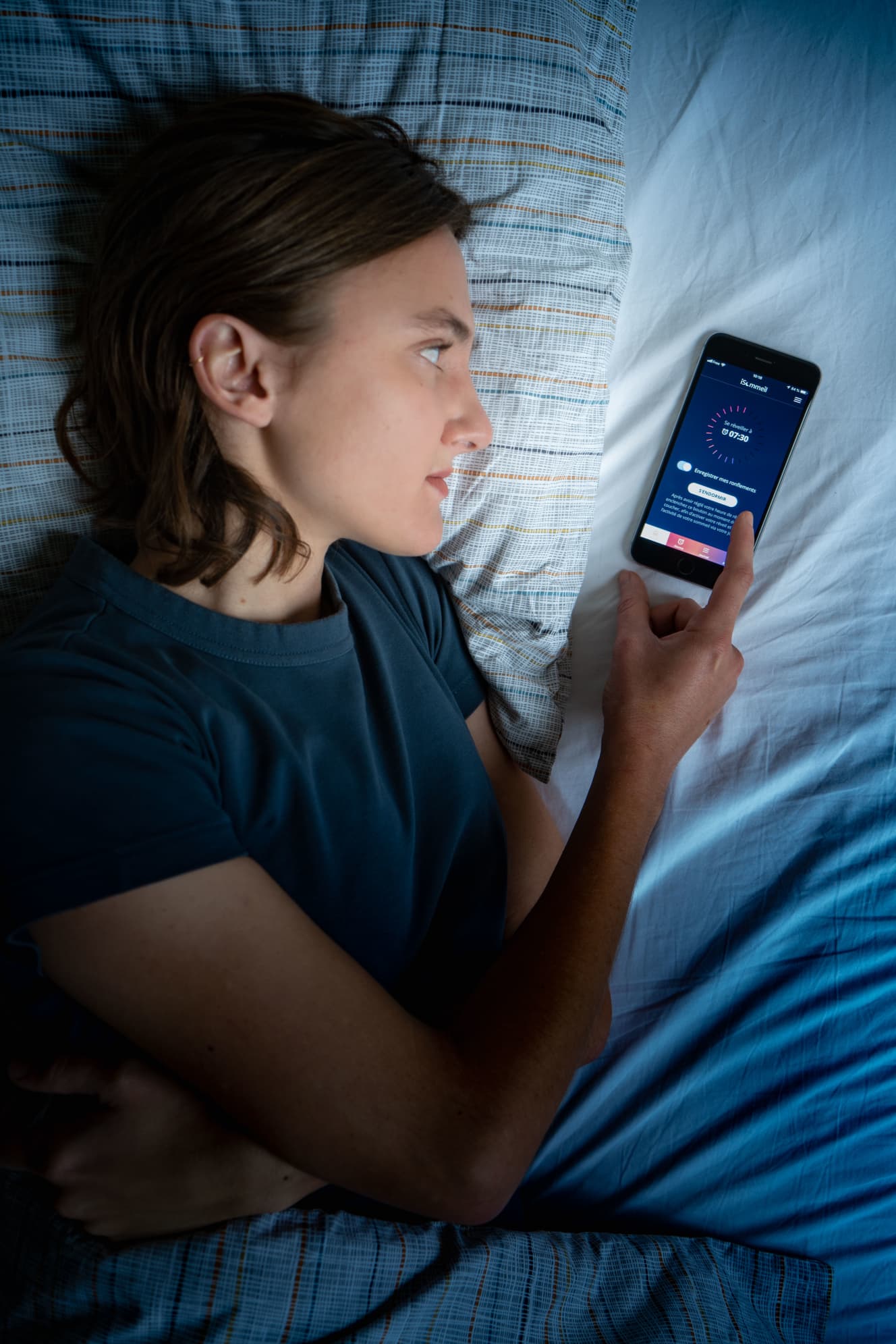
Spending more than an hour a day aimlessly scrolling on your smartphone may increase the risk of developing smartphone dementia
If you find yourself unable to let go of your smartphone even when taking a bath or going to the bathroom, you may already be addicted to your smartphone—on a straight path to smartphone dementia. However, according to Director Katsuyuki Uchino:
“There is a possibility of developing smartphone dementia if you are aimlessly looking at your phone for more than an hour.”
To improve symptoms, it’s important to intentionally create time away from your smartphone. He says to limit aimless browsing to less than an hour per day.
“When your smartphone is nearby, you end up wanting to look at it. I think some people use their phones as alarm clocks, but don’t bring your smartphone into the bedroom. Get into the habit of keeping a distance from your smartphone—for example, use an alarm clock to wake up.”
Apparently, one patient continued aimless browsing for 21 hours a day.
“As expected, I told them to reduce it to at least half, but it seemed difficult. However, if you don’t improve things during the forgetfulness stage, there’s a possibility it could develop into autonomic nervous system disorder, then depression, and eventually full-blown dementia.”
The part of the brain responsible for memory processing is the frontal lobe. If your brain becomes cluttered like a hoarder’s house, the function of the frontal lobe deteriorates.
“The frontal lobe is the center of thinking, the core of decision-making, and also responsible for judgment and emotional control. When the function of the frontal lobe declines, you may not be able to express what you want to say properly, become emotionally unstable, distracted, and lose focus.”
Long hours of smartphone use also increase exposure to blue light, which can disturb the autonomic nervous system.
According to Director Uchino, if three or more of the following items apply to you, there is a high possibility you may have smartphone dementia. If you’re thinking maybe, it’s best to get examined.
□ Your smartphone is always within reach
□ You can’t recall the names of people you know right away
□ You’ve recently forgotten how to write kanji
□ You take photos to remember things
□ You don’t research anything without using your smartphone
□ You’re always sleep-deprived
□ You lack motivation and feel disinterested
□ You’ve become inefficient with work or housework planning
Forgetfulness there might be an underlying illness hiding behind it
Director Uchino, who opened the smartphone dementia outpatient clinic hoping people would feel free to seek help, actually had another purpose for its establishment.
“There have been cases where patients came in for forgetfulness and were later diagnosed with early-onset Alzheimer’s or brain tumors.”
The difference between smartphone dementia and genuine dementia lies in whether one is aware of their forgetfulness. In true dementia, patients forget that they forgot, making them unaware of the issue.
“If others point out your forgetfulness or if your sleep and eating rhythms become disrupted, that’s a warning sign.”
If something feels off, it’s important to distance yourself from your smartphone—but more than that, seeking medical attention may bring peace of mind.

▼Katsuyuki Uchino – Director of Kanamachi Ekimae Neurology Clinic and Chairman of the Amaterasu Medical Corporation. He aims to provide care from multiple perspectives for patients whose needs cannot be addressed by medication or tests alone. He is also a certified physician by the Japanese Society of Internal Medicine, a dementia support doctor certified by the Ministry of Health, Labour and Welfare, and an occupational health physician certified by the Japan Medical Association.
Interview and text: Izumi Nakagawa PHOTO: Afro