White truffles and caviar…now “alternative ingredients” that even unaware eaters and “top celebrities” can’t spot.


No longer “fake” or “imitation”!
The allure of such luxury foods as caviar, foie gras, truffles, and sea urchin is that they make people want to try them at least once. In recent years, however, “alternatives” to these ingredients have been quietly but steadily gaining ground. Against a backdrop of soaring prices, distribution uncertainty, and ethical issues such as animal welfare and environmental impact, the demand for “alternative ingredients” is on the rise.
The evolution of these ingredients is no longer at the level of “fake” or “imitation. They look, taste, and smell just like the real thing. They are so realistically reproduced that you would not notice them unless you were told, and they are used in restaurants.
In my book “Restaurant Business” (Crossmedia Publishing), which describes the restaurant business in detail, I discussed in detail the prices of high-end ingredients and how they are used in restaurants, but due to space limitations, I was unable to touch on this theme of “alternative ingredients. However, for reasons of space limitation, we were unable to fully address the theme of “alternative ingredients. In this issue, we would like to introduce some of the representative alternative ingredients that are currently attracting attention as a “supplement” to this article.
Black Wagyu beef fillet: 10,200 yen per 100g, but 600 yen for a crossbred beef fillet!
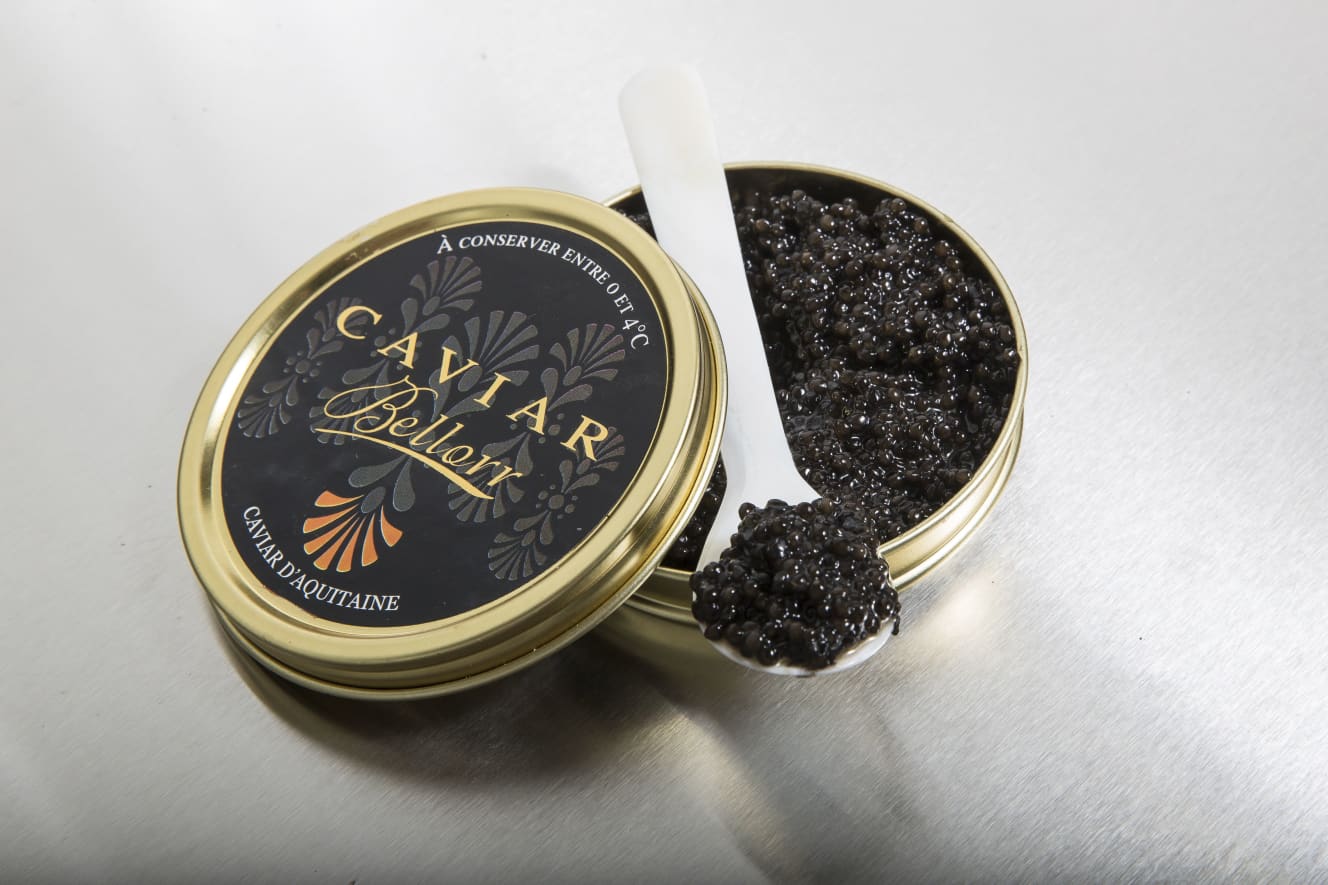
An alternative to caviar is artificial caviar derived from seaweed using molecular cooking “spheronization” technology. It reproduces the round shape of small grains, salty taste, and aroma of the sea, and looks almost the same as the real thing. After beluga, the next largest grain, the popular Oshetra caviar costs more than 10,000 yen for 30 grams, while the artificial caviar starts at around 2,000 yen for 100 grams. Lumpfish caviar, which is the egg of the lumpfish, a member of the scorpionfish family, starts at 1,000 yen for 100 g, partly because of its inferior eating quality.
Truffle oil, truffle salt, and other truffle-flavored processed foods are sometimes used as alternatives in “Truffles. Natural truffles produce their ghostly scent from the aroma of as many as 80 organic compounds. Artificial truffles, however, lack complexity because only a few of them are used. While 100 g of real fresh black truffles costs more than 10,000 yen, 100 g of truffle oil or truffle salt starts at 2,000 yen. Because they are easy to use, yet can create a sense of luxury, they have recently become popular as home seasonings, and the bewitching aroma of truffles has become “everyday” food.
Foie gras is made by enlarging the liver of geese and ducks, and its production method of force-feeding (forcing the animals to eat food) has been called into question as a form of animal abuse. Production has been banned in Italy, Finland, Poland, Turkey, and other countries, and its sale is being debated in the U.S. state of New York. The search for alternative ingredients continues, and a plant-based “vegan foie gras” that recreates the flavor of cashews by fermenting them with malted rice has appeared. The real thing costs more than 3,000 yen for 100 g, but this one costs around 1,000 yen for 100 g. Since not a few gastronomes are concerned about this product, it is likely to be used more and more in Japan in the future.
In the world of meat, too, “high quality” is being replaced. In particular, the most commonly used alternative to “Kuroge Wagyu,” which accounts for about 97% of Wagyu beef, is F1 (crossbred) beef, which is a cross between Kuroge Wagyu and Holstein beef. The fat content and appearance are similar to Wagyu, and the taste is not bad. For example, a fillet, which is a high-end part of beef, costs only 600 yen per 100 grams, compared to Wagyu beef, which costs more than 10,200 yen per 100 grams. Since yakiniku and steak restaurants claim their beef as “domestic beef,” many people eat it without noticing the distinction. If it is a lump of meat, such as steak, or ground meat, such as hamburger steak, the difference between the two is less noticeable.
In the case of marine products, red snow crab is often used as a substitute for snow crab. Honshuwai crab is a “brand-name snow crab” that is called Echizen crab in Fukui Prefecture and Matsuba crab in the San-in region, depending on the region. Red snow crab has a slightly watery flesh, but it has a strong sweetness that makes it ideal for processing. A serving of this crab costs 5,000 to 6,000 yen or more, while a serving of red snow crab costs less than 2,500 yen. Since snow crab is very popular in Japan, the cost advantage of red snow crab makes it ideal for sushi, gratin, cream croquettes, and other occasions where a “crab flavor” is required. It is not uncommon to find red snow crab even when the crab is described as “snow crab.
Lastly, I would like to introduce an alternative to sea urchin. The “sea urchin-like paste” is made from pumpkin, soy milk, seaweed, soup stock, and other ingredients to reproduce the color, texture, and aroma of the sea, and is used in vegetarian and vegan menus. It looks very realistic, tastes sweet and fragrant, and has enough power to create the presence of sea urchin as a stand-alone ingredient in a dish. It is also vegan, which is great for a chef. Real sea urchin costs around 4,000 yen for 100 g, but reproduced paste costs less than 100 yen in some cases. It is used in gunkanmaki, canapés, cold pasta toppings, and other dishes.
Technology and Ingenuity to Reproduce “Memorable Taste Components
What these alternative ingredients have in common is that they are not simply “cheap imitations. They are packed with technology and ingenuity to reproduce “memorable taste components” such as aroma, texture, and appearance. In addition, social considerations such as sustainability, animal welfare, and the “ethics of eating” are beginning to influence consumers’ choices.
There is no doubt that the deep appeal and complex flavors of the real thing are unique. However, as long as the “points that people perceive as luxury,” such as eating quality, smoothness, flavor, and texture, can be reproduced, satisfaction as a dining experience can be obtained. In the same way as the “sober-curious” who dare to reject alcohol even though they can drink it, this era of “daring not to choose genuine luxury foodstuffs” may have already quietly begun. This era may have already quietly begun.
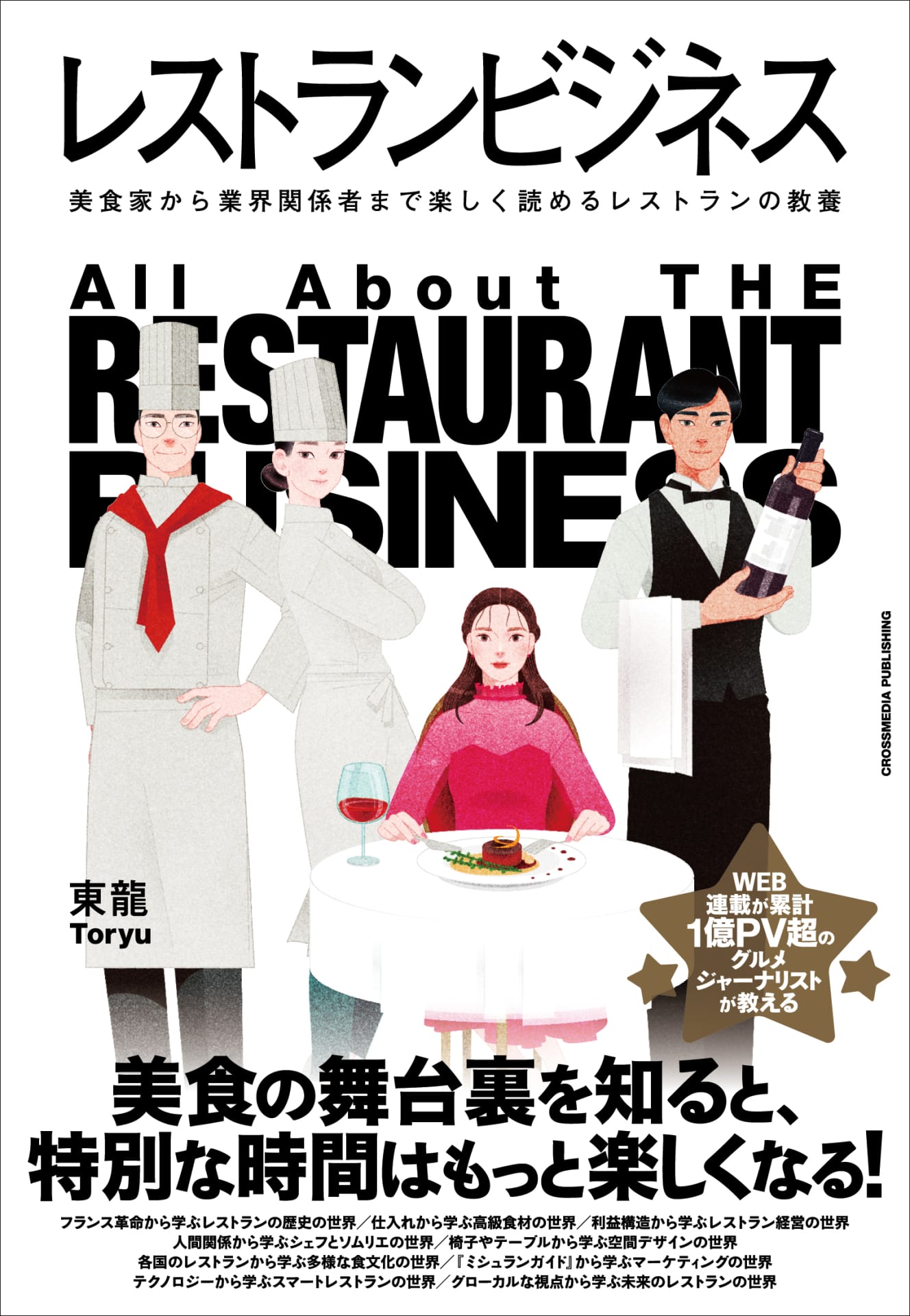
To purchase a copy of ” Restaurant Business ” (Crossmedia Publishing), click here.
Reporting and writing: Dong Long
Born in Taiwan in 1976. Winner of TV Tokyo's "TV Champion" in 2002 and 2007. He loves cooking, sweets, and alcohol, with a focus on fine dining and hotel gourmet cuisine. He writes easy-to-understand articles with his unique perspective on everything from inflammatory incidents to gastronomy and trends, and from the state of food to issues facing restaurants. He is also a judge, lecturer, producer, and consultant.
PHOTO: Afro