Overgrown with Summer Weeds — The Current State of the Amari Road 9 Years After the Scandal


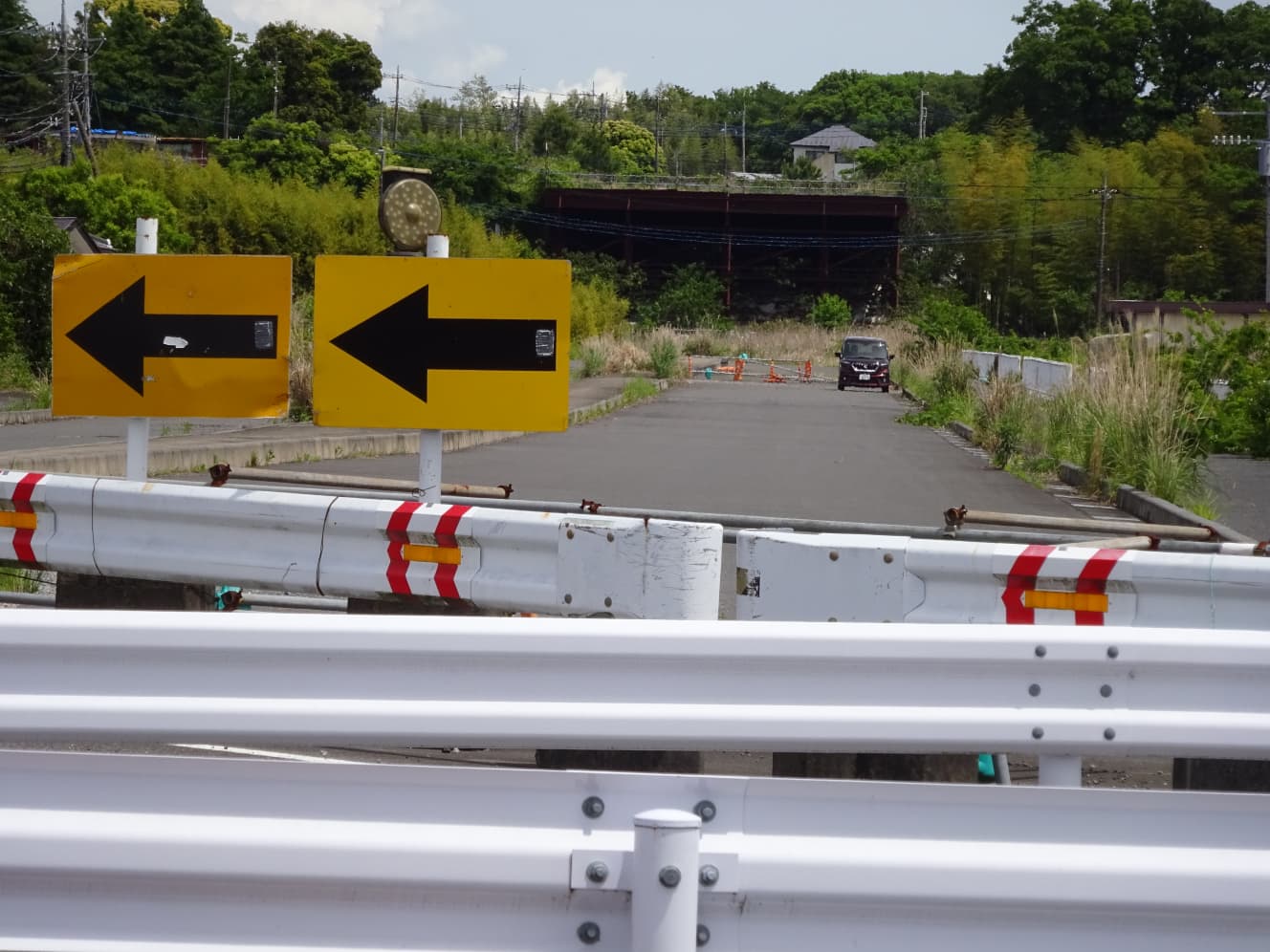
The planned construction site is overgrown with summer weeds
“We were constantly told by the neighbors, ‘The construction has stopped because of you.’ From our side, we were making legitimate demands, but honestly, being made out to be the villain by everyone is tough. We want to reach a compensation agreement with UR, though”
Chiba New Town, spreading across northwestern Chiba Prefecture, was supposed to be linked by a major artery—the prefectural road “Chiba New Town Northern Ring Road.” However, about a 450-meter section has remained unopened and neglected for years. The president of Satsuma Kogyo (now Mutsuki Kensetsu), Hiroyoshi Teradoko, who has long been blamed as the cause of the delay, spoke resignedly.
Visiting the unopened section reveals a road abruptly ending with barricades, beyond which summer weeds have overgrown the wasteland, and rusted steel structures stand forlornly. This very site was the stage of the “Amari Scandal,” which shook the political world. Teradoko himself was the person who handed 500,000 yen in cash to Akira Amari (75), then Minister in charge of Economic Revitalization, in the minister’s office. Nine years have passed since the “Amari Scandal,” but this massive public construction project remains on hold, making no progress. What is happening at this stalled construction site?
The Chiba New Town Northern Ring Road is a general prefectural road about 11 km long, starting from Inzai City and ending in Shirai City. The urban planning decision dates back to 1967. Chiba Prefecture is the project executor, and the Urban Renaissance Agency (UR) is responsible for maintaining the unopened section and negotiating compensation.
The problematic unopened section finally saw construction begin in December 2013, but work stopped again after December 2015. The reasons include an enormous volume of industrial waste illegally buried—46,800 cubic meters—and the presence of Satsuma Kogyo’s company building right next to the planned road site. To proceed with construction, all industrial waste underground must be excavated, but Satsuma Kogyo’s office and dormitories obstruct the work. Compensation negotiations between UR and Satsuma Kogyo have been protracted, and this is where Akira Amari came into the picture.
In January 2016, “Shukan Bunshun” reported suspicions that Amari received cash from a former general affairs staff member at Satsuma Kogyo. It is alleged that Satsuma Kogyo lobbied Amari to gain an advantage in compensation talks with UR. The compensation of about 220 million yen received by Satsuma Kogyo from UR in August 2013 to relocate and rebuild the office was reportedly secured through Amari’s mediation. The scandal led to public criticism, and Amari resigned as Economic Revitalization Minister. Although charged with violation of the Act on Punishment of Acts by Public Officials Relating to the Receipt of Money, Amari was eventually not prosecuted. Despite this, road construction remains halted.


This time, the UR side refused the offer
Just before the Amari scandal broke, an endless battle had already begun at the site between UR (Urban Renaissance Agency) and Satsuma Kogyo.
The 220 million yen compensation was meant to cover rebuilding the company offices around Satsuma Kogyo’s property, but the industrial waste buried underground at the relocation site blocked construction, stalling the rebuild. In July 2015, UR proposed a complete relocation for Satsuma Kogyo to move entirely to a different location, but the two sides couldn’t agree on additional compensation, causing the construction to stop again.
In July 2017, UR made a final offer of 110 million yen in additional compensation, but no agreement was reached. Frustrated, UR sued Satsuma Kogyo seeking confirmation that they had no obligation to pay more than that amount, but UR lost the lawsuit. Meanwhile, Satsuma Kogyo filed for civil mediation, but UR never attended, so it failed.
Since July 2015, this legal tug-of-war continued: UR firmly refused to pay more than 110 million yen, while Satsuma Kogyo insisted it was insufficient.
President Teratoko of Satsuma Kogyo vented frustration, saying, “It all went wrong because UR promised to secure land adjacent to our site as the relocation destination, but didn’t deliver. Without that adjacent land, rebuilding on our current site is impossible due to buried industrial waste. Time passed with no relocation, and the 220 million yen compensation became taxable, costing us millions more in taxes.
Moreover, relocating requires buying at least 1,000 tsubo (about 3,300 sqm) of land. With only 110 million yen offered, it’s impossible. We asked for about 290 million yen. UR got stubborn, but we’re also running at a loss.”
Although exhausted by constant pressure from neighbors blaming them for the stalled road, the company finally decided to accept UR’s offer. “I told UR in March 2021, ‘Fine, 110 million is okay, let’s end this hassle,’” Teratoko said.
But UR rejected the offer, citing that a third party had registered provisional rights on Satsuma Kogyo’s land.
“The site where our office stands has been leased for decades since my father’s time. An NPO representative signed a contract to buy the land from the landlord and filed provisional registration. UR says they cannot finalize the compensation contract until talks with this representative conclude,” explained Teratoko.
As negotiations stalled, new problems surfaced. When asked about restarting construction, UR replied:
“Since the suspension, construction conditions have changed. We are currently discussing with related organizations about how to proceed smoothly and methods of construction.”
Regarding the compensation issue with Satsuma Kogyo, which affects resumption, UR expressed:
“We believe the issue will be resolved once both parties agree on compensation terms and contracts are fulfilled.”
About the third party with provisional registration, UR added:
“Depending on construction methods, negotiations with landowners or others may be necessary for land use required by the project.”
UR’s response indicates significant hurdles before work resumes. Local residents can only hope the project finally moves forward—and hope that politicians do not re-enter the picture.
Reporting and writing: Shinsuke Sakai PHOTO: Courtesy of Hiroyoshi Teradoko (3rd photo)