Twin Stars of the Slopes — Yuna and Haruka Kasai Dream of Olympic Podium and Kimigayo
Won gold and bronze medals in the combined event at the Nordic World Championships in February this year.


“I ended up becoming the best—even among the boys.”
Two new heroines have emerged in the world of Japanese skiing. At the Nordic World Ski Championships this February, Yuna Kasai won gold in the women’s Nordic combined event, while her twin sister Haruka also made the podium with a third-place finish. The Kasai sisters, fraternal twins born and raised in Sapporo, Hokkaido, are not related to ski jumping legend Noriaki Kasai. Now 21 years old, they became captivated by ski jumping as children after watching their aunt—herself a ski jumper—compete, and soon joined a local sports club.
Yuna reflects on that time:
“My aunt looked so cool when she jumped. The first time I jumped was from a small hill at Okurayama. I was terrified when I stood on the start platform, but somehow I managed to jump pretty smoothly”
Haruka followed with a sheepish smile:
“I couldn’t jump for six months.”
In junior high, the sisters switched to Nordic combined, which involves both ski jumping and cross-country skiing. While at Tokai University Sapporo High School, they both rose to become top competitors in Japan.
“As part of our training, we did cross-country skiing, and I once entered a Nordic combined competition in elementary school. I ended up beating even the boys and came in first. That thrill of crossing the finish line stuck with me, and I knew I wanted to do combined events in junior high.” (Yuna)
“I didn’t want to do combined at first, but when we scored a one-two finish together in our first year of junior high, it suddenly became fun.” (Haruka)
In 2022, the sisters enrolled at Waseda University. At their first World Championships the following year in Planica, Haruka won a bronze medal—Japan’s first in women’s Nordic combined—boosting her confidence and setting her sights on the Olympics, just like her sister.
However, women’s Nordic combined is still not an Olympic event.
“At one point, there were rumors it might be included in the Beijing 2022 Games, and people were saying it would definitely be added to the next Games in Milan-Cortina. But it wasn’t. I was honestly devastated when I found out. They say it’s because the top athletes are concentrated in just three countries—Norway, Austria, and Germany. If there aren’t enough top athletes from around the world, it’s hard to get TV viewership.” (Haruka)
But if athletes from more countries, like Japan and the U.S., begin to succeed, it could help make the sport more global—and increase its chances of Olympic inclusion.
“Exactly. This year, it wasn’t just us—an American athlete also ranked high. Even though there’s no Olympic stage for us right now, we’ll keep working to achieve strong results at World Championships and World Cups. That way, we’ll be ready for the day it finally becomes an Olympic sport.” (Yuna)
Prepared to compete on the front lines
The sisters, born just 30 seconds apart, have done everything together since childhood. Though they’re fraternal twins, their facial features are quite similar, and their uncanny synchronicity includes things like accidentally buying the same book when out shopping or blurting out the same phrase at the same time. The elder sister, Yuna—who has a slightly more laid-back demeanor compared to her younger sister—says:
“We’ve always been together, so we never fight. But our personalities are a little different. Haruka is super competitive. If I had to describe her as an athlete in one word, it would be strong.”
The sisters belong to the Waseda University ski club, not a corporate team. Compared to athletes in Olympic disciplines, they receive relatively little financial support from the Ski Association of Japan. As a result, for their overseas competitions between November and March, they rely not only on support from sponsors they’ve found themselves, but also have to cover a portion of the costs out of pocket just to be able to compete.
Since ski jumping and cross-country skiing require different skis, boots, and wear, they constantly carry close to 40 kilograms of gear—resulting in excess baggage fees every time they board a flight.
“Travel is tough. Between the two of us, it costs about 10 million yen (roughly $63,000) per season. That’s why it’s so important not just to win prize money by getting good results, but also to showcase ourselves to secure sponsors for the next season.” (Haruka)
During the season, they mainly stay in Europe. On their rare days off, they either rest or go sightseeing.
“I really like Oslo (in Norway). Sometimes the food doesn’t suit us, so we always carry a rice cooker and Japanese rice. We cook in our hotel room and make rice balls to eat between ski jumping and cross-country events. Before a competition, I just want to eat rice.” (Haruka)
Next year, when the Milan-Cortina Winter Olympics—an event they can’t yet compete in—take place, the sisters will also graduate from university. Yuna reflects:
“Standing on the podium with my sister at this year’s World Championships was a major milestone. It gave me the confidence and determination to keep competing at the top level. If our sport ever becomes an Olympic event, I want to stand on the podium and hear ‘Kimigayo’ play.”
In the past, the Ogiwara brothers, Kenji and Tsugiharu, dominated the Nordic combined. Now, a quarter-century later, one can only hope for the day when the Kasai sisters, too, raise the Japanese flag on the Olympic snow.
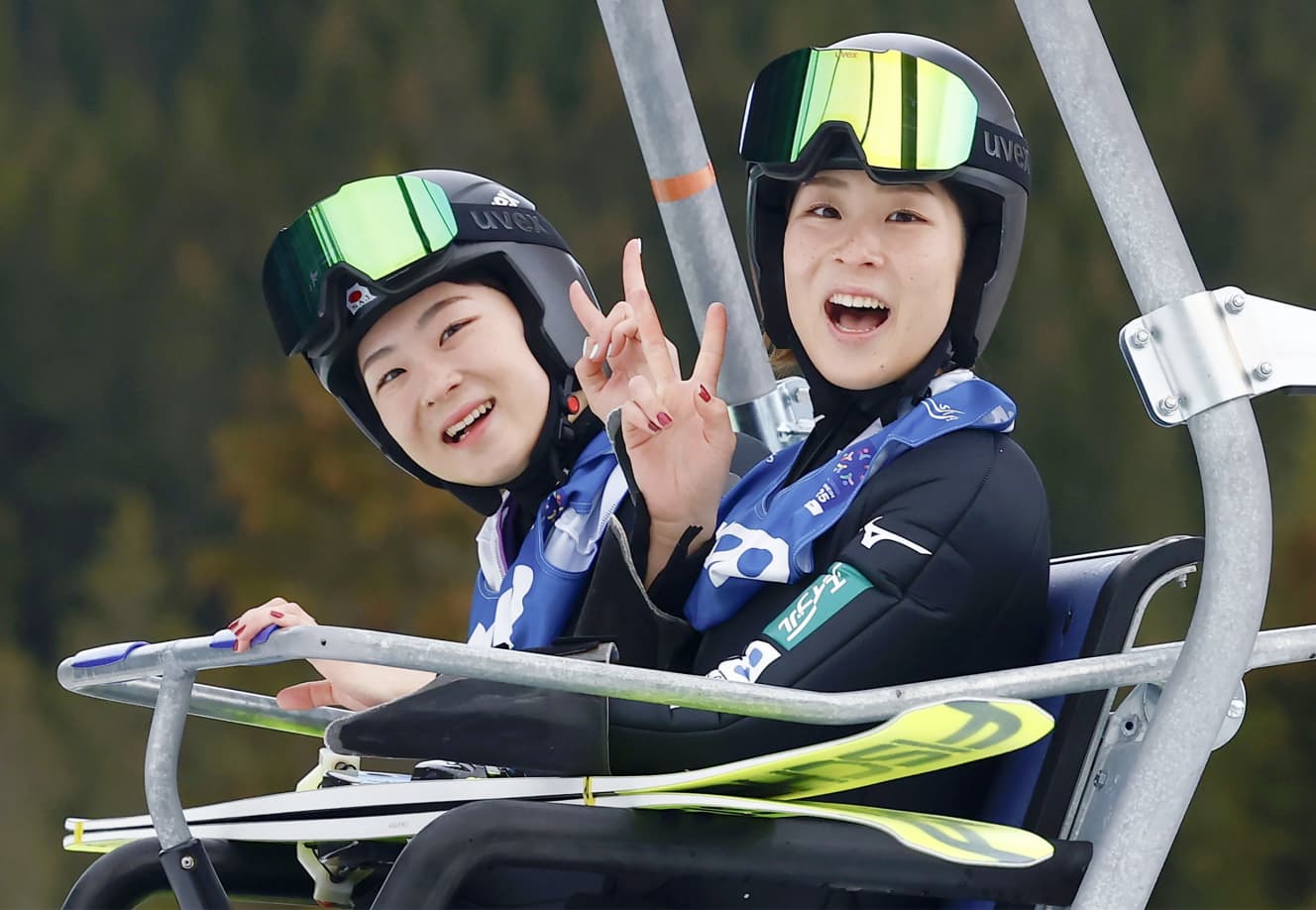


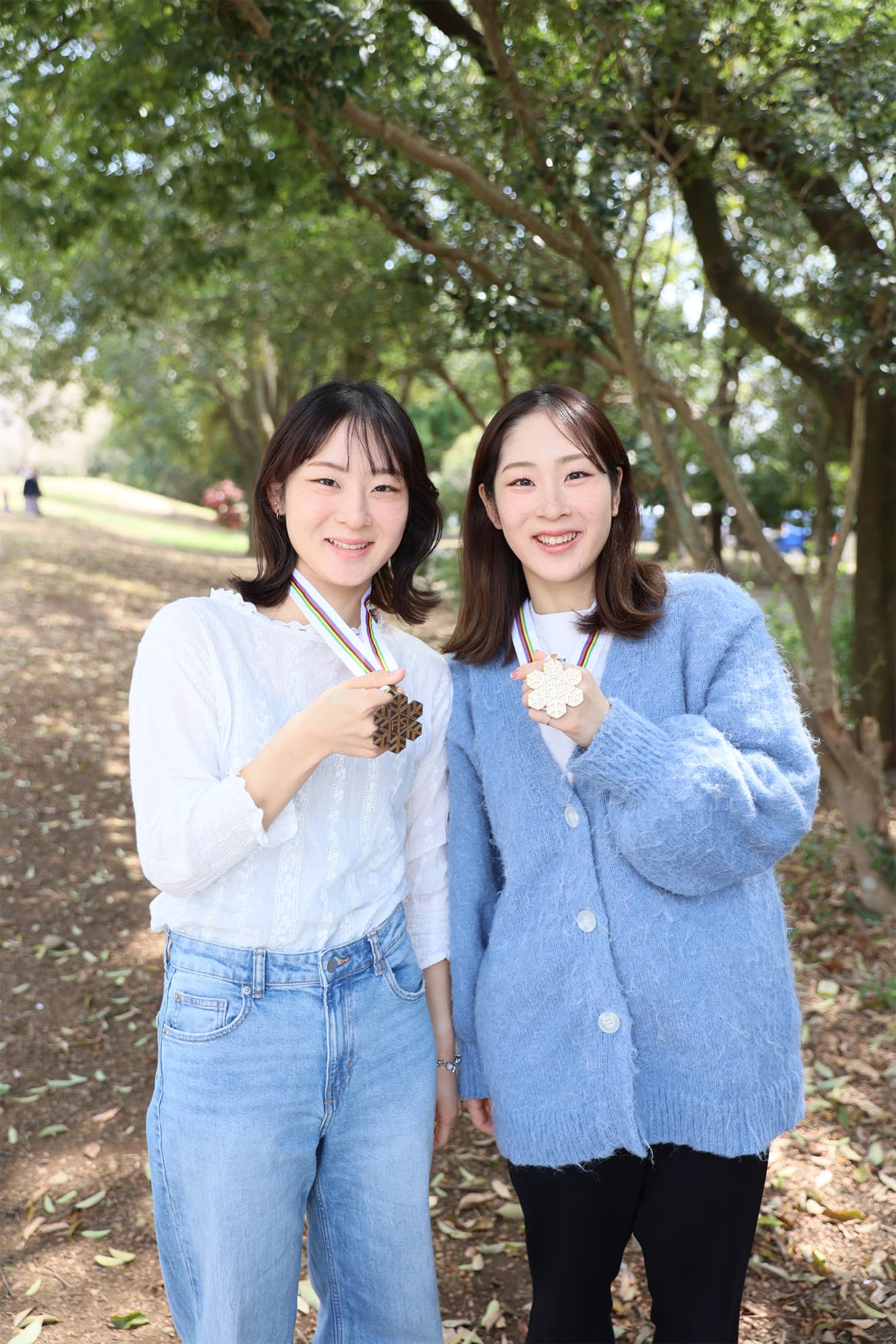 Unpublished Photo: Yuna & Haruka Kasai — The New Twin Heroines Shining in the Ski World. “Someday, we want to stand on the Olympic podium and hear ‘Kimigayo’ play!
From the June 20, 2025 issue of “FRIDAY”
PHOTO: Takehiko Kohiyama (1st photo) Kyodo News (2nd photo)