The Rising Cost of Mountain Rescues and What Can Be Done


Disaster prevention helicopters cost “400,000 to 500,000 yen” per hour for fuel alone.
After a Chinese climber called for rescue twice while climbing Mt. Fuji during the off-season—and amid a series of similar incidents—Yamanashi Prefecture has begun considering establishing an ordinance to charge for rescue operations using disaster relief helicopters. According to Shizuoka Prefecture, the fuel and related costs for operating such helicopters amount to 400,000 to 500,000 yen per hour.
“When rescue operations are carried out by public agencies like fire departments or police, the costs are covered by taxes, and the person being rescued does not bear any expense. The only exception is Saitama Prefecture, where disaster helicopters are already subject to a fee of 8,000 yen per five minutes to cover fuel costs.”
So explains lawyer Yasushi Mizote, who has also climbed 7,000-meter peaks such as Aktaši in the Himalayas.

Currently, there are very few private companies that operate rescue helicopters, so rescues are usually carried out by fire department or police helicopters, which are free of charge except for Saitama Prefecture’s disaster relief helicopter.
Given that, it’s no wonder some people might feel tempted to call for a rescue as if calling a taxi.
However, it’s not just helicopters that respond to rescues. If the rescue team consists of police or fire personnel, the costs are covered by taxes.
“However, if there are not enough police or fire personnel available, and a request is made by the lost individual or their family, private individuals affiliated with the local mountain rescue council may be dispatched. In such cases, a daily wage must be paid to those private individuals, and the cost is billed to the lost person or their family.”
In private rescues, there are cases where private individuals affiliated with the mountain rescue council are dispatched (paid), members of the mountaineering club the lost person belongs to, friends, or acquaintances participate (usually unpaid), or a commercial rescue company is hired (paid).
“Depending on the region, if you request help from a private individual affiliated with a mountain rescue council, you must pay a daily wage of 30,000 to 50,000 yen. Friends and acquaintances usually work as unpaid volunteers, but lodging and transportation costs are often billed to the lost person or their family.”
For example, if five people search for five days at 30,000 yen per day, the labor cost alone amounts to 750,000 yen.
“Public agencies typically end their search after about 4 to 7 days. Since mountain rescue council members support the police, if the police end the search, the mountain rescue council members do as well.
After that, the only options left are searches by friends and acquaintances, or requesting help from a commercial rescue company. If you hire a private company, the costs can be very high.”
Mr. Mizote recommends taking out mountain insurance not only for search and rescue costs, but also to cover expenses related to injuries sustained while hiking (however, hospitalization and treatment costs vary depending on the type of insurance and additional coverage).
Discuss charging for ambulances before charging for disaster-prevention helicopters
What about overseas? One might assume that rescue costs are firmly charged.
“In most countries overseas, public mountain rescue services are free. However, in many of those countries, ambulances—regardless of location—are fee-based.
In Switzerland, rescue helicopters are charged across the country (and ambulances are also charged), so mountain rescue via helicopter also comes with a cost. As a result, many citizens there have insurance coverage.”
In Saitama Prefecture, where disaster relief helicopters are fee-based, the number of dispatches decreased from 41 in the four years before the ordinance took effect to 24 in the four years after. The prefecture attributes this reduction not only to the introduction of fees but also to ongoing accident prevention campaigns, such as distributing flyers warning about dangerous areas.
“Generally, rescue helicopters include prefectural disaster helicopters, municipal disaster (fire department) helicopters, and police helicopters. Legally, municipal disaster helicopters and police helicopters are free of charge.
In Saitama, both prefectural disaster helicopters and police helicopters are available. The prefectural disaster helicopter is fee-based, while the police helicopter is free. As a result, whether a rescue incurs a cost depends on which helicopter is dispatched, leading to a sense of unfairness.”
Mr. Mizote says that rather than making disaster relief helicopters fee-based, the discussion should first focus on charging for ambulance use.
“In terms of people using them like taxis, it’s overwhelmingly more common with ambulances. Also, ambulance dispatches are reaching their limit nationwide.
The issue of charging for rescue operations includes ambulances and helicopters, but making ambulances fee-based is the more pressing matter. Legally, it’s not feasible to draw a line on a map separating mountainous areas from non-mountainous areas, so when considering charging for helicopter rescues, the discussion must also include urban areas.”
He also points out that accidents such as falling rocks, volcanic eruptions, and mudslides in the mountains are both natural disasters and mountain accidents, and there needs to be discussion about whether rescue helicopters should be fee-based in the event of a major rockfall or eruption on Mt. Fuji.
“Legally, Mt. Fuji is not entirely closed off during the year (though some trails may be), so a ‘fee-based system for helicopters during the off-season’ doesn’t really hold up. Also, if only the prefectural disaster helicopters are charged while other helicopters remain free, then making just one of them fee-based doesn’t carry much meaning—this presents another issue.”
Only 100 people per day can climb Mount Whitney, the highest peak in the U.S.! Reducing the number of climbers leads to fewer mountain accidents.
Still, why is mountain rescue abroad free of charge, whether conducted by public agencies or private organizations?
“In most foreign countries, mountain rescue activities are carried out free of charge by public institutions or volunteer groups. Globally, many popular mountains enforce entry restrictions through permit systems and other methods. Since the number of climbers is not that high, I believe rescue costs aren’t as big of an issue.”
For example, in the U.S., only 100 people are allowed to climb Mount Whitney, the highest peak in the country, per day. Mont Blanc in France limits climbers to 214 people per day. On Mount Fuji’s Yoshida Route, gates are closed once the number of climbers exceeds 4,000 per day—but the scale of entry differs significantly.
“Many countries restrict access to mountains from the standpoint of environmental conservation by requiring permits. In the U.S., unauthorized climbers can be arrested on the spot by park rangers. For popular mountains and trails, annual entry permits are issued around February, and some mountains reach their capacity almost immediately.”
The Milford Track in New Zealand, often called the most beautiful trail in the world, is limited to fewer than 100 people per day. When Mr. Mizote walked it, there were times when he couldn’t see anyone in front or behind him.
“If the number of accidents and the cost of rescues like helicopter dispatches are a problem, restricting the number of climbers through a permit system is more effective.
On Mount Fuji, climbers walk in long lines along the trail. If a rockfall occurs in such a place, the likelihood of someone getting hit is very high. If the number of climbers is halved, the number of accidents will also be halved.”
Last year, there were 59 rescue cases on Mount Fuji, 8 of which involved bulldozers or helicopters.
It’s frustrating to hear stories of people climbing Fuji in shorts and T-shirts, only to become immobile near the summit due to the cold and then call for rescue.
“Most accidents on Fuji happen because beginners, inexperienced people, and tourists climb it. If prior climbing permits were required, people wouldn’t be able to just decide to climb on a whim as part of their sightseeing.”
Starting this year, Yamanashi Prefecture has designated Fuji Rangers as fixed-term prefectural employees. They now have the authority to deny entry at the 5th Station to those who are poorly dressed or lack sufficient gear. Perhaps this year, there will be no irresponsible climbers needing rescue because they couldn’t move due to the cold.
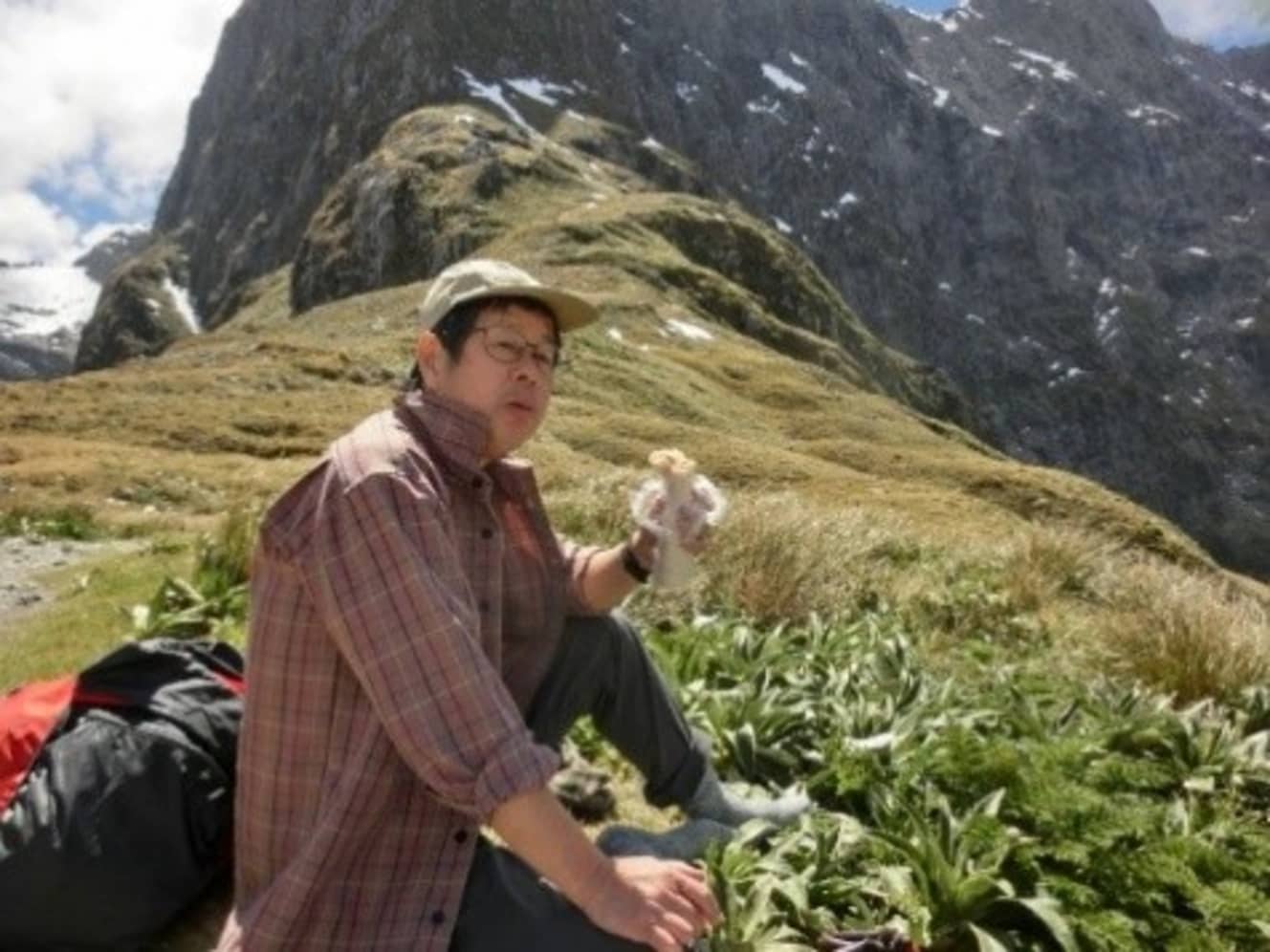
▼Yasushi Mizote – Attorney. He serves as a specialist investigator at the National Mountaineering Training Center and as a board member of the Japan Mountain Search and Rescue Research Institute. He is also a mountaineer himself, having climbed 7,439-meter Mount Pobeda on the border of China and Kyrgyzstan, and 7,016-meter Aktaşi Peak in the Himalayas, among others. His publications include “Legal Basics for Mountaineers” (Yamakei Shinsho) and more.
Interview and text by: Izumi Nakagawa PHOTO: Kyodo News