Shingo Suetsugu’s Enduring Challenge at 45, Pursuing 10.82 Seconds Despite Injury
FRIDAY Sports Nonfiction


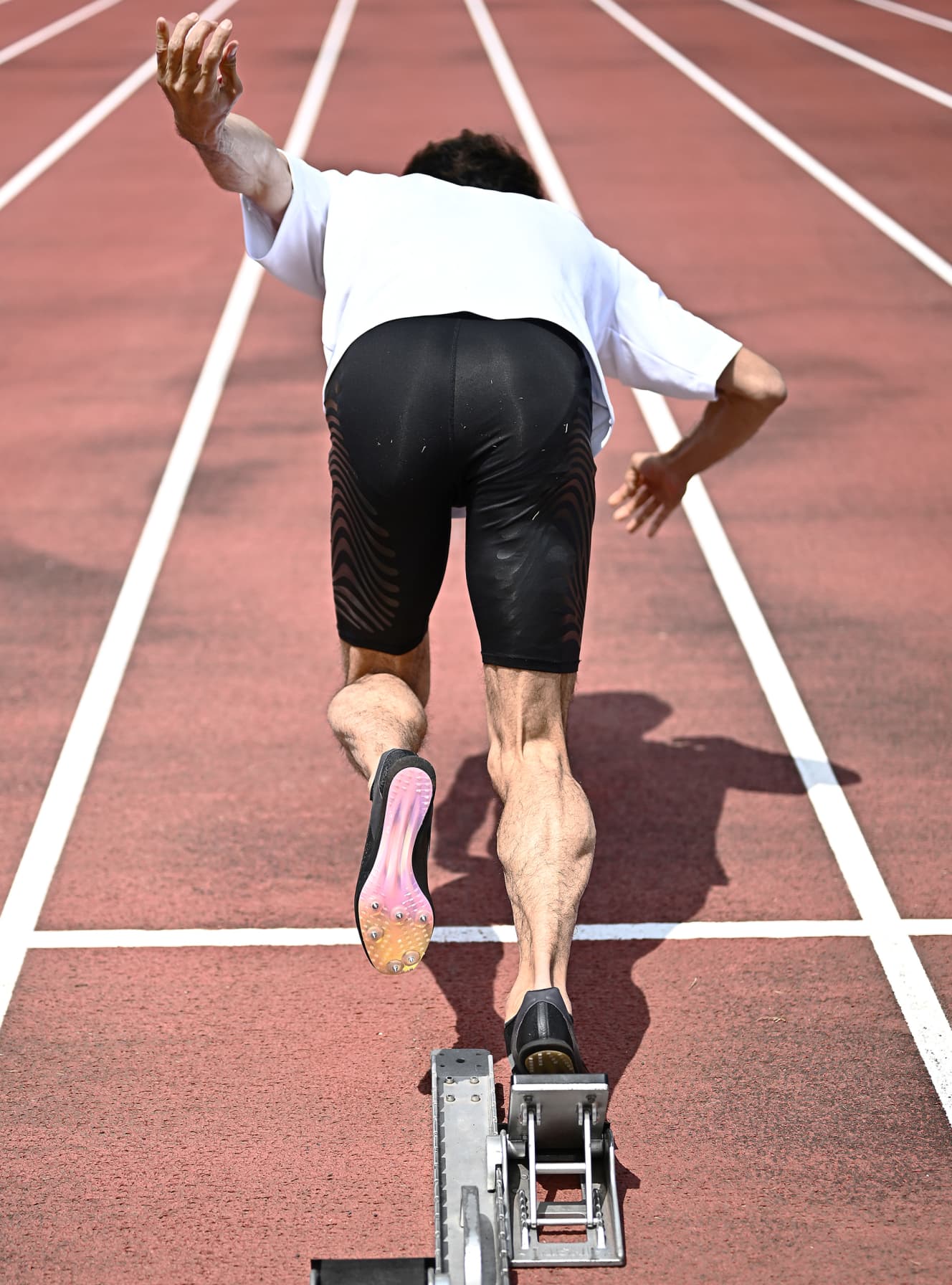
On May 4th, after finishing his first race of the season (100m) in Sano City, Tochigi Prefecture, Shingo Suetsugu (45) summed up his performance with, “So slow!”
“I was aiming for 10.5 seconds, but ended up with 10.86. However, it’s like I was running in sixth gear all along on a bike — if I can increase my cadence from here, I feel my running level will improve. Well, since I’m doing something unprecedented, I don’t even know if it’s good or bad myself,” he said.
It’s no surprise that many people find it remarkable that a top runner, who won Japan’s first sprint medal (bronze) in the men’s 200m at the 2003 World Championships over 20 years ago, is still active today.
However, Suetsugu only took about three years off after winning a silver medal in the 4x100m relay at the 2008 Beijing Olympics and has never once mentioned retirement.
Though he couldn’t participate, he declared last November in Tokyo his intention to challenge the World Championships scheduled for this summer (starting September 13).
Why he chose this tough challenge
On May 17, at his second race of the season—the Earth Grand Prix, which he hosts himself—Suetsugu clocked 10.82 seconds and confessed, “I was struggling with bunions on my left foot after the first race.”
“When I pressed hard on the ground, it hurt, and until the day before the race, I could only wear sandals. But it wasn’t a muscle strain, and I have the technique to cover for injuries like this. The proof is that my time barely changed from the first race. That’s where I see the potential.”
Suetsugu’s 200m Japanese record of 20.03 seconds set in 2003 still stands unbroken. So why does this already accomplished legend continue to challenge himself?
“I was scared to publicly aim for the World Championships. Of course, I worried, ‘What if I fail?’ and I have things to lose. But my close friends told me, ‘That’s so you,’ and I myself still have confidence, both mentally and physically, that I can run fast. Also—at this age, I want to erase the question marks around running and break that fixed mindset.
Originally, running should be fun, but because Japanese people are serious, they feel obligated to produce results, and become too stiff. Part of me wants to seriously confront this dark side of Japanese sports culture.”
What pushed him forward was the Kyushu Kyoritsu University Challenge held in Fukuoka on November 3 last year. The moment he lost to a high schooler in the 100m, without even checking his time, the thought “I want to aim for the World Championships” suddenly came over him.
Suetsugu, who has taken on many challenges before, also admitted, “This is the first time I’m challenging myself purely for my own sake.”
“In my twenties, I ran thinking only about winning on the world stage. It was for my country, for my company, and because of various obligations, I had no choice but to do so. As a result, I won medals at the World Championships and the Olympics.
But if I felt any benefit or reward from that, no—I don’t remember ever being told words that affirmed my career as an athlete.
At the time, I couldn’t fully come to terms with that situation. After the Beijing Olympics, I had to distance myself from athletics. There were times when my hands trembled, and I couldn’t drive, and I even thought, ‘Am I slowly heading toward death?’
Of course, I’m proud to have won medals, but life became difficult. Now, results are secondary—I don’t care what anyone says—I just want to enjoy the challenge.”
Seeking more than just tangible results
What he seeks is not just visible results
In 2015, he left the sports company he had belonged to, and in 2018, he established “Eagle Run,” a community connected through running that does not focus on winning or losing. Besides running classes, he has been active as a professional runner.
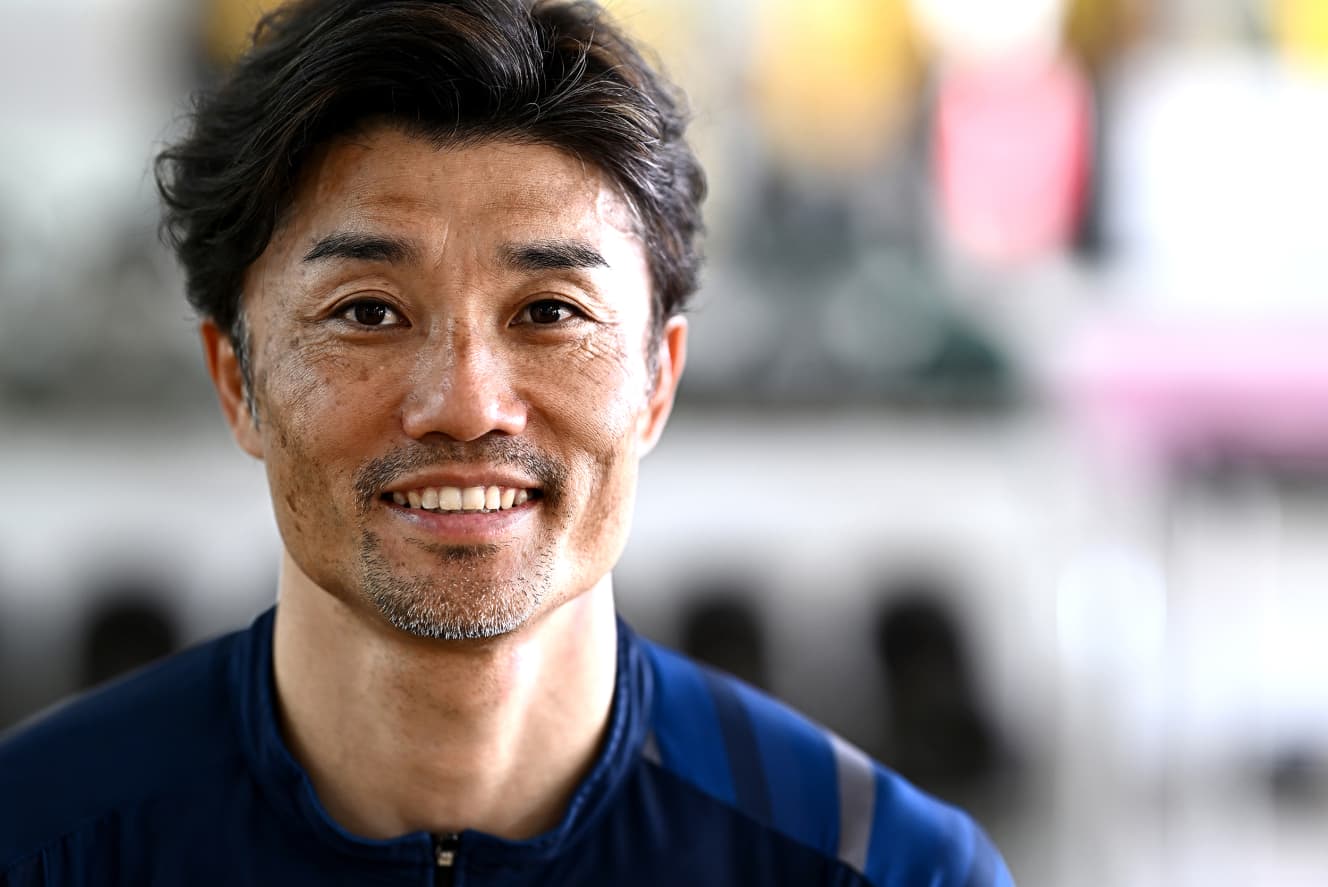
At his peak, his sharp, intense gaze was intimidating, keeping people at a distance, but now he looks somewhat joyful.
“Of course, I get frustrated because I’m not running good times. But thanks to physical training, my muscle output has nearly doubled compared to last year. My stride length has improved, so it depends on the condition of my legs, but the key is how much I can increase my pitch (cadence).
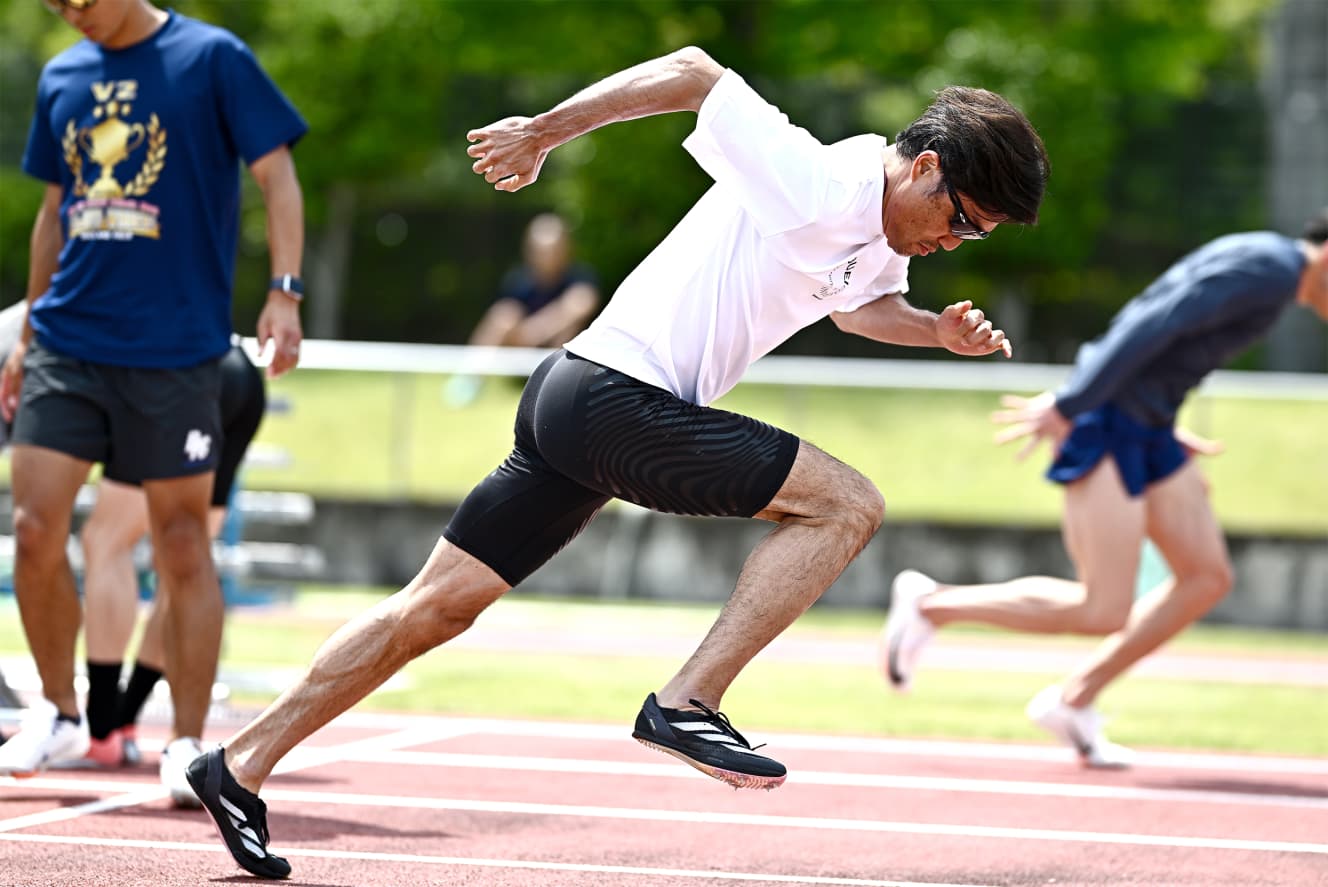
When I was younger, I used all my energy to run, but now I can increase output by using techniques like leveraging gravity or applying the principle of a lever, without using as much strength as before. To put it simply, I reduce the number of steps, increase stride length, and run as if I’m bouncing. Doing this takes unnecessary tension out of my body, so I think the pain decreases.”
Although he didn’t qualify for the World Championships, what Suetsugu seeks is not just visible results.
“What is the goal of my challenge? It might be a long battle. Ordinary athletes wouldn’t take on such a challenge because they might show an unflattering side of themselves. But I’ve left that behind. I hate clinging to the past. I’m not seeking a place to shine again; rather, I want to express myself through running. So ultimately, it doesn’t matter where I run.”
No matter what the result is, “I don’t care.”
He turned 45 on June 2nd. I wondered if there are moments when continuing to run feels tough for him.
“On race days, I feel both ‘I’m looking forward to this’ and also ‘How long will I keep doing this?’ When it’s time to actually run, I can’t hold back at all because of my personality. After finishing the race, I think I’ll understand the answer to why?”
Currently single, Suetsugu lives between two places—Kanagawa and Tokyo. When in Tokyo, he takes a walk every morning around the National Stadium. Both the Japanese Championships in July and the World Athletics Championships in September will be held there.
“Since the stadium was rebuilt, I haven’t run there even once yet. No matter what the result is, I’m doing this 100% by my own will, so I don’t care. I’ll just keep asserting myself until the very end.”
I have the confidence, both physically and mentally, that I can run fast


From the June 20, 2025 issue of “FRIDAY”
Interview and text by Masao Kurihara: Masao Kurihara Photography: Tsutomu Kishimoto (PICSPORT)