The building is deteriorating and the use of the repair reserve fund is unclear… Fight against “dictatorial management association” erupts at a resort condominium


Residents of the condominium called “North Korea of Shibuya” overthrow the “dictatorship” of the board of directors, which had continued for nearly 30 years, after a 1,200-day struggle! –The story is like an act of TBS’s “Sunday Theater”. It was like an episode of TBS’s “Sunday Gekijo,” a drama that took place in the real world.
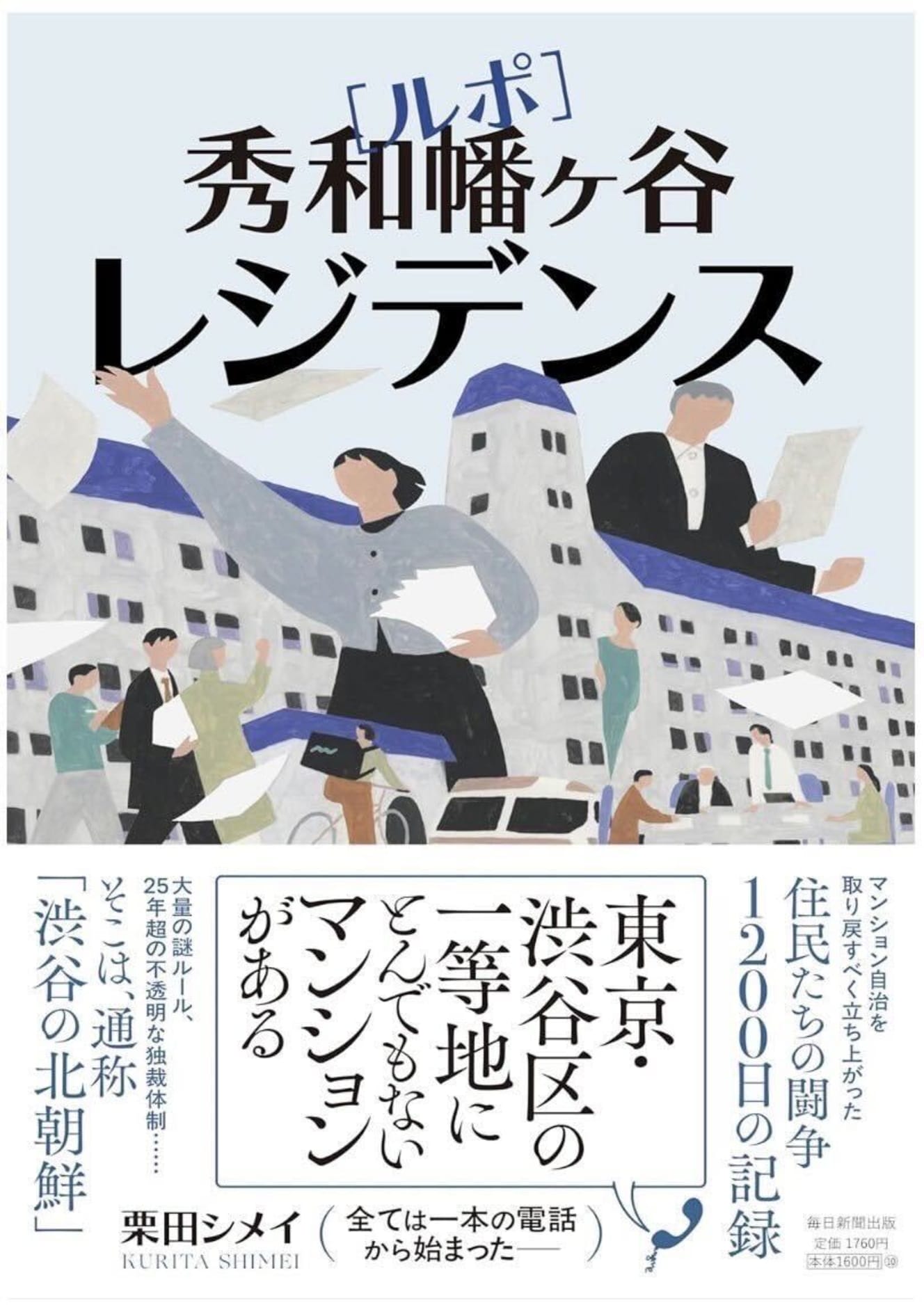
Nonfiction writer Shimei Kurita’s book “Reporto Shuwa Hatagaya Residence” (Mainichi Newspaper Publishing Co., Ltd.), which covers the whole story, has been attracting public attention, with 20,000 copies in its third printing within a month of its release.
Click here to read ” Reporto Shuwa Hatagaya Residence” (Mainichi Shimbun Publishing )!
According to Mr. Kurita, the book received a particularly strong response from readers who questioned his views on the self-righteous attitude of Mr. Yoshino, the president of the board of directors, and Mr. Oyama, the superintendent (both pseudonyms). Mr. Kurita reveals the untold episode that led him to write the book.
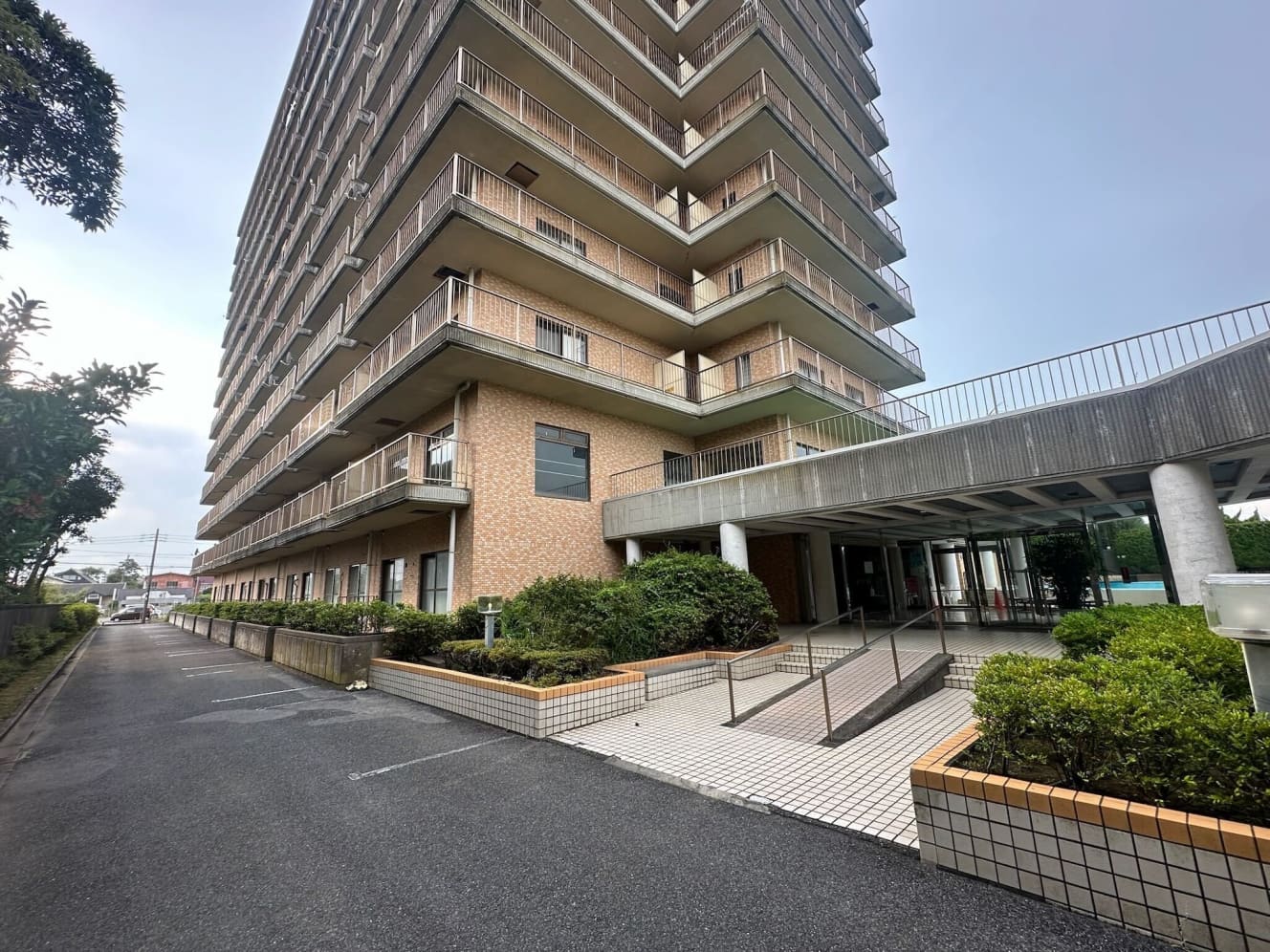
Mysterious rules that torment residents
It all started with a two-page article he contributed to the August 14, 2020 issue of “FRIDAY. Testimonies about the mysterious rules of the “dictatorship condominium” kept coming in, and as we proceeded with the interview, we soon learned that the “bad reputation” of Shuwa Hatagaya Residence was highly certain. The “bad reputation” was as follows.
1. 10,000 yen is charged for moving-in and moving-out expenses if you let your relatives or acquaintances stay overnight.
2. Care providers and babysitters are not allowed in or out after 5:00 p.m. on weekdays and on Saturdays and Sundays.
3. When I called for an ambulance at night after experiencing heart pains, I could not contact the management office and the ambulance crew could not enter the room.
4.Delivery staff such as Uber Eats is denied entry
5. When I tried to rent out a room I had purchased, the management association imposed unreasonable conditions on me, saying, “You can’t (rent) to foreigners or elderly people.
6. When purchasing a condominium, there was also an interview by the management association.
7. When moving out, their belongings were checked.
However, if the board of directors is correct in its assertion that “the bylaws are based on the majority power of attorney,” only 5 and 6 of these “bad rumors” have the possibility of coming into contact with the law (the board of directors later denied this in an interview, saying that this was not the case). (The board later denied that this was the case.) This was a matter of concern for us as we proceeded with our interview.
General meeting that was never held
It was necessary to objectively interview the residents to corroborate their emotionally charged words. One of the major sources of our judgment was a resort condominium, “Diapalace Shirako No. 2,” located in Shirako-cho, Chiba Prefecture, near Kujukuri-hama Beach.
Why did covering Diapalace Shirako No. 2 lead to understanding the actual situation of Shuwa Hatagaya Residence? In fact, Chairman Yoshino, who held real power at Shuwa Hatagaya Residence for about 25 years, had established a similar long-term administration at Shirako.
It is no exaggeration to say that the situation was as bad as, or even worse than, that in Hatagaya. In the case of the Milt’s condominium, there was a clear defect. The regular general meeting, a forum for dialogue between residents and the management association, had not been held for 23 years since President Yoshino took office. After the intervention of the police and lawyers, the general meeting was finally held, but it was so disrupted that a riot broke out in some areas.
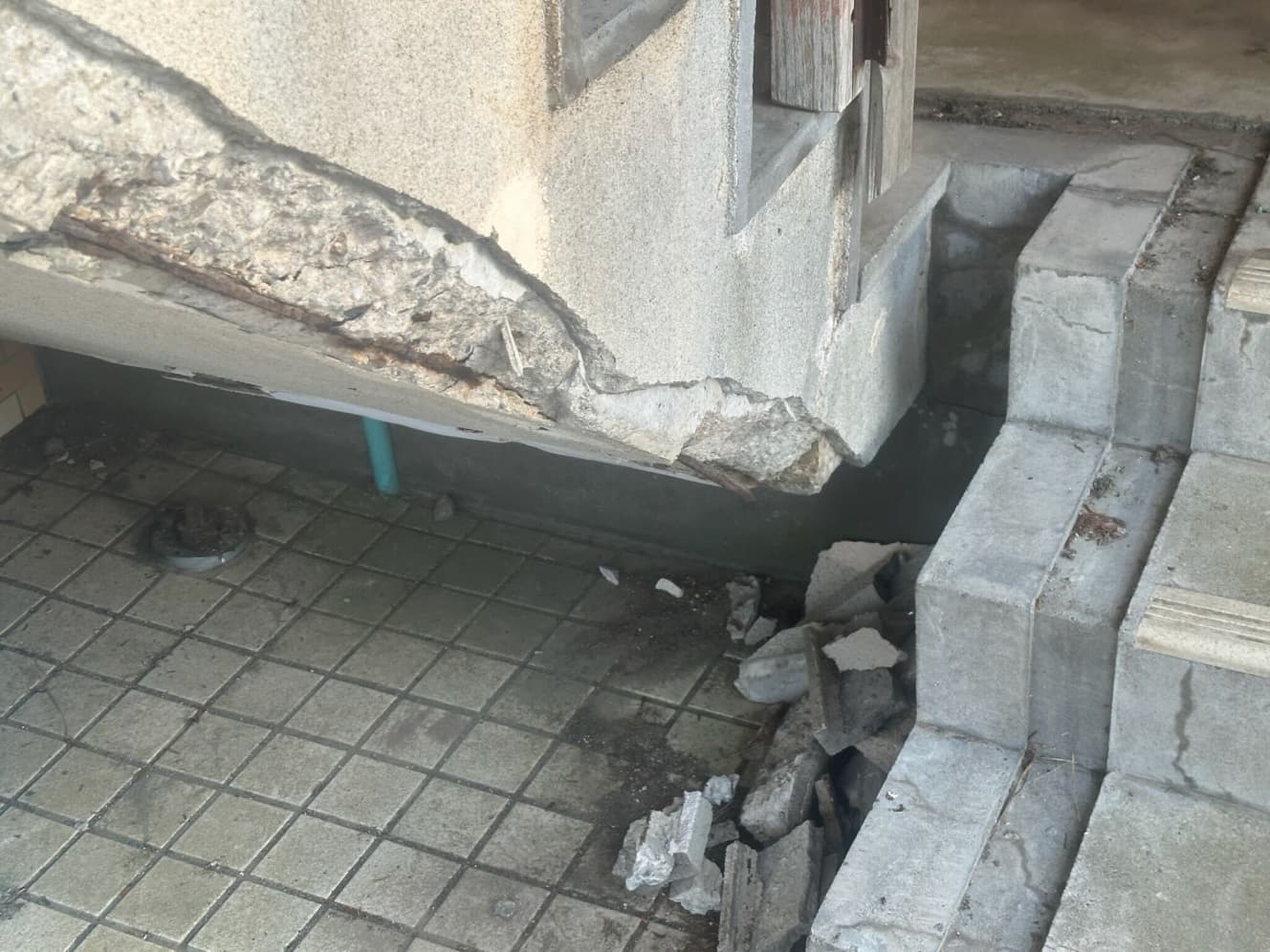
Another problem was that it was unclear what the repair reserve fund had been used for. When residents demanded disclosure of the income and expenditure report, the board of directors refused. The common areas, concrete, and building of Diapalace Shirako No. 2 had deteriorated significantly, and it was clear that there was a lack of management.
The characteristics of a resort condominium certainly make it difficult for condominium owners to gather. However, despite repeated strong requests by residents for a general meeting to be held, one was never held. While Hatagaya had a general meeting, a forum for expressing opinions, Shirako did not even have such a forum, and unit owners were not given the information they should have known or even the rights they took for granted.
In response to the protests of some residents, Chairman Yoshino refused to listen to them, saying, “We have the power of attorney from the majority of the residents,” and a residents’ movement was launched. And after a number of disputes, the situation developed into a lawsuit demanding access to the books of account and other matters.
One of the members who later led Shuwa Hatagaya Residence to “regime change” revealed to me, “Objectively speaking, Hakko is a very good friend of Shuwa Hatagaya Residence.
Objectively speaking, Shiroko was in worse shape than Shuwa Hatagaya. We were not even given the opportunity for dialogue, it was truly a dictatorship. The fact that there were residents who stood up in Shiroko gave us the courage to fight. It was thanks to Shirako that Hatagaya succeeded in becoming healthy.
The End of Dictatorship
Even after the board of directors of Shuwa Hatagaya Residence was replaced in November 2009, the conflict between the board chairman and residents continued at Shiroko. Some residents refused to pay management fees and repair reserve funds, and the battle between Chairman Yoshino and the residents developed into a bogged-down lawsuit. On April 30 of this year, the Chiba District Court ruled that a third-party attorney would temporarily assume Chancellor Yoshino’s duties.
The Chiba District Court pointed out that during this period, no general meeting was convened or held, no report was made on business or financial results, and no resolution was passed for the election of board members. A third party was appointed as “this person has been extremely negligent in performing the duties of the chairman of the board of directors, in violation of the Act on Building Unit Ownership and the Articles of Incorporation, and a serious fact of wrongful act or violation of law or the Articles of Incorporation has been found.
Thus, the dictatorship of the board chairman over the two condominiums came to an end after a long struggle by the residents. Mr. Yoshino has spent a total of 34 years as chairman of the board of directors. From now on, he will aim to hold a general meeting as soon as possible.
The woman who was the plaintiff in the dispute over the Milt condominium repeatedly said, “We are not going to hold a general meeting.
We just want to live a normal life. We just want to live a normal life. It has been a really long process to get to this point.
The laws governing condominium management have long been pointed out to be flawed, and the current Diet session has finally activated a movement to revise the laws. On the flip side, Shirako and Shuwa Hataya are not unique cases; they are problems that could happen to anyone.
The two residents’ movements suggest that it is difficult to regain self-governance once it has collapsed against a background of indifference and other people’s concerns.
Interview and text: Shimei Kurita