How One Office Worker Aimed to Turn 3 Million Yen into a Fortune with a Rapid Investment Strategy


Change your stock investment strategy depending on the amount of financial assets you have!?
An “okuribito” refers to an investor who has built up assets in the hundred-million-yen range. Featured this time is Mr. Kenmo, who chose stock investing to ease future financial worries. While continuing his job as a company employee, he started studying from scratch and impressively reached 100 million yen in assets within five years. His highly replicable investment method has been creating buzz within the “okuribito” community.

Profile: kenmo (Shōnan Investment Study Group)
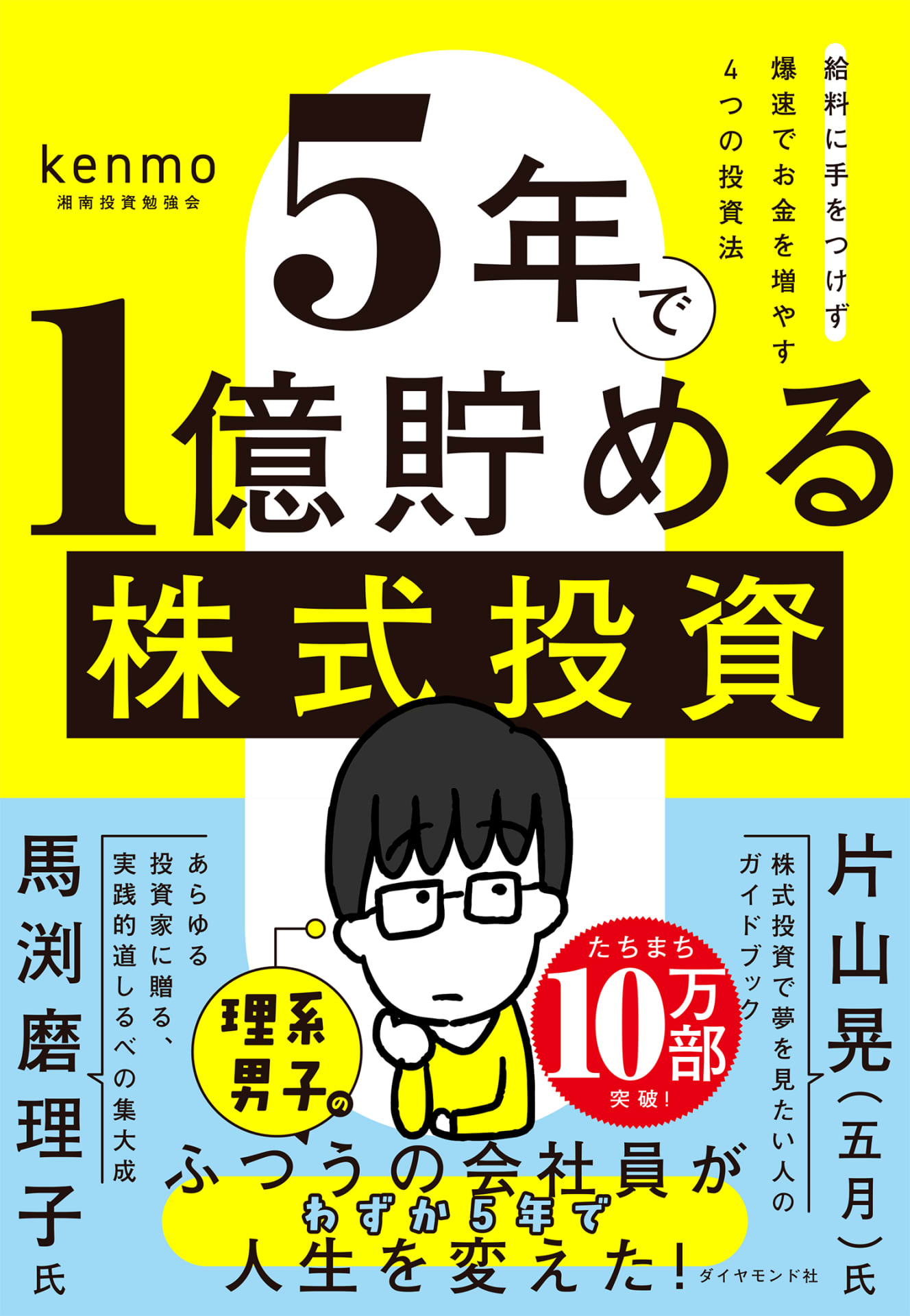
Born in 1982 in Aichi Prefecture. After graduating, he joined a manufacturer listed on the Tokyo Stock Exchange First Section (now Prime Market) as a researcher. In 2011, he began stock investing with an initial capital of 3 million yen. While continuing his corporate job, he reached 100 million yen in assets within five years. In 2018, he founded the “Shonan Investment Study Group” for information exchange among individual investors. In 2023, he left his job and is now actively engaged in supporting corporate IR activities. His first book, Stock Investment to Save 100 Million Yen in 5 Years: 4 Investment Methods to Rapidly Grow Your Money Without Touching Your Salary, has become a bestseller with over 100,000 copies sold.
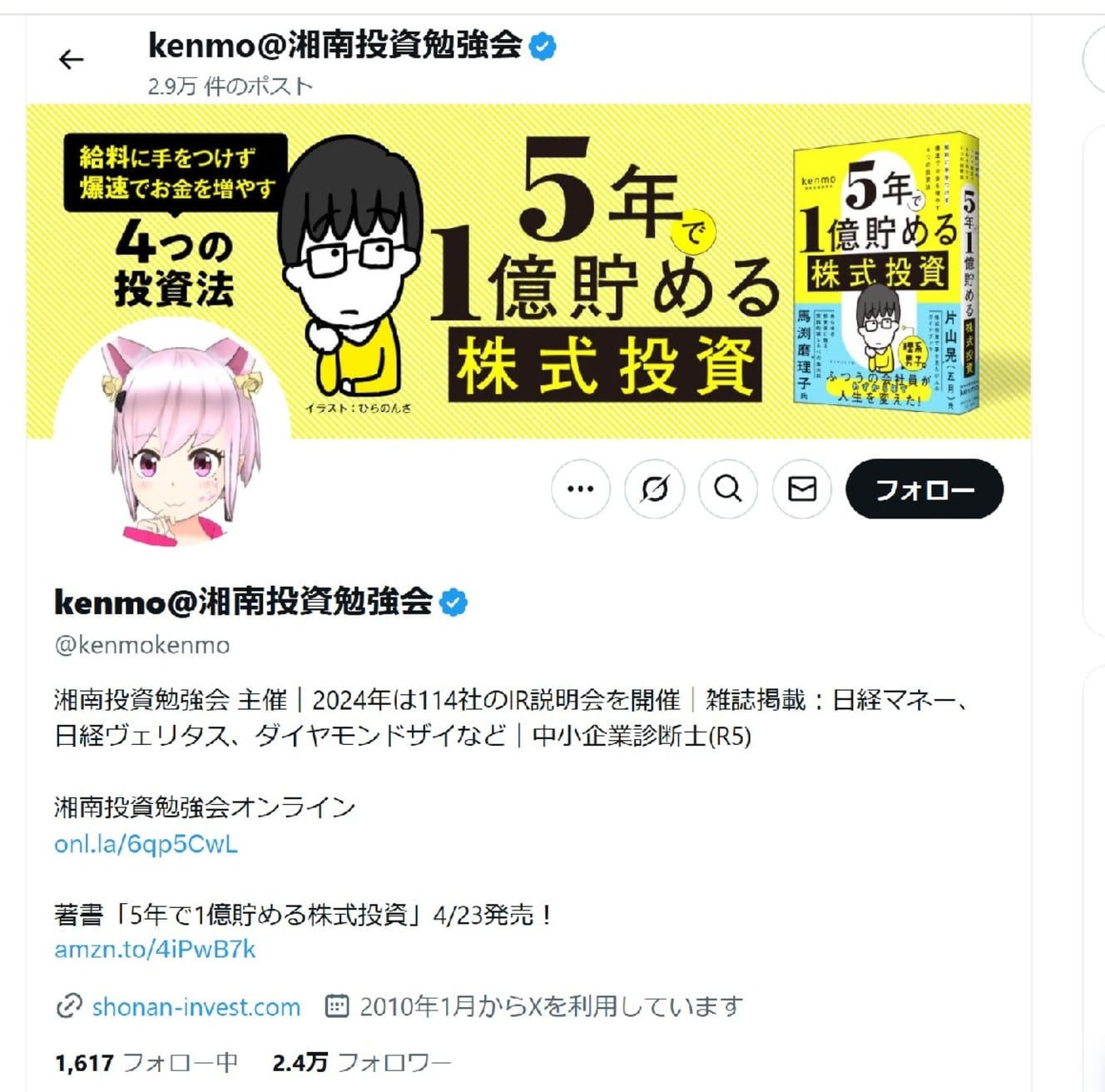
No additional funds were invested besides the initial 3 million yen!
The featured “Okuribito” investor this time, kenmo, is known for gradually adopting various stock investment strategies as his financial assets grew.
In his fourth year as a working adult, he began investing in stocks with 3 million yen he had saved from bonuses. Using a new high breakout strategy, he turned that 3 million yen into 30 million yen in two years. Then, through a shareholder benefits demand strategy, he increased it to 50 million yen in one year. Continuing to steadily grow his financial assets, he successfully amassed a total of 100 million yen in five years.
Remarkably, after starting stock investing, he never added any extra funds beyond his initial 3 million yen. When his assets surpassed 30 million yen, he withdrew the original 3 million yen, and from then on, invested solely using the profits earned through stock trading. He also employed earnings momentum investing and medium- to long-term investments in small- and mid-cap stocks, eventually growing his assets to 300 million yen.
“For the first two years, I increased my assets through concentrated investing, but as my asset scale grew, the increased risk from concentrated positions became a major concern.
If it was just around 3 million yen, even if I lost everything, I could earn it back by working as a company employee for a while. But 30 million yen was a different story. I was also aware that my early success was largely due to luck, and now that I had reached 30 million yen, I couldn’t afford to lose it. I started to feel the need to be more defensive.
So, little by little, I began incorporating other investment methods beyond the new high breakout strategy.” (kenmo)
Switching between various investment strategies depending on market conditions
Let’s briefly touch on the main investment methods kenmo has employed:
First, “New High Breakout Investing” involves buying stocks that hit new highs and selling them at even higher prices. “Shareholder Benefit Demand Investing” targets the tendency for stock prices to rise as the record date for dividends or shareholder perks approaches — buying beforehand and selling before the record date.
Then, “Earnings Momentum Investing” is a strategy where a company’s stock is bought after a positive earnings announcement triggers upward price momentum, aiming to ride the continued rally. Lastly, “Mid- to Long-Term Investing in Small and Mid-Cap Stocks” means investing patiently in smaller, lower-market-cap companies with strong growth potential.
All of these remain active investment methods for kenmo, and he switches between them depending on the overall market climate and individual stock conditions (known in Japanese investing terms as jiai, meaning the tone or state of the market and stock price movements).
To efficiently grow a small amount of capital, “New High Breakout Investing”
Mr. Kenmo initially adopted the New High Breakout Investing strategy — and there was a clear reason behind it.
“When I started investing in stocks, I set a goal to accumulate 100 million yen within five years. I gathered information from various books and blogs, and came across a book by a former fund manager of a UAE government fund, titled The Stock Formula Taught by a Legendary Fund Manager.
The New High Breakout Investing strategy introduced there made perfect sense to me. I felt that if I were going to rapidly grow a small initial capital in a short period, this was the method to use.”
Many investors who’ve successfully built fortunes through stock investing say that growing their capital up to around 30 million yen was the hardest part. There’s also a strong demand to achieve sizable profits in as short a period as possible.
So — let’s take a closer look at this New High Breakout Investing strategy.
The reason for targeting new high stocks
“A new high refers to a stock’s highest price ever recorded. Stocks that reach new highs often experience a significant breakout — meaning a sharp upward move — and this investment method aims to trade during that upward momentum to capture profits.”
When a stock hits a new high, it means all investors holding it are essentially in profit. There’s little need to rush to sell, so selling pressure tends to pause temporarily. On the other hand, if a stock breaks out to a new high, there’s usually a reason behind it — for example, the company might have launched a hit product or service, and the market is pricing in future earnings growth.
“There are various definitions of new highs: year-to-date, since IPO, over the past year, and so on. The longer the timeframe, the more valuable the new high, but it also reduces the number of qualifying stocks.
I personally screen for new highs over the past 52 weeks (one year). With a 52-week timeframe, you can use free tools like Kabu-Tan for screening.”
Currently, the financial markets continue to fluctuate due to former U.S. President Trump’s tariff policies, but what is Mr. Kenmo’s specific procedure for his New High Breakout Investing?
Details about Kenmo’s latest portfolio and the stocks he’s watching are available in the Paid edition [FRIDAY Subscription].
■ Follow Kenmo on X: kenmo@湘南投資勉強会
Interview and text: Kenji Matsuoka
After working as a money writer, financial planner, and market analyst for a securities company, he became independent in 1996. He writes articles on finance and asset management mainly for business and economic magazines. Author of "A Textbook for the First Year of Robo-Advisor Investing" and "Understanding with Rich Illustrations! A book that will definitely benefit you with cashless payment. X (former Twitter) => @1847mattsuu