About 700,000 characters” managed by the family register information system… Is the “Ministry of Justice” to blame for Japan’s lack of digitization?


Kanji for Personal Names” Hindering the Efficiency of Local Government Systems
Please check the furigana in your family register.
Many people must have received an e-mail with this subject from MyNa Portal at the end of last month.
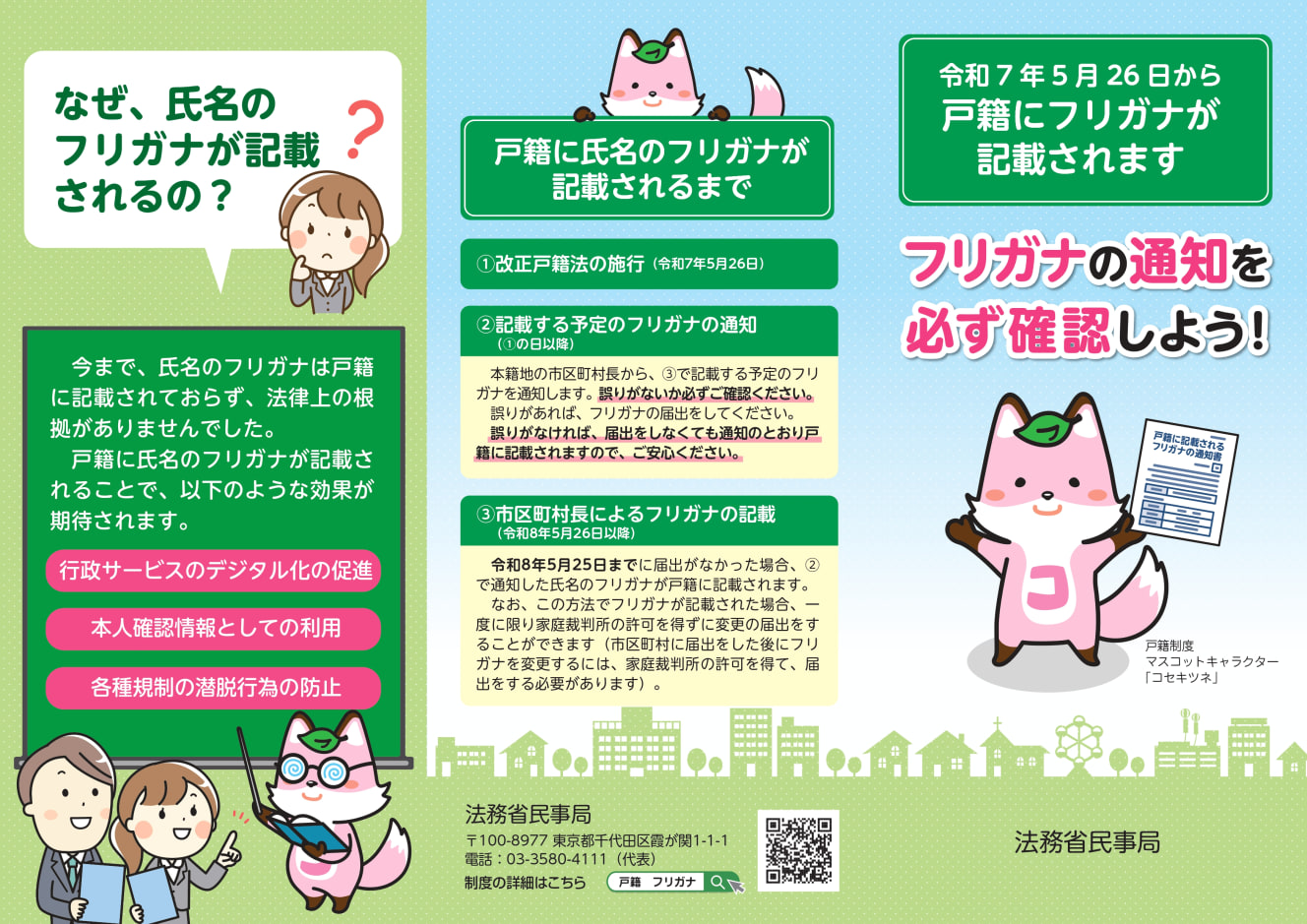
On May 26 of this year, the revised Family Registration Law came into effect, which requires that family registers include furigana (phonetic alphabet) for names. In a pamphlet, the Ministry of Justice emphasizes the “progress of digitization of administrative procedures” and its “convenience as identification information.
The pamphlet states, ” At last, the ‘furigana’ of names now has a legal basis. I think this is a step forward. But it is too late.
Toshihiro Enami, Advisor to the Administrative Systems Research Institute and Senior Researcher at Tateshina Information, who has been involved in the development of the Basic Resident Ledger Network System (Juki Net) at Fujitsu for more than 30 years, says so.
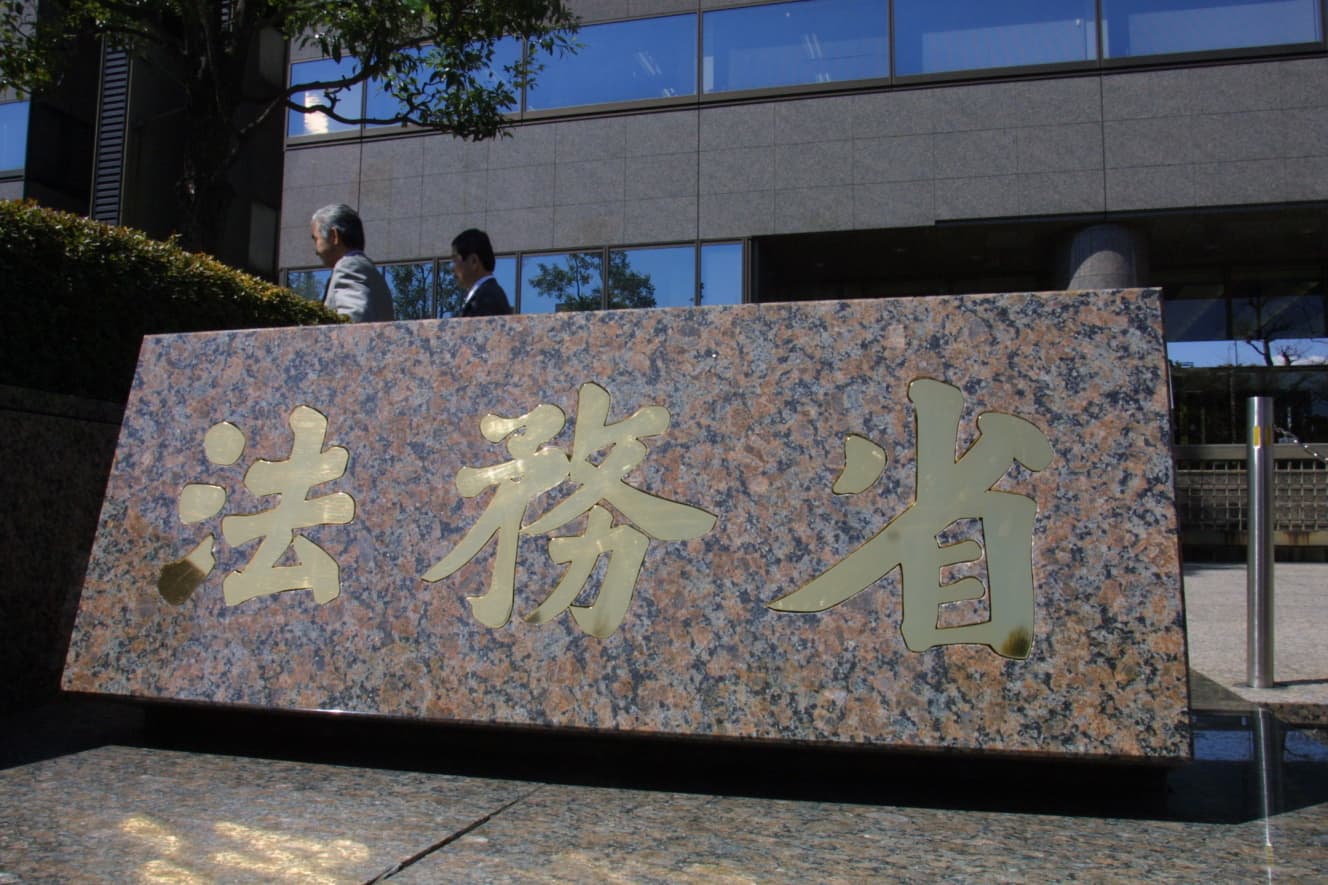
The Ministry of Justice is responsible for family registers, which is probably the reason why it has been so slow to revise the law to include the reading of the family name in the family register. It is often said that the Ministry of Justice is a precedent-setting organization, and they are reluctant to change anything, including the system. That is why digitalization in Japan has not progressed very well.
Enami has been involved in the development of local government systems for many years, and in the process has often felt that the Ministry of Justice has become a barrier to the digitization of administrative systems. There is a good reason why he is so critical of the Ministry of Justice.
The most troublesome part of streamlining a local government’s information system is the vast number of ‘letters’ managed by administrative agencies, ” he said. One of the issues that arose during the revision of the law to computerize family registers was how to deal with the “kanji for personal names” used in family registers.
In 1994, the Ministry of Justice announced a policy to correct all misspellings and slang characters ex officio when family registers are computerized, in conjunction with the revision of the Family Registration Law. The Liberal Democratic Party members of the Diet vehemently objected to this, saying, ‘It is not right to change names without permission for the convenience of the administration.
In the end, the Ministry of Justice decided to leave the original paper family registers in their original form, even for misspellings and slang characters that were to be corrected into correct characters when the family registers were computerized.
Family registers that cannot be digitized remain on paper
This is how the systemization of family registers began in 1994. Later, the demand for online family registry procedures increased, and in 2004, the “unified characters of the family register” were established.
In 2004, the ” unified characters of the family register” were established. The number of these characters is approximately 56,000, and the number of Chinese characters is approximately 55,000.
However, since the Family Registration Law was amended to allow misspellings and slang characters if the individual objects to them, there are naturally some characters that cannot be accommodated in the “unified family register characters.
On the other hand, the “unified characters for the Juki Net” were established by the Ministry of Internal Affairs and Communications in 2003, when the Juki Net was launched simultaneously throughout Japan. The number of characters is approximately 21,000, including 19,000 Kanji characters.
In addition to the Juki Net Unified Character set and the Family Register Unified Character set, about 10,000 JIS Kanji characters are used in administrative procedures. The Ministry of Economy, Trade and Industry (METI) has been working on these three character sets. The Ministry of Economy, Trade and Industry (METI) has organized these three character sets under its “Character Information Infrastructure” development project since 2010, and designated approximately 60,000 of them as “Character Information Infrastructure” characters to be used in administrative systems.
However, some family registers are not suitable for computerization because they contain misspelled characters. Because they contain characters that cannot be systematized, each municipality manages them on paper, and there are a large number of them.
According to a survey by the Ministry of Justice, there are approximately 700,000 characters managed by the national family register information system. The Digital Agency analyzed these approximately 700,000 characters. In order to promote standardization of the core business systems of local governments, the number of characters was narrowed down to approximately 70,000, which are considered to be the same as the 60,000 “Character Information Base” characters.
The Digital Agency has designated approximately 70,000 characters as the “standard characters for administrative work” and aims to gradually introduce them to all local governments nationwide from FY2013, but the transition to “standard characters” for the family register system seems to have been postponed.
The JIS 1st through 4th levels together total about 10,000 characters, and this is the character system we use in our PCs and smartphones.
In the private sector, we can easily exchange data as long as we use Kanji characters within the JIS range. However, even if the government were to handle 70,000 standard characters, it would not be possible to smoothly exchange data with the private sector.
Moreover, there are large numbers of family registers that are managed on paper without computerization. In other words, data matching of names is difficult. That is why my number is necessary.
The Ministry of Justice is not positive about using My Number.”
According to Enami, who has been involved in the design of the My Number system as an expert on the “number system,” “The Ministry of Justice is not actively involved in the use of My Number for family registers.
The Ministry of Justice has not been aggressive about using my number for family registers,” said Enami, who has been involved in the design of the number system as an expert on the “number system . In 2002, theMinistry of Justiceestablished the “Study Group on the Family Registration System,” consisting of experts, andin 2003, the study group discussed the unification of the family registration system and ensuring the accuracy of family register entries.
The final report of the “Study Group on the Family Registration System” was compiled in 2005.
The final report of the “Study Group on the Family Registration System” was completed in 2005. ” The report states that ‘My number will be assigned using the supplementary record of the family register (a document in which changes in address are recorded),’ and it was concluded that the my number system should be introduced.
However, the amendment to the Family Registration Law in 2007 states that “My number will not be used. It was decided to assign a personal identification code for information provision to be used within administrative agencies to link information.
From “using” to “not using” my number. What exactly happened in the two years between the study group’s final report and the revision of the Family Registration Law?
The Ministry of Justice does not publicly disclose what discussions took place after the study group’s final report was compiled and the law was revised. Since the conclusion has changed, there must have been some kind of discussion.
I can only assume, however, that the problem was that the family register did not match the actual situation. This is because the family register will remain even if the person is deceased as long as there is no notification. If you decide to wave your own number, it might be difficult to keep track. I have a feeling that they stopped using it because they were concerned about that.
Nevertheless, there are cases in which applications for procedures requiring family registration certificates have become easier.
For example, in the child support allowance certification process, the attachment of a family register certificate is no longer required if the applicant presents his or her my number to the government agency where the application is submitted, starting in August 2012. In March of this year, when applying for a passport via MyNa Portal, family registry information is automatically linked, eliminating the need to submit a paper family registry certificate.
In a way, this is a breakthrough for the Ministry of Justice.
However, although it may be a little more convenient on the surface, I don’t think it will reach the level of being extremely comfortable unless fundamental changes are made. After all, unless the character system of the family register is properly organized, it cannot be completely converted into data.
For example, in the future, personal data will be created around the furigana of names, and all numbers that identify individuals will be managed with my number. It might be a good idea to make the kanji characters in the name only as an accessory, an entity that may or may not exist.”
If this happens, Japan’s digitalization, which has lagged behind the rest of the world, will finally be able to move forward.
The overall digital system design will be handled by the Digital Agency, so I think it would be a good idea if the Ministry of Justice and the Digital Agency were to merge. Otherwise, I don’t think the Ministry of Justice will ever change.
Toshihiro Enami is an advisor to the Administrative Systems Research Institute and a senior researcher at Tateshina Information. Since 1995, he has been engaged in research activities at Fujitsu Research Institute, focusing on e-government, e-municipalities, and my number. Author of “Digital Procedure Laws Change Corporate Practices” (Nihon Hohojin), “The Curse of My Number” (Aoyama Life Publishing), etc.
Interview and text by: Sayuri Saito PHOTO: Aflo