Experts Break Down Roki Sasaki’s Mechanics: Why the Dodgers’ Phenom Struggles with Control
Taku Kawamura, a professor at the University of Tsukuba, thoroughly explains the "changes" after moving to the Majors.


A series of pictures showing the lack of stability

Struggling and experimenting with the first-year wall in the U.S
“I’m not too worried about his pitch speed. I’m more concerned about his control.”
On May 10 (Japan time), the day after the Dodgers’ game against the Diamondbacks in which Roki Sasaki (23) was pulled after giving up five runs in four innings, Dodgers manager Roberts expressed his concerns about the young pitcher.
It’s understandable why Roberts is worried. Sasaki, who recorded the fastest pitch by a Japanese player at 165 km/h while with the Chiba Lotte Marines, has seen his average fastball speed drop to 154.6 km/h this season since moving to the majors. Even more serious is his control—his walks per game, which averaged about two in Japan, have worsened to nearly six, showing clear signs of wildness.
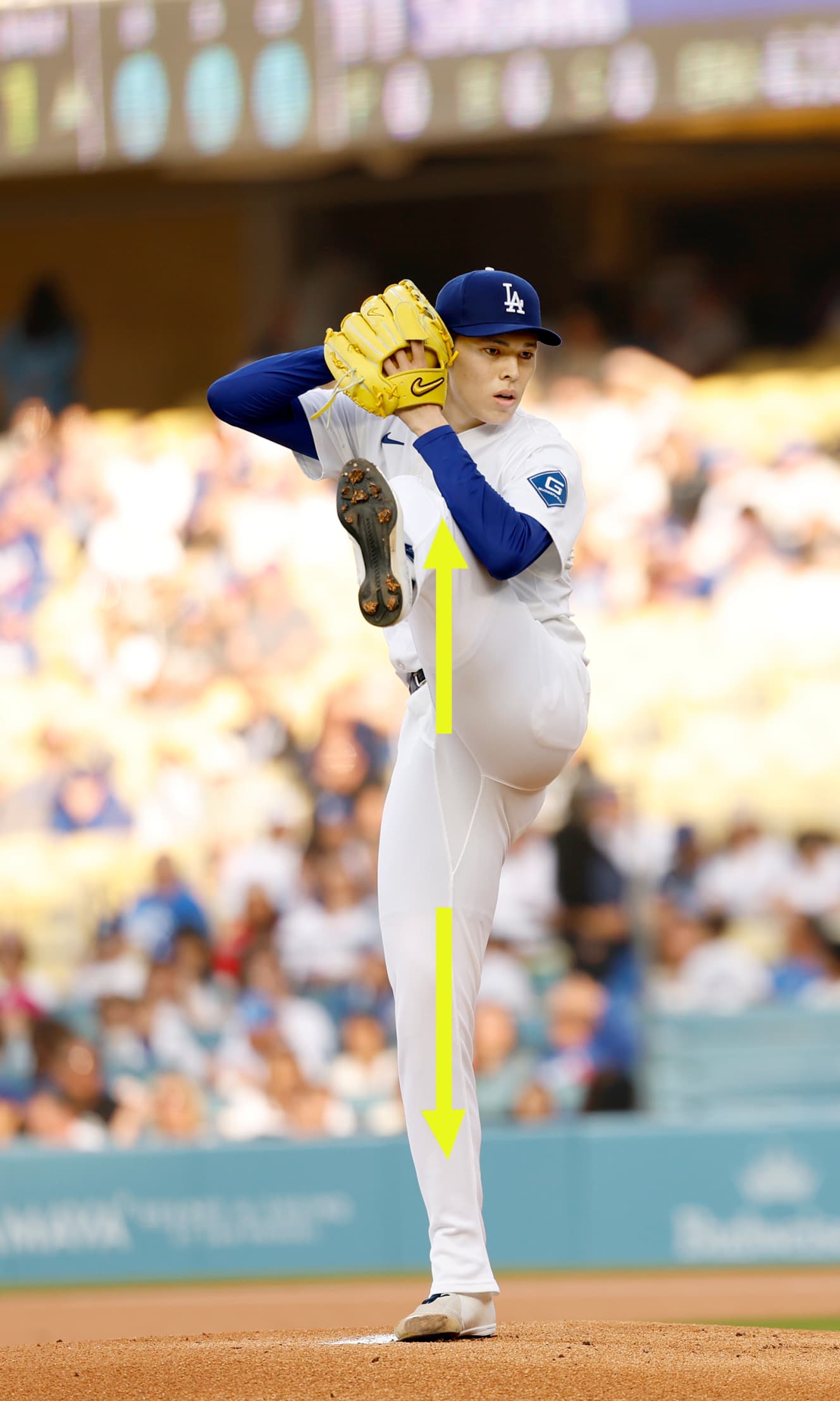
What is causing this slump? Let’s listen to the analysis by Takashi Kawamura, a motion analysis expert and professor at Tsukuba University, while examining the sequence photos of Sasaki’s pitching form shown above. Starting with frame ①:
“A smooth start. He raises his left leg high without any body wobble. He puts his weight on his right foot and firmly plants it on the ground.”
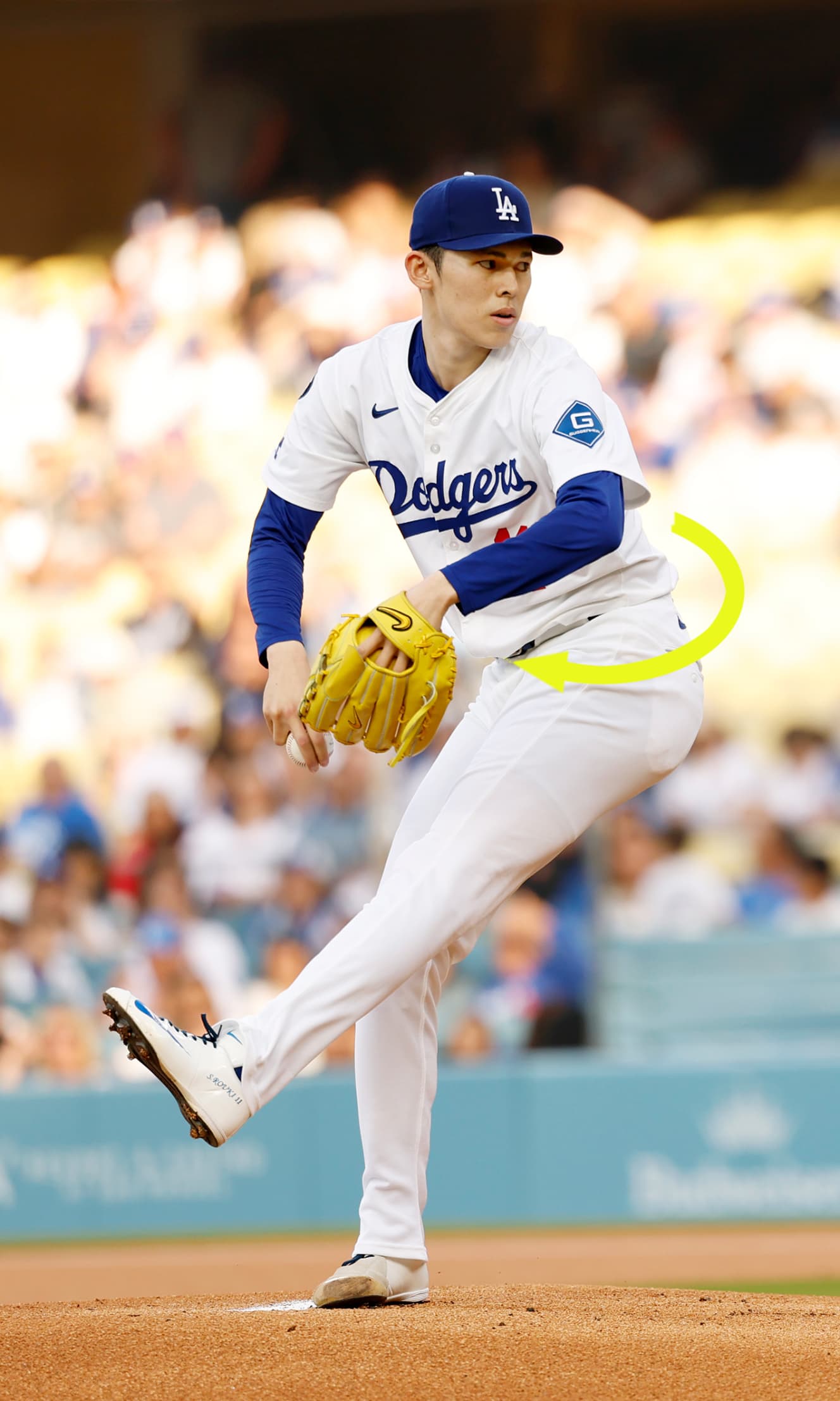
Frame ② reveals this season’s issue for Sasaki.
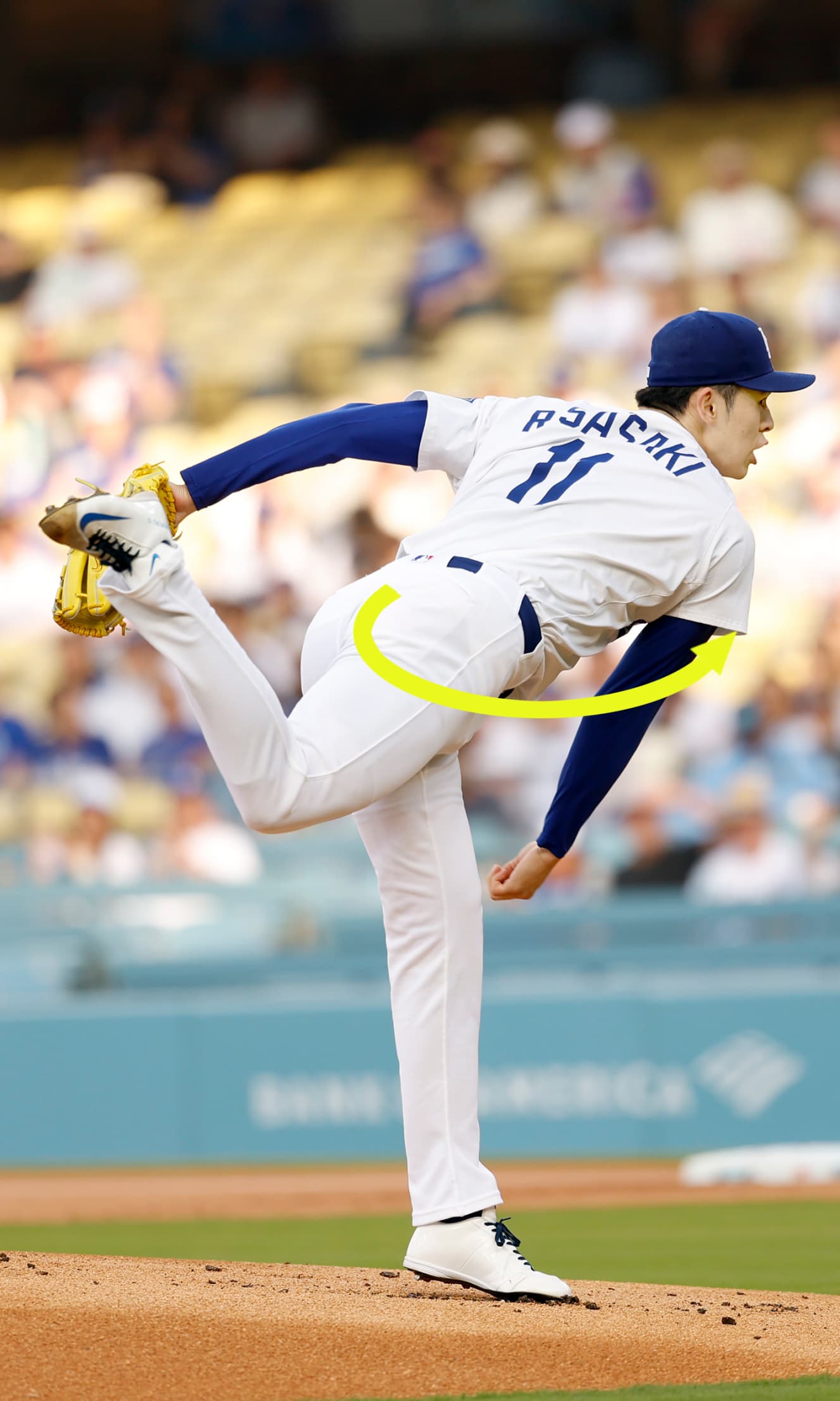
“He twists his hips quite a bit, almost in a tornado style. Sasaki himself probably knows his velocity has dropped since playing in Japan. To compensate, he’s twisting his hips more to generate stronger force on the ball. However, this twist seems to negatively affect his body movement.”
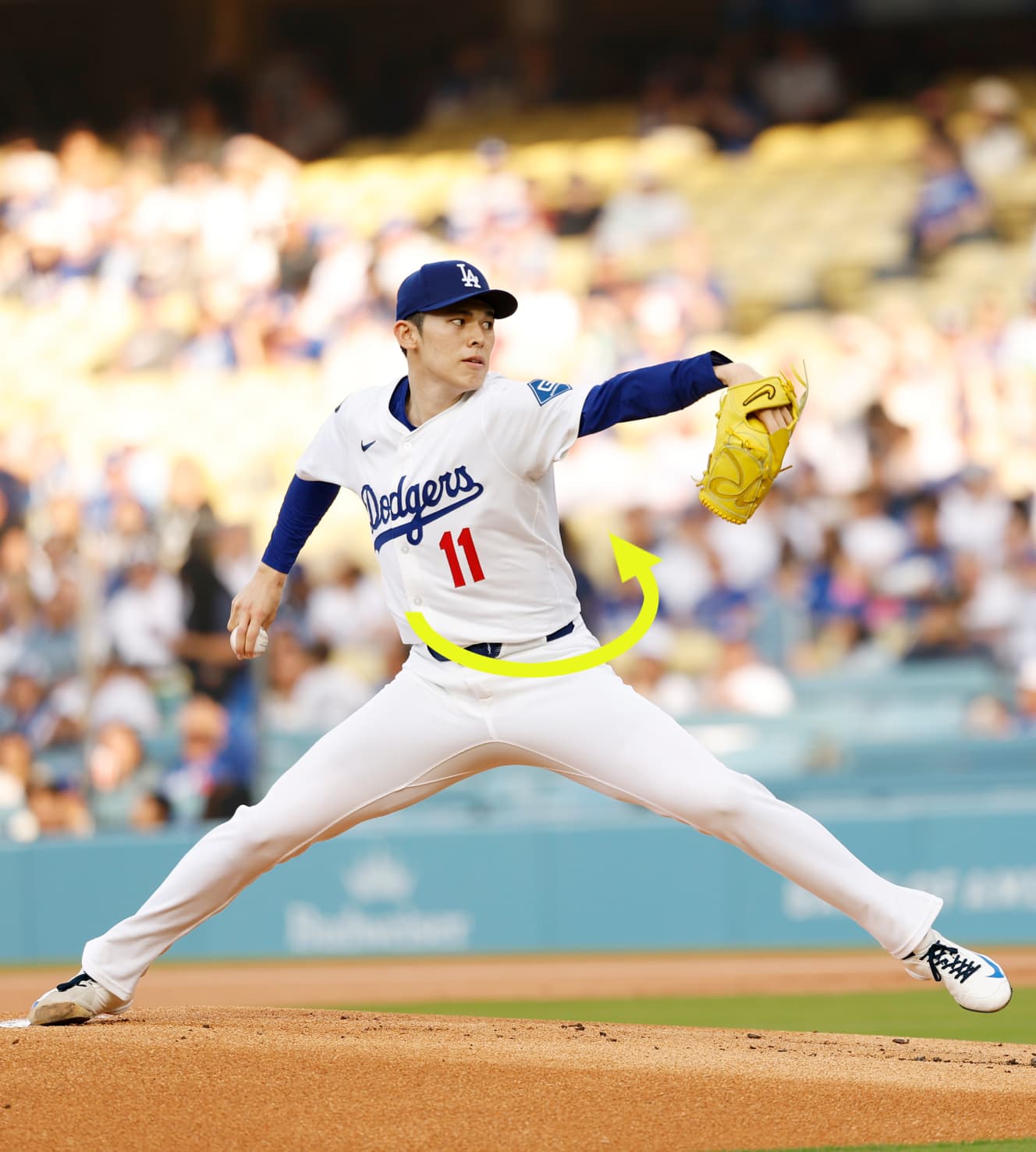
Frame ③ shows that he’s throwing from his back.
“Because of the hip twist, his back is facing toward the batter. In trying to unwind this twist, his upper body rotates rapidly, causing wasted motion. Instead of twisting horizontally, a vertical motion—where the arm swings down toward the batter—creates more speed and power on the ball.”
Frame ④ points to a reason for his control problems.
“He opens his body too early, so the number ‘11’ on his chest faces the batter prematurely. His arm motion is delayed, and the ball in his right hand is too far away from his head. Since his eyes are farther from the target, it’s no surprise his control is off.”
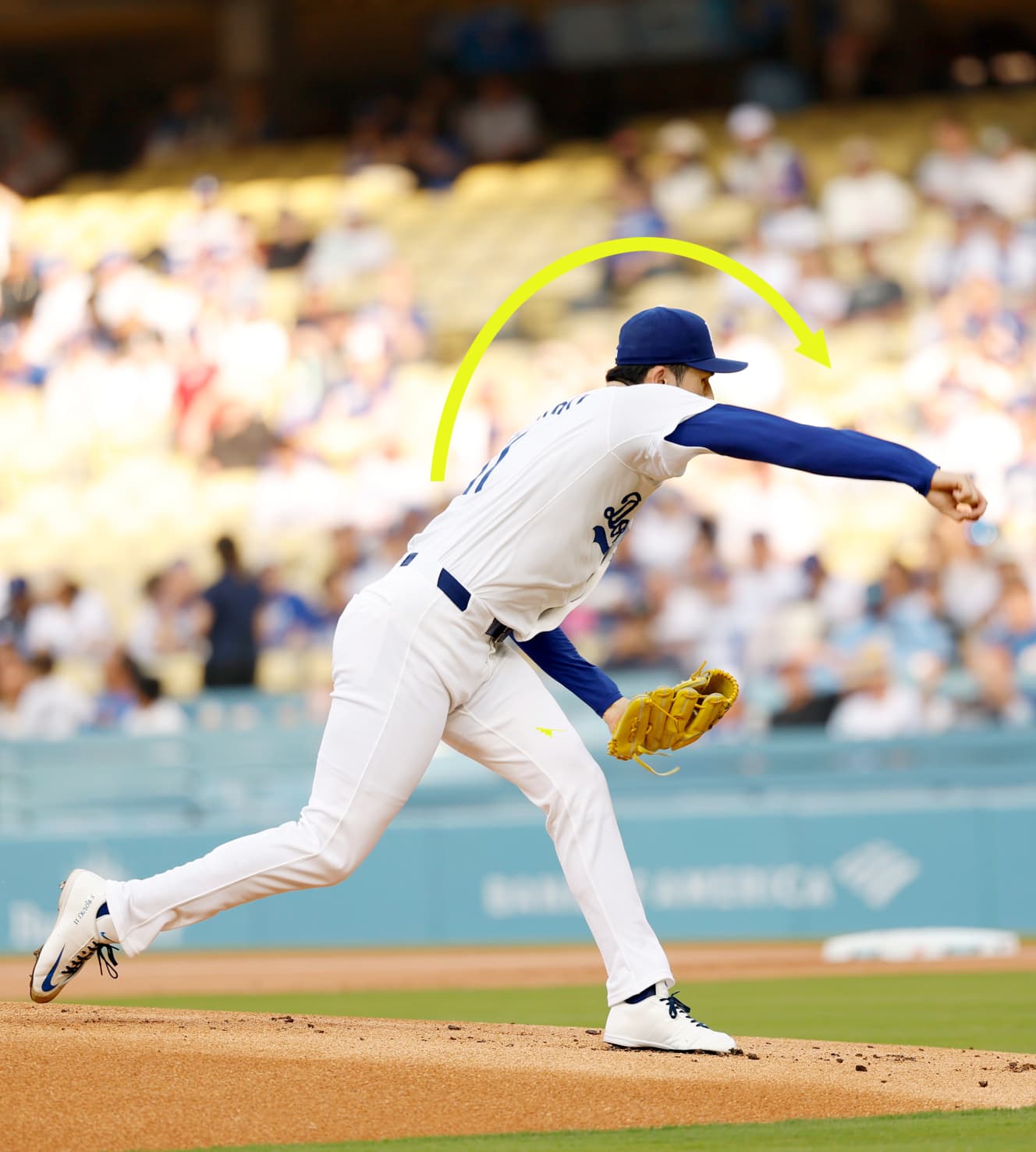
Looking at the finish positions ⑤ and ⑥:
“In ⑤, you can see he isn’t effectively using his lower body, so he relies heavily on his upper body strength to throw. In ⑥, his body, which should be facing home plate, is tilted toward first base, and the range of his arm swing is small. This makes it difficult to increase pitch velocity and power.”
Although Sasaki currently lacks stability, can he catch a wave of success?
“He is likely experimenting to adapt to differences like slippery baseballs and harder mounds compared to Japan. Sasaki is only 23 years old. Even young pitchers usually start thriving in the majors around age 25. It’s still too early to demand results. What’s important is strengthening his core and building a body that can pitch year-round. Once his form settles, he should be able to consistently win double-digit games.”
Sasaki is facing a tough first-year adjustment in the U.S., and the struggle to find a pitching style suited for the majors will likely continue.
From the May 30, 2025 issue of “FRIDAY”
PHOTO: Taguchi Yuji