At the “Inagawa-kai funeral” attended by the Yamaguchigumi VI, several hundred million yen was given as incense money… The “funeral situation” of a gang wrapped in a veil.
The "funeral" of Inagawa-kai President Jiro Kiyota was held on May 15. More than 100 yakuza gathered from all over the country for the occasion of the final greeting to a major figure in the world of yakuza. Nonfiction writer Masahiro Ojima talks about the customs and traditions related to yakuza "funerals.


The funeral hall cannot be used even though he passed away.
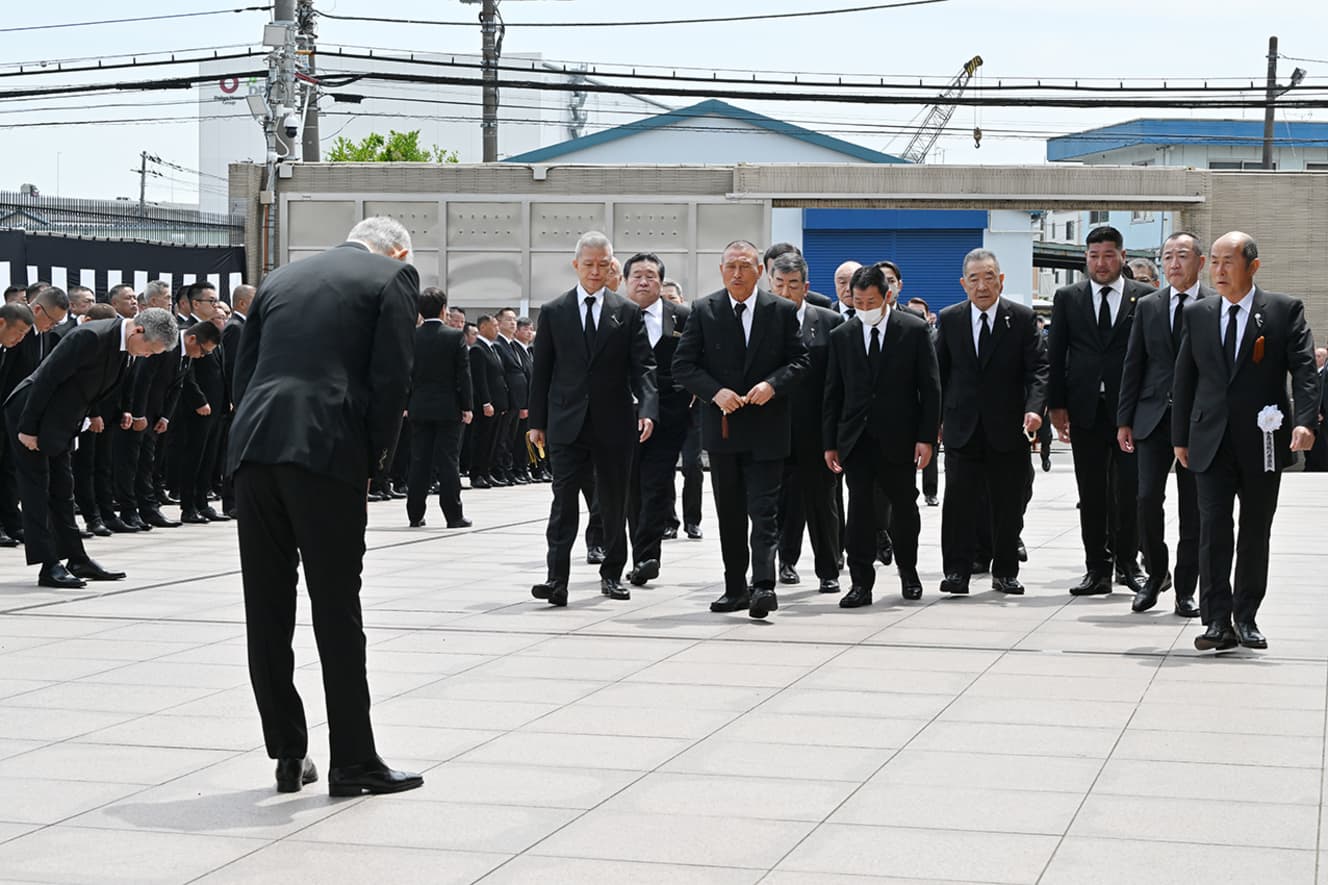
Jiro Kiyota, president of Inagawa-kai, the third most powerful gang in Japan after Yamaguchigumi VI and Sumiyoshikai, passed away on April 21. He was 84 years old, and his “funeral” as a member of the Inagawa-kai was held on May 15 at Inagawa Kaikan in Yokohama City.
Kiyota was appointed president of the Inagawa-kai in 2010 after serving as president of the Yamakawa family, a secondary organization. In 1919, he Zenyakued the post to the current president, Kazuya Uchibori, who has since retired from the position of president. An alumnus of the police authority’s senior investigative staff said, “When I was professionally in charge of investigating gang crimes, I once met Kiyota at the Yamakawa family headquarters office in Kawasaki. I remember Kiyota’s manner of speaking was polite and gentlemanly, although we only made general small talk, as many yakuza have bad attitudes,” he said, describing his personality.
Inagawa-kai is said to have a friendly relationship with Yamaguchigumi VI, the largest gang in Japan, and top executives including Shinobu Tsukasa (83), the sixth head of the gang, and Shomei Takeuchi (65), who had just assumed the position of young leader, were in attendance, as were representatives of more than 20 organizations from across Japan, including Shuji Ogawa, chairman of Sumiyoshikai. In the gangster community, funerals such as this one, as well as the presentation of the assumed name when the head of an organization is replaced, are called “giri-ji,” and are highly valued. However, the nature of such ceremonies has changed with the times. A senior member of a designated crime syndicate active mainly in Tokyo revealed, “Despite the fact that it is a funeral, it is still a very important event.
In recent years, it has become impossible to use funeral halls for funerals because of the yakuza’s presence. Sometimes the funeral halls refuse to allow us to use them because we are anti-social forces. Therefore, in many cases, the name of the yakuza clan is withheld and the funeral is held in the form of a ‘family funeral.
In the past, the funerals of designated crime syndicate leaders were held in grand style at places such as Tokyo’s Aoyama Saiban, which is known for holding funerals for politicians, business executives, entertainers, and other prominent people. However, the aforementioned gang leader said, “First of all, such funerals are unthinkable. In fact, in the case of the Inagawa-kai, it was held at its own facilities, which can receive mourners from all over Japan.
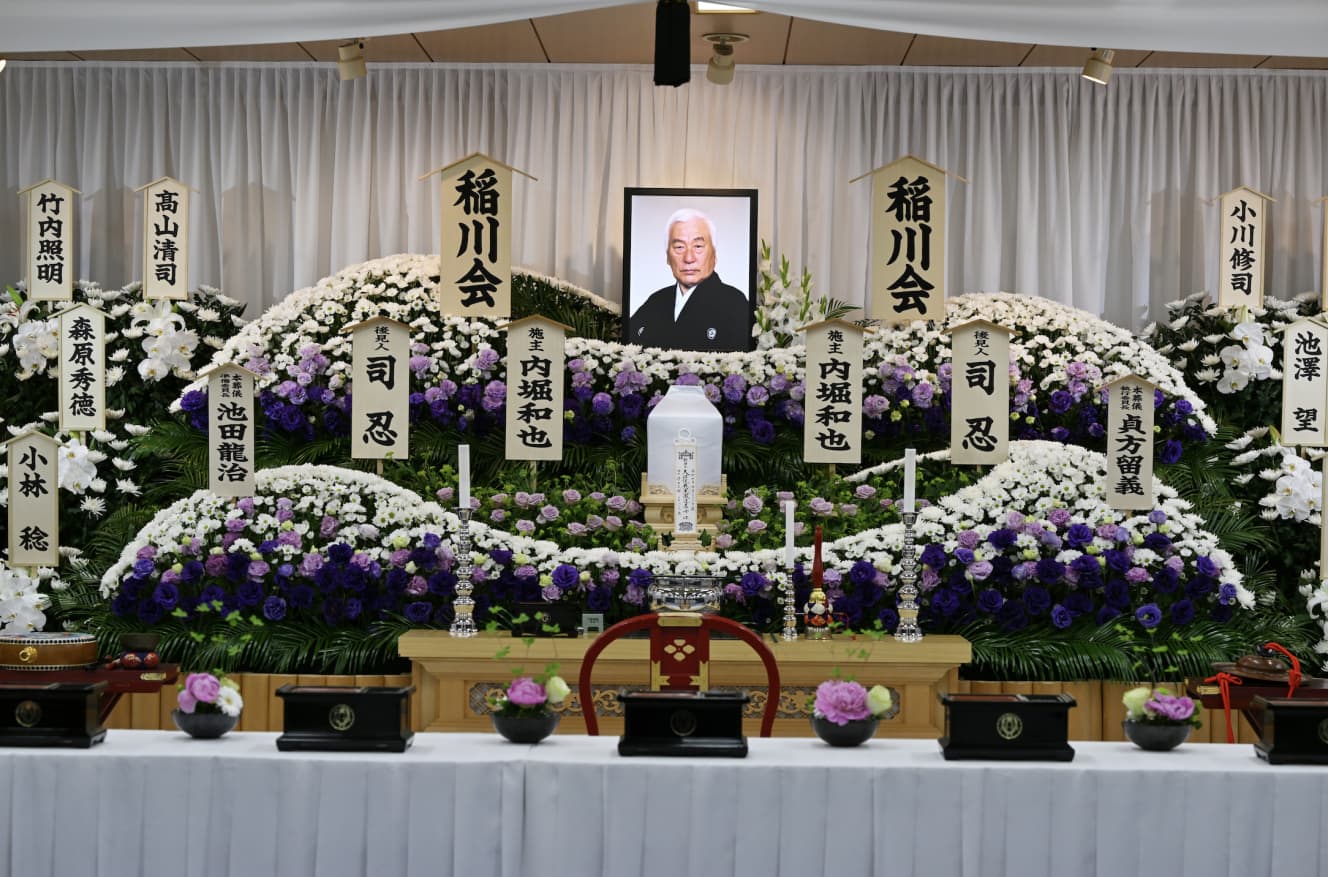
The total amount of donated incense was in the hundreds of millions of yen.
Before the funeral, the Inagawa-kai Yamakawa family and family members held a funeral service on April 26 at the Yamakawa family headquarters office in Kawasaki City. An old senior official of another designated crime syndicate based in the Tokyo metropolitan area pointed out the situation with regard to the funeral offering.
The money from the family funeral in April should have been given to the bereaved family after expenses were deducted,” he said. In the case of the Inagawa-kai funeral, the organizer was the Inagawa-kai, so the organization must have received all the money. The total amount would be several hundred million yen.
In general society, congratulatory gifts and incense at weddings and funerals are customarily tax-exempt. A senior official of the national tax authorities said, “Even if they collected hundreds of millions of yen in donations, they would not be subject to taxation. They are treated the same as ordinary citizens.
Other than these restrictions on the use of funeral halls and anecdotes about incense offerings, there are no major characteristics in dress or customs. However, as a place where many gang leaders gather, there have been bloody incidents in the past.’ In August 2001, Inagawa-kai gang members blundered into the Yotsugi funeral hall in Katsushika Ward, Tokyo, where a funeral for a Sumiyoshikai executive was being held, and fired a pistol. Two of Sumiyoshikai’s top executives were killed and one was seriously injured. This incident, known as the “Yotsugi Saiban Incident,” has long been talked about by senior police investigators and the gang industry.
Today, the Inagawa-kai, the Yamaguchigumi VI, and the Sumiyoshi-kai are said to be on friendly terms. However, a senior police official believes that “it is not without possibility that a petty trouble could develop into a rivalry war. While there are detailed rules, there are also horrific incidents. This is the state of affairs at funerals in Japan. (Honorifics omitted)
Interview and text by: Masahiro Ojima PHOTO: Takero Shigumura