″Kohei Matsumoto, Kochi United SC, J-League player who lost sight in his right eye, says, “This is my prime time.
Visually impaired in a training accident five years ago, but at the age of 35 he has reached the stage of his dreams


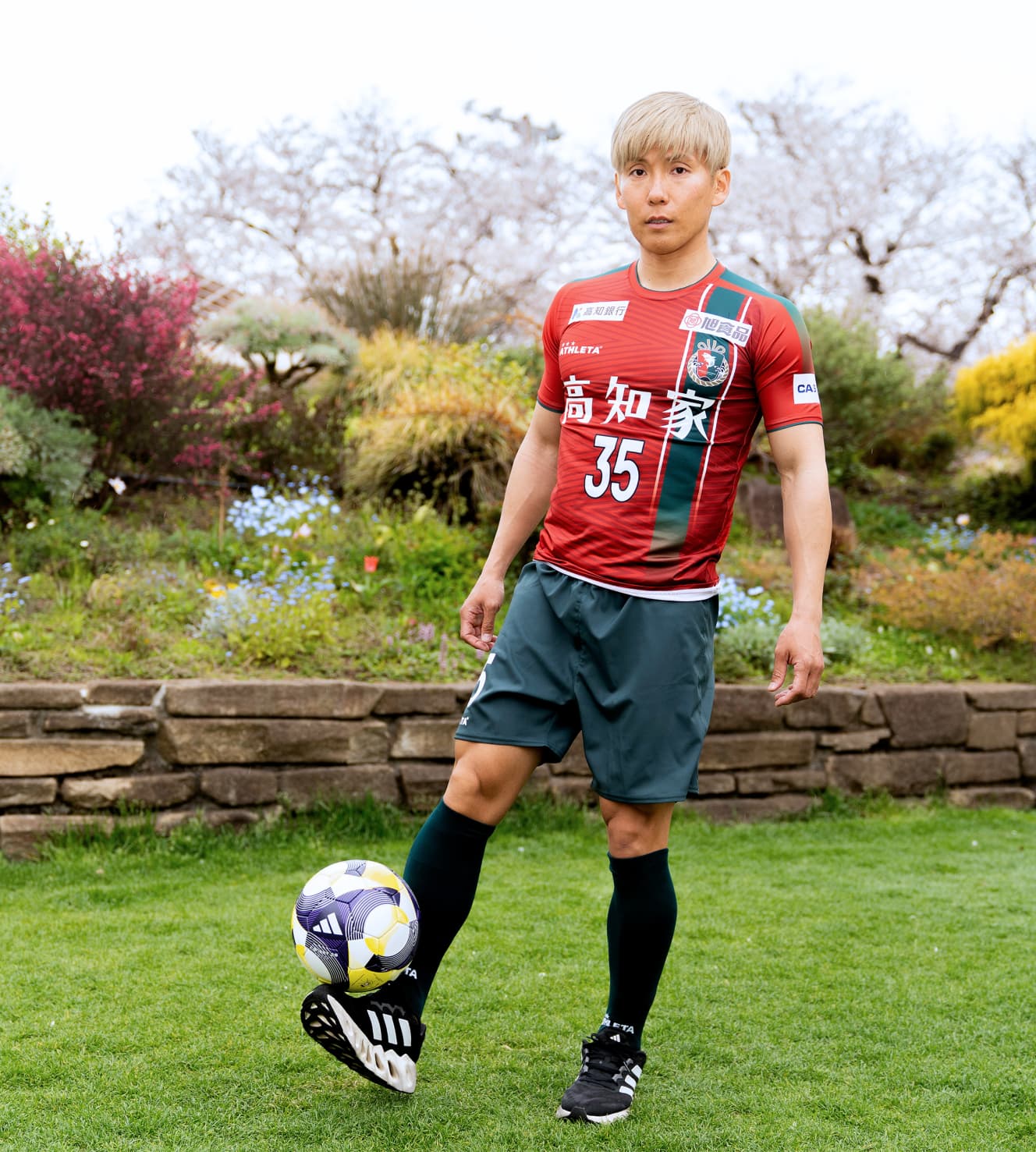
The “first” J-League player in history was born with an indomitable spirit.
At the age of 35, he joined the J3 Kochi United SC. Kohei Matsumoto (36), who became a J-League player of his dreams, attracted wide public attention. The reason for this is his “special” background.
In May 2008, during a tube training session in New Zealand, a metal fitting came off and hit Matsumoto in both eyes. He was immediately rushed to the hospital, but he had lost almost all vision in his right eye and could barely recognize the outline of his left eye. The doctor told him to give up soccer.
However, Matsumoto persevered in his rehabilitation, and after five years he made his mark as a J-League player, a dream come true. When I pointed out that this was the first time in history that a visually impaired player had made it to the J-League, Matsumoto smiled wryly.
I’m probably the worst out of all the J-Leaguers,” he said. I was even the worst in my previous team in the Solomon Islands. But I don’t think anyone can beat me in running and athletic ability. I couldn’t have been a J-Leaguer before I got injured, but I was able to become one after I lost my sight. This is my prime time.”
Matsumoto, a native of Osaka, studied hard at the youth levels of Cerezo Osaka and Gamba Osaka. However, it was not until he was 25 that he began his professional career. He played for nine clubs in six countries, mainly in Oceania. In 1919, he participated in the “Club World Cup” with a club in New Caledonia.
In Oceania, I lived a subsistence lifestyle, catching and eating octopus and pigs by myself. There was no drinking water, so I had to crack open a coconut to rehydrate myself. Cows came into the ground, and we lived in fear of bandits. …… But I was still able to continue to play soccer because I had the willpower to be frustrated that there were plays I couldn’t make.”
I don’t mind being a guest panda.”
It was no small feat for Matsumoto to come back from a serious injury that almost cost him his eyesight in both eyes. Even so, Matsumoto made a plan to return to the field in six months in preparation for the upcoming Club World Cup qualifying round.
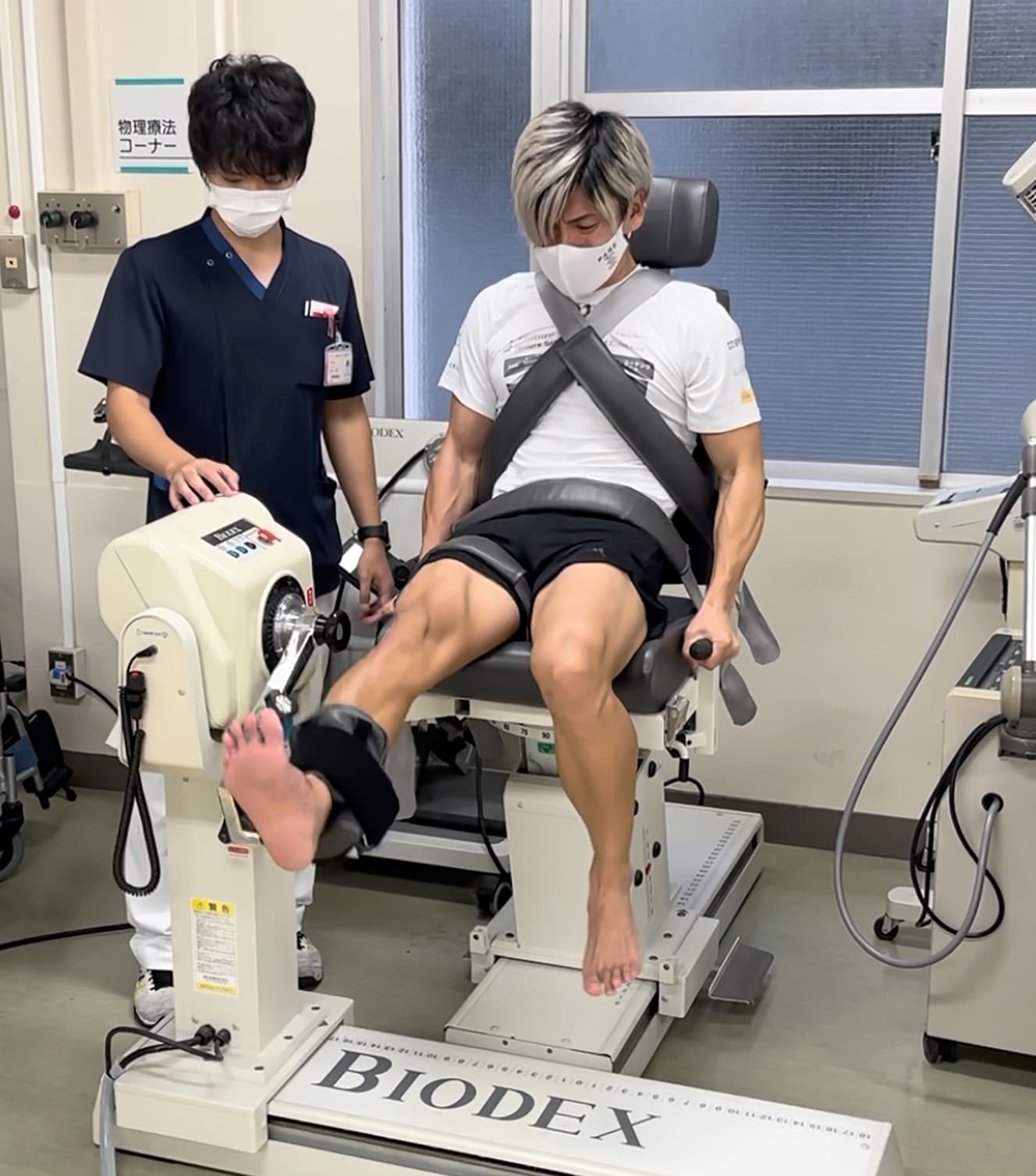
I was told it would normally take three years, but I thought I could shorten the time by doing three years’ worth of rehabilitation in one month,” Matsumoto said. But I did rehabilitation walking from morning to night in a neighborhood park, but because I had no sense of balance, I would throw up easily. I was mistaken for a prowler and was called to the police several times (laughs). 4 months later, I was able to run, but this time I could see the ball in multiple layers. It was also hard to get used to training to recognize teammates by color and silhouette. But stopping rehabilitation was not an option.”
The rehabilitation of the eye, including training to expand the field of vision, is a simple but tremendously strenuous process. Nevertheless, Matsumoto worked steadily, and a year later he was back to playing soccer, and three years later he was playing official professional soccer matches for a New Zealand club. Three years later, Matsumoto was playing professionally for a New Zealand club, regularly playing in all their games, and wearing the captain’s mark on his left arm during international tournaments.
He said, “I didn’t tell the coach or my teammates about my eye injury. I didn’t tell the coach or my teammates about my eye injury, because otherwise they wouldn’t use me in the games. My English is not good, but I put in more effort than anyone else in training. Somehow, I always find myself being named captain.”
Nine companies that have learned of his return and support Matsumoto’s efforts are supporting his athletic career. After joining Kochi, some of his supporters from his overseas days became team sponsors. However, Matsumoto has not spent any of the sponsorship money on anything other than soccer-related activities.
While he has realized his dream, he also feels frustrated. A separated calf has prevented him from playing any official games for Kochi.
Before I joined Kochi, the club asked me, ‘What would you do if you couldn’t play in any games? I was asked by the club, ‘What would you do if you couldn’t play in any games? I said, ‘It doesn’t matter if I have an eye injury. I said, ‘It doesn’t matter if I have an eye injury; I’ll just have to show them through my ability. My visual impairment is not a handicap for me. At first, I didn’t care if I was a panda or anything else. Most of my classmates have retired, but I can still run. So as long as I am physically active, I want to continue to be active.
Since my interview with Matsumoto, I have often received updates on his progress via voice message. In one such message, he said, “My goal is to become a J-League player.
My goal is not to become a J-Leaguer, but to play an active role. Only then will I be able to give courage to children with similar visual impairments.
Believing that there is a mission that only he can realize, Matsumoto is looking only ahead.


From the May 30, 2025 issue of FRIDAY
Interview and text: Shimei Kurita PHOTO: Takayuki Ogawauchi (first photo)