Playback ’95] The “Beginning of the End” of Aum Shinrikyo… The whole story of “Asahara’s Arrest” watched by the whole nation


What did “FRIDAY” report 10, 20, and 30 years ago? In “Playback Friday,” we revisit the topics that were hot at the time. This time, we will look back at the “All-out coverage” of the June 2, 1995 issue, which was published 30 years ago! The day the “Aum empire” collapsed: The arrest of Shoko Asahara! The “Long Day” of the Fall of a False Image” is introduced.
The disappearance of lawyer Sakamoto and his family, the Matsumoto sarin gas attack, the abduction, confinement, and death of Mr. Kariya… In March 1995, the police investigation network into the numerous allegations against the Aum Shinrikyo was steadily narrowing. The sarin gas attack on the subway on March 20, just prior to the mandatory search, was a “last ditch effort,” and after March 22, mandatory searches were carried out one after another at the cult’s facilities, and its leaders were arrested. This article follows the day of the arrest of Shoko Asahara, the founder of the cult, with the full force of the editorial department. (Descriptions in parentheses are quotations from previous articles. All ages and titles are current as of the time of the article.)
Four-hour search finally leads to his arrest
At 5:35 a.m. on January 16, in the twilight of Kamikyuu Isshiki Village, Yamanashi Prefecture, where heavy rain had been falling since dawn, the sound of a sharp engine cutter rang out and sparks flew from the tightly closed door of “Satian 6” as a large press corps of over 150 people looked on. Fifteen minutes later, investigators rushed into the building. The believers inside were escorted out, but they showed no signs of resistance.
At the same time, 2,000 investigators were mobilized at about 10 locations across Japan, including other Aum Shinrikyo facilities scattered around the village, the Fujiyama headquarters in Fujinomiya City, Shizuoka Prefecture, and the Tokyo headquarters in Minami-Aoyama, conducting forced searches. At 6:30 a.m., Prime Minister Tomiichi Murayama and others gathered at the Prime Minister’s Office for an emergency cabinet meeting. The Aum Shinrikyo case was already a matter of national importance.
Meanwhile, the scene where investigators raided was in a stalemate. The media, who had no idea what was going on inside the building, just waited and waited. The building was dark inside because the electricity was cut off, and the structure was complicated. The doors were reinforced with steel plates, making the investigation more difficult than expected. Some of the investigators were even saying, “He might not be here. However, about four hours after the raid, the moment arrived.
The “transport” was like a marathon broadcast.
The moment of the arrest was described in an article written at the time as follows
At 9:45 a.m., about four hours after the investigation began, Oyasama Asahara was finally found. She was meditating alone in a hidden double-walled room on the third floor, suspended from the ceiling. When prompted by investigators, she silently climbed down a ladder. His health was reportedly deteriorating, but when the doctor tried to take his pulse, he said, “I am healthy, don’t touch me. I am healthy, please don’t touch me. I don’t even let my disciples touch me.
At 10:30 a.m., when the fog began to roll in, a navy blue one-box car with Oyasama Asahara in it departed from the 6th Satyan, led by a police car, as the press waited.
Strobe lights flashed like a storm, and reporters screamed into their microphones. The “false image” of Guru Asahara, who had terrorized the world, was being dragged out of the “Aum empire” he had built in the foothills of Mt.
Television cameras waiting along the roadside were following the event as if it were a live marathon. Oyasama Asahara’s chin was lifted slightly, his eyes closed in meditation. As the car entered the Chuo Expressway from the Kawaguchiko Interchange, eight or nine helicopters followed her at a very low altitude, hoping to capture her image from the sky. Perhaps they had seen the TV broadcast. Everywhere on the pedestrian bridge where the convoy passed was tinny with onlookers.
At 0:35 p.m., the car carrying Oyasama Asahara arrived at the sub entrance of the Metropolitan Police Department amidst a waiting press corps of about 150 people.
In the afternoon, Asahara said in response to an interrogation, “Would I, who am blind, cause such an incident? I know you won’t believe me,” he said, denying the charges. At 6:00 p.m., Fumihiro Jyosuke, head of the Aum Shinrikyo emergency task force, held a press conference at Aum’s Tokyo headquarters in Minami-Aoyama, and called the arrest “unjustified.
In the day’s roundup, 15 of the 41 people for whom arrest warrants had been issued were arrested, most of them members of the “chemical squad,” which is believed to have manufactured the sarin. However, some of the perpetrators of the sarin gas attack on the subway and others remained at large. The arrest of Asahara was only the beginning of the end of the Aum Shinrikyo case.
Without telling the truth until the very end…
The investigation into Aum continued with the arrest of Tomomasa Nakagawa and other cult leaders, and as of ’98, 189 followers were indicted. Some former cadres admitted their guilt at an early stage and explained in court the actual situation of the cult and the details of their cases. The full extent of the cases involving Aum came to light.
After the trial, Asahara was often reported under his real name, Chizuo Matsumoto. He was indicted in 17 cases, including 26 murders and one death by arrest and confinement, and his trial began in April 1996. Asahara consistently maintained his innocence, saying that he did not give the orders. When the court refused to stop his testimony, he suddenly began speaking in English and repeatedly interfered with the testimony of former officials who claimed to have received instructions from him, and was once ordered to leave the courtroom.
Asahara admitted that Aum was responsible for almost all of the 17 incidents, but claimed that they were the responsibility of his disciples and that he himself was innocent.’ After his trial in February 2002, he said nothing more. In February 2004, he was sentenced to death. Asahara appealed, but the trial was terminated when he failed to submit the necessary documents at the second hearing, and his death sentence was finalized without any truth from his own lips.
By November 2011, the trials of the other former leaders were also completed, and 13 of them were sentenced to death and five to life imprisonment. In January 2006, the trials of former Aum Shinrikyo members who had fled the country at that point were also finalized, bringing the Aum Shinrikyo case to a complete conclusion.
The death penalty for Chizuo Matsumoto, a.k.a. Shoko Asahara, was carried out on July 6, 2006.
According to the medical records submitted by the Tokyo Detention Center to the Ministry of Justice at the end of June, he had lived a regular life according to the instructions of the staff and had eaten well. On the other hand, however, he did not respond properly when doctors spoke to him, and it is said that he was unable to communicate with them.
The trial court described him as “the most heinous criminal in the history of our country,” but his final days were short-lived.


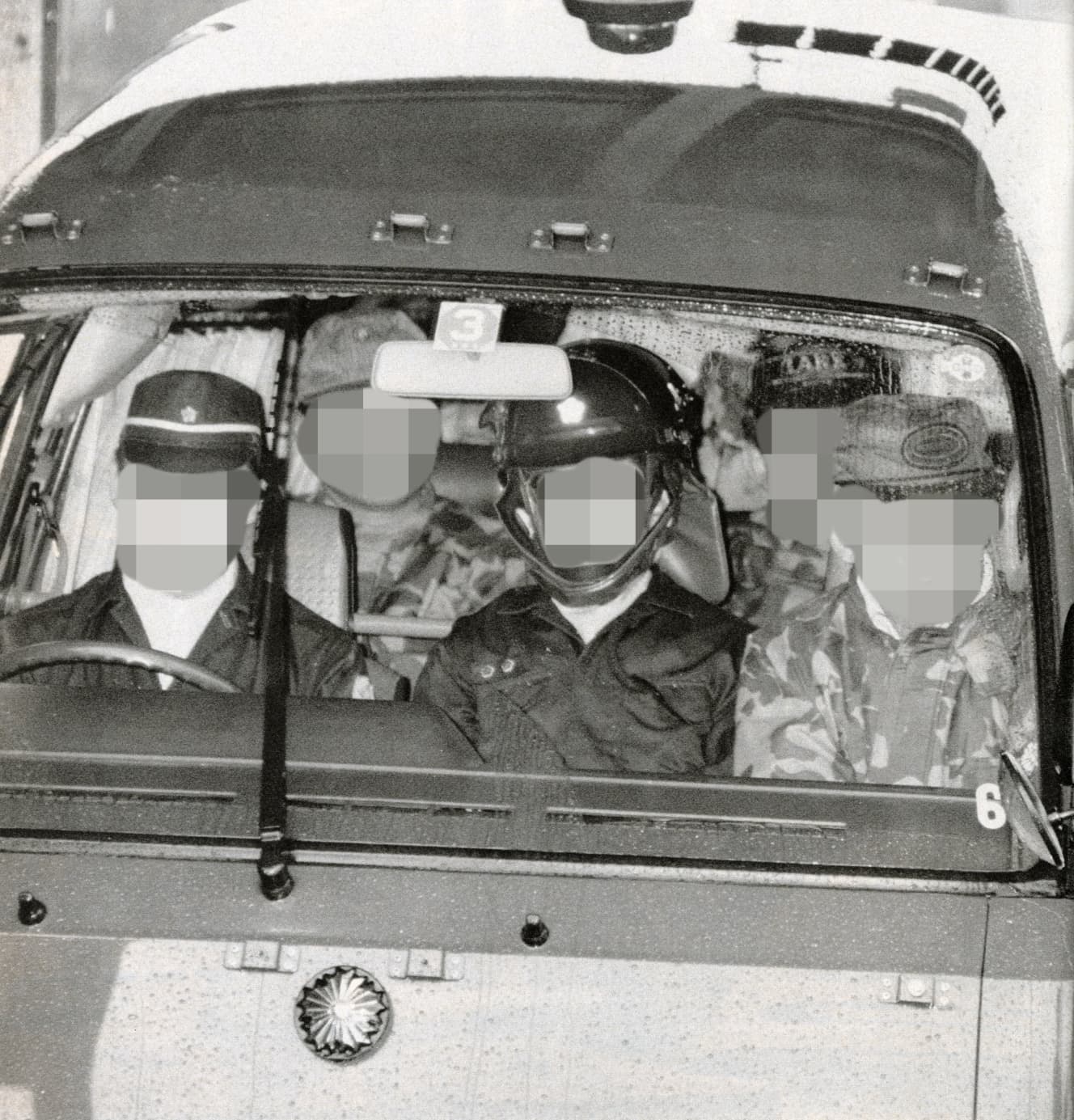
PHOTO: Masaharu Uemoto (5th photo)