Man Who Killed Wife and Six Children Claims He Doesn’t Remember the Incident Despite Accepting Death Sentence


In October 2017, in Hitachi City, Ibaraki Prefecture, Hirofumi Komatsu (40), the defendant in the “Hitachi Wife and Six Children Murder Case,” killed his wife and six children while they were sleeping and set fire to his home. On February 21 of this year, his appeal was rejected by the Supreme Court, confirming his death sentence.
The YouTube channel Hikage no Koe conducts exclusive interviews with victims and parties involved in incidents and accidents that tend to be buried in daily news and forgotten. In 2022, they also published a book titled Hikage no Koe: The Other Truth of Serious Cases Not Covered by the Media (Tetsujinsha).
The channel’s reporting team had been covering Komatsu since before the trial began, but at some point, he suddenly changed drastically, leading them to distance themselves from him. This entire episode is compiled into a video.
The reporting team touched on his resolve toward the death penalty
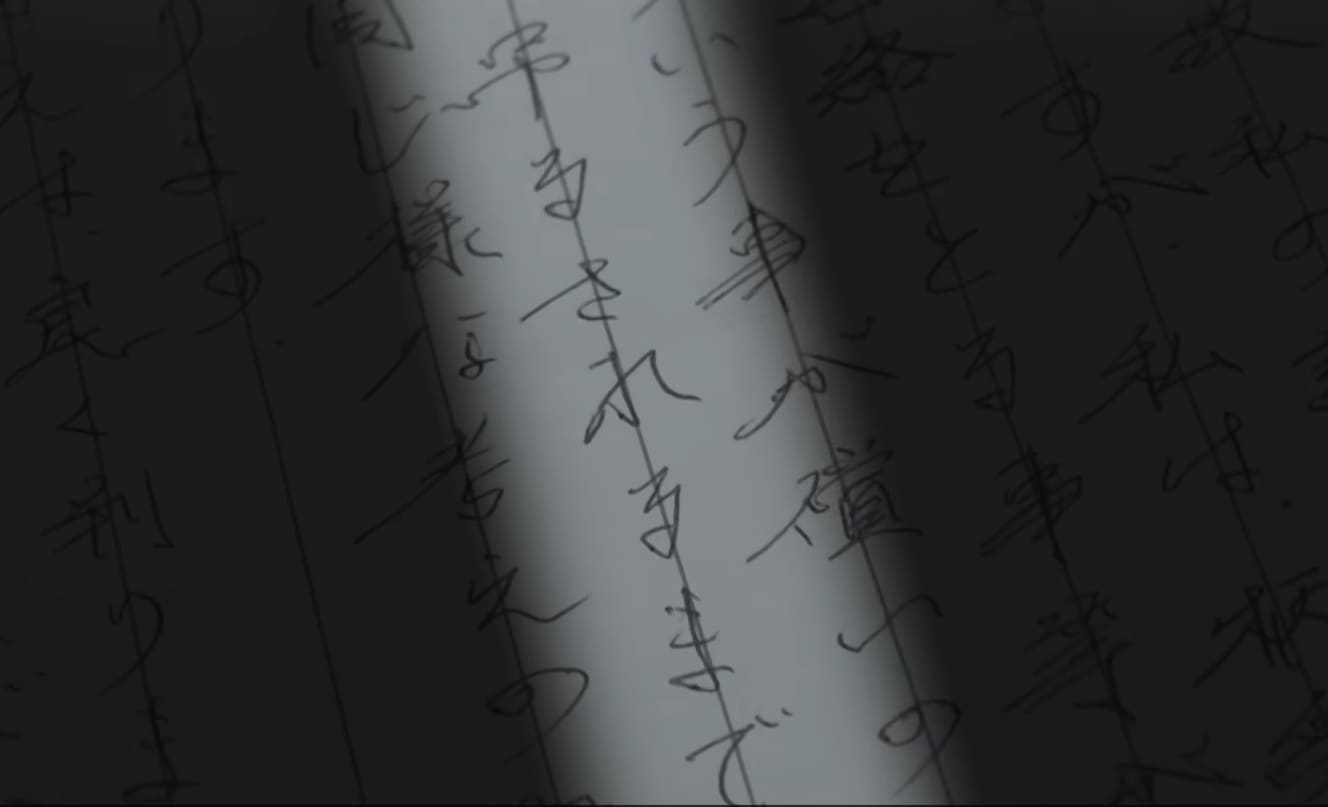
“I have no confidants or supporters. Until I am hanged, I hope to throw a stone that causes some ripple.” (Original text unchanged)
The letter showed that even before the trial began, he was already showing resolve to accept the death penalty. And, seven years after writing this letter, in February 2025, as predicted, the death sentence was finalized.
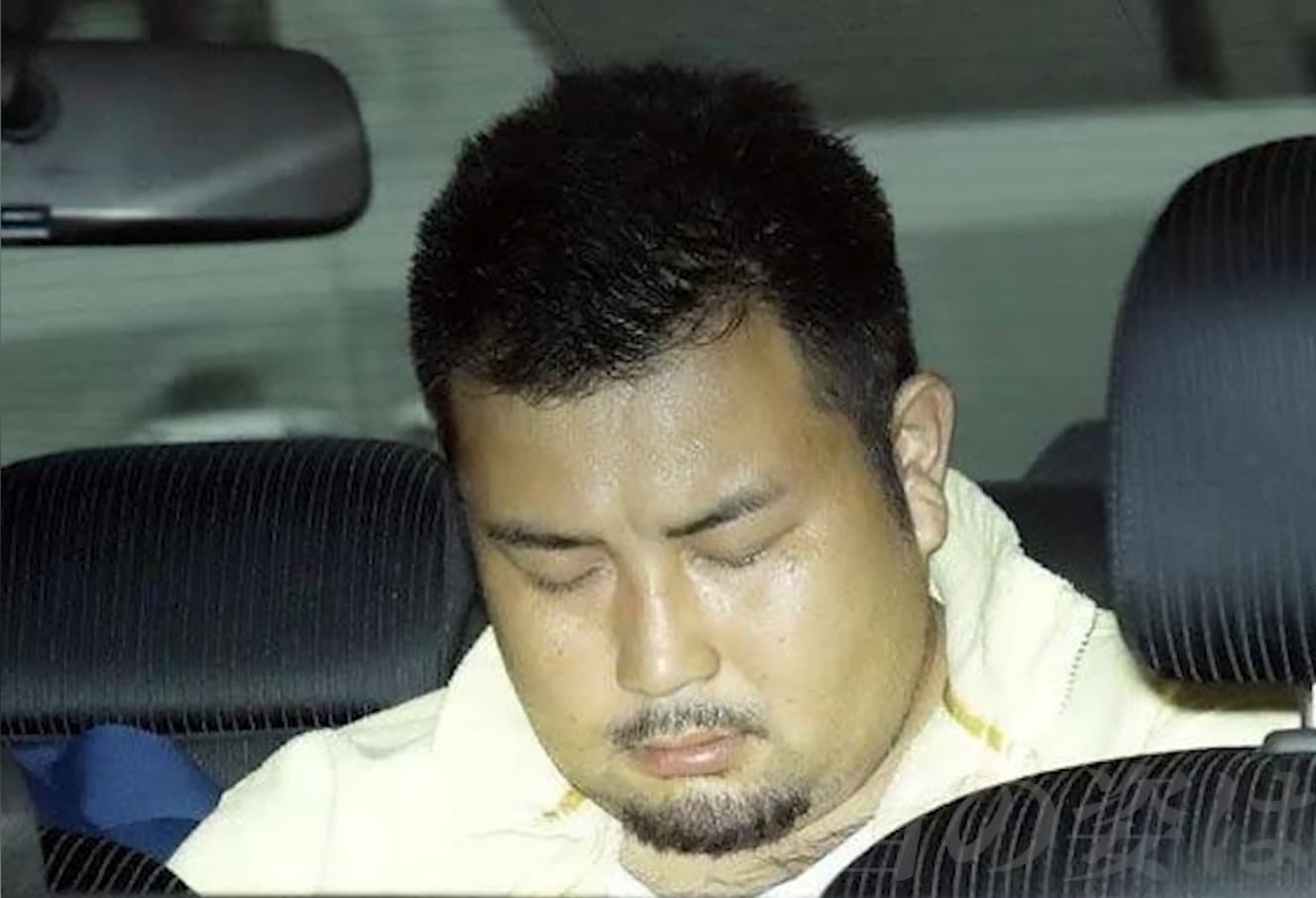
Hirofumi Komatsu, death row inmate (age 40).
In 2017, in Hitachi City, Ibaraki Prefecture, he stabbed to death his wife and five children aged 3 to 11 with a knife. He was charged with murder and other crimes. In fact, we had been in contact with Komatsu multiple times through letters and visits. However, this communication ceased after 2021. To be precise, we stopped sending letters. The reason was that Komatsu had changed drastically, almost like a different person. What happened to him?
“Could you please reply just to say whether the items I sent are OK or not? I will decide after that is clarified.” (From a letter dated August 17, 2020, original text unchanged)
Hirofumi Komatsu, death row inmate who killed his wife and five children, a total of six people. First, let’s look back on his life and trial materials as well as statements from his visits.
Even though he resolved to become normal, in the end, he couldn’t change
Kojiro Komatsu was born in 1984 in Edogawa Ward, Tokyo, and moved to Yachimata City, Chiba Prefecture, around the time he became aware of his surroundings. He dropped out of high school and started working in construction, but nothing lasted long. He repeatedly skipped work and quit without notice when he found it hard to show up.
Still, in 2009, at age 25, after his father passed away, Komatsu resolved to straighten out his life. He moved to Hitachi City in Ibaraki Prefecture—the scene of the later crime—and vowed to start fresh. Around that time, he met his wife, who worked in hospital administration. She was a single mother, but three months after they met, she became pregnant with Komatsu’s child.
However, despite having someone to love and children to protect, Komatsu continued reckless behavior, including being arrested for unlicensed driving and frequently changing jobs. Eventually, his wife told him to leave the job that was supposed to be his last chance and announced she wanted a divorce. Komatsu reportedly snooped on his wife’s LINE messages and discovered she had been friendly with a customer at a snack bar where she worked to support the family. Seeing this drove him to a blank state of mind, which led to him killing his wife and children.
In fact, Komatsu had at one time tried to face his guilt. He sent essays to publications such as Weekly Bunshun and the Asahi Shimbun, openly recounting the incident without hiding his crimes. Regarding this, he wrote to Asahi Shimbun:
“Only someone who has actually killed can understand what it means to kill. I hope that by talking about it, I can help prevent similar incidents.”
We also sent our first letter to Komatsu during this period. In our initial letter dated November 15, 2018, he told us:
“Once it’s finalized, I will no longer be able to communicate, so I do not believe that being interviewed like this is part of atonement at all, but until I am hanged, I hope to make some kind of impact.”
Contact was lost his attitude suddenly changed
The handwriting in the letters was very neat, and when we visited for meetings, he was polite and answered sincerely. He even spoke openly about accepting his death penalty. However, shortly after this first letter, communication ceased for about a year. Letters sent to places where he was likely detained, such as Hitachi Police Station and Mito Detention Center, were repeatedly returned.
When we finally re-established contact, Komatsu had changed so much that it was hard to believe he was the same person we had interacted with before. What had happened during this time? Komatsu later explained:
“Honestly, I do not remember. I was discharged from the hospital in February of last year (2019). Since there was always a doctor present, I came to Mito Prison at the end of February. I apparently went into cardiac arrest temporarily and was put on an artificial heart-lung machine.” (Letter dated July 30, 2020)
“At that time, I weighed about 110 kilograms, but upon discharge, I was 73 kilograms. Now, with prison food, I have gained 9 kilograms and weigh 82.” (Letter dated August 3, 2020)
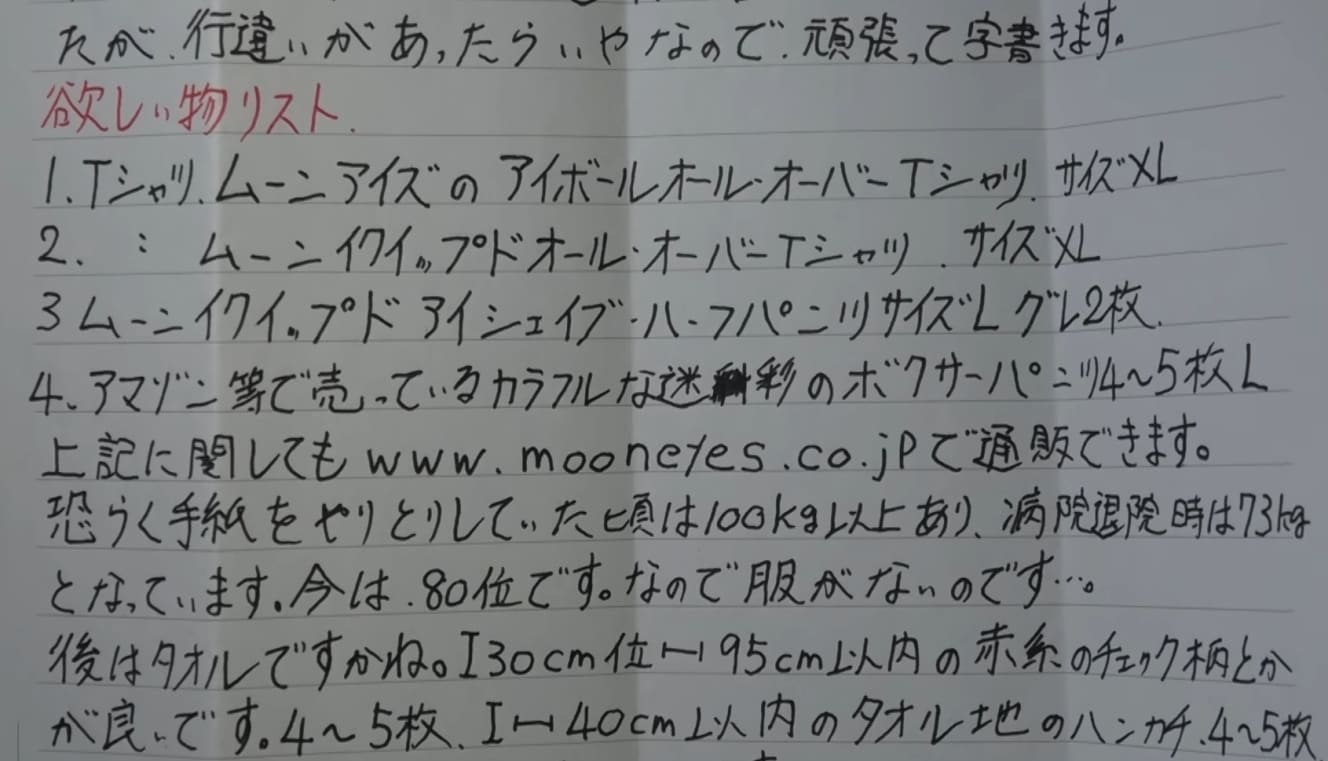
Komatsu lost his memory of the incident after suffering heart failure and temporarily losing consciousness. His handwriting became sloppy compared to before, and he seemed to have lost the attitude of facing up to the crime. In later letters, he would simply say he didn’t remember the incident and repeatedly asked for care packages.
In a letter dated August 11, 2020, Komatsu sent a wish list that included clothes costing tens of thousands of yen. It even contained the following request:
“I would like coffee, cocoa, and sausages prepared for the photos of the six children.” (August 11, 2020)
“He snapped back, saying, ‘I find that quite unfair.'”
The children Komatsu killed ranged from 3 to 11 years old. Doubts arise about Komatsu’s request for coffee on behalf of the young children. Surely a 3-year-old child would have something more appropriate than coffee. If he wanted coffee for himself, he should just say so.
Before losing his memory, an article published in the Asahi Shimbun included this description:
“He says he can’t look at the more than 200 photos of his children he has on hand. He fears facing the reality of the crime, calmly saying, ‘If I confront the incident, I might break down.’” (Asahi Shimbun, October 6, 2018)
However, at the trial, perhaps to seek leniency, he claimed that he still prays before the children’s photos every day. In response, the prosecution asked, “If you don’t remember the incident, why do you pray before the photos?”—leaving him flustered.
At least, the request for coffee for six people seems like he used the children he killed as an excuse for wanting his own luxury item. When confronted directly with such doubts, this letter was returned:
“I find that quite unfair. (Regarding gifts from major media,) I think it’s not less than 100,000 yen per person. (Omitted) I consider trust to be equivalent to receiving gifts.” (August 28, 2020)
We naturally began to distance ourselves from Komatsu.
In February 2025, Komatsu Hirofumi’s appeal was rejected, and his death sentence was finalized. However, this was not widely reported. Komatsu’s main claim was that, since he had lost his memory, the trial should be halted. It is clear that neither precedent nor public sentiment would support avoiding the death penalty on such grounds.
One surprising fact was that Komatsu, who had said he was completely alone, had changed his surname. Presumably, he was adopted and gained new relatives. Meanwhile, the media only ran basic reports and never attempted to delve into Komatsu’s true feelings.
Whether Komatsu’s true self is the man who acknowledged his crime and accepted the harshest penalty, or the one who lost his memory and kept begging for gifts, remains unknown. However, from the drastic change in his behavior that we witnessed, it felt as if we caught a glimpse of Komatsu’s selfish nature—unchanged even after committing a great crime.

Composition: Kenichiro Wagatsuma, Ken Kobayashi, Mizuho Takagi, and Kenichiro Wagatsuma from the "Voice of the Shadow" YouTube channel.