Urawa Business Manager Masahiko Tsujikawa Reveals Secrets to Success After Reaching Koshien First Appearance and Final Four
When he first took over, there were 12 members in the team, and he drove the bus to the riverside where the team practiced.


The starting point was, “Damn it. If I don’t win and get recognized.”
“Maybe we can do it.”
As the man went back and forth between the waiting room and the entrance to the field at Koshien, his feelings began to settle. The previous game had gone into extra innings and was delayed, so there was some extra time. The man was Masahiko Tsujikawa (59), the manager of the Urawa Jitsugyo High School (Saitama) baseball team, preparing for their first game of the Senbatsu against Shiga Gakuen (Shiga).
“The opponent is a regular at Koshien. I couldn’t imagine winning. I’m a worrier. But as I wandered the hallway, strangely, my feelings became more positive.”
Urawa Jitsugyo, having defeated strong teams like Shiga Gakuen and Seiko Gakuin (Fukushima), reached the Final Four in their first-ever appearance at Koshien, both in spring and summer. Tsujikawa shares the secret behind the school’s rise to success.
Tsujikawa became the manager of Urawa Jitsugyo in April 1988, following the advice of his former teacher during his middle school years.
“At that time, the team had only 12 members. The practice field was along a riverbank, and I used to drive the bus to get there.”
The origin Tsujikawa refers to is an event that took place in the fall of his first year as manager. It was a banquet where high school baseball coaches from the southern part of Saitama gathered.
“As a new manager at an unknown school, no one spoke to me. I didn’t know anyone. I couldn’t join in the conversation and spent 2-3 hours sitting silently at the edge of the table, drinking beer. It was miserable. I strongly felt, ‘Damn it. If I don’t win and get recognized, I can’t even join the conversation at a drinking party.'”
Tsujikawa visited middle schools throughout Saitama, asking talented students to come to Urawa Jitsugyo. He also ran the practices by himself.
“I grew up in a sports-oriented baseball team, so I used to yell a lot. But overly strict coaching just made the players shrink back. There was a time when several players quit all at once, so I switched to a milder approach.”
“Your lives are about to change. Show your determination!”
Tsujikawa made sure to arrange as many practice games as possible with high schools that had their own stadiums. There was a reason for this.
“Schools with their own stadiums are bound to be strong. Their pitchers are undoubtedly excellent. There’s no point in playing against weak opponents. You improve by facing strong teams with great pitchers.”
Thanks to the increasing number of talented players and consecutive matches against powerhouse schools, Urawa Jitsugyo reached the top 8 for the first time in the 1992 Saitama Summer Tournament. In the same year’s fall, they reached the finals. However, there was one big obstacle: Urawa Gakuin, a school that boasted a record 15 appearances at Koshien.
“From a gut feeling, I think we were beaten about 2 wins to 50 losses. The intimidation from Urawa Gakuin was overwhelming. From the warm-up, you could hear loud voices as if the ground was shaking. Even if we thought ‘this year we can do it,’ we kept losing at key moments.”
That Urawa Gakuin team was defeated by Urawa Jitsugyo in the previous fall’s prefectural tournament, with their ace, Sota Ishido, leading the charge. Tsujikawa, feeling that if we don’t make it this year, there won’t be another chance, gave his players a motivating speech before the quarterfinals of the Kanto Tournament, where they were on the brink of qualifying for the Senbatsu.
“If we win today’s game, your lives will change. Show your determination!”
Urawa Jitsugyo made it to the top 4, but Tsujikawa’s natural tendency to worry still showed. On the day the Senbatsu teams were announced, he fidgeted, sitting and standing on the field. When the news of their qualification was broadcast, it was the first time in his life he cried tears of joy.
“Even after qualifying for Koshien, I was still anxious. I kept waking up at 3 a.m. every day, wondering what would happen if we played a horrible game.”
Despite these worries, Urawa Jitsugyo went beyond their goal of reaching the top 8 in the spring Senbatsu and made it to the top 4. However, Tsujikawa did not seem satisfied.
“It wasn’t until we returned to Saitama that I was able to think, ‘That was fun.’ Right after the semifinal loss to Chiben Wakayama (5-0), I couldn’t help but feel frustrated. We lost due to errors, but I felt we could have played a better game.”
Once again, Tsujikawa is looking ahead to the next Koshien. His sights are already set on the summer tournament.

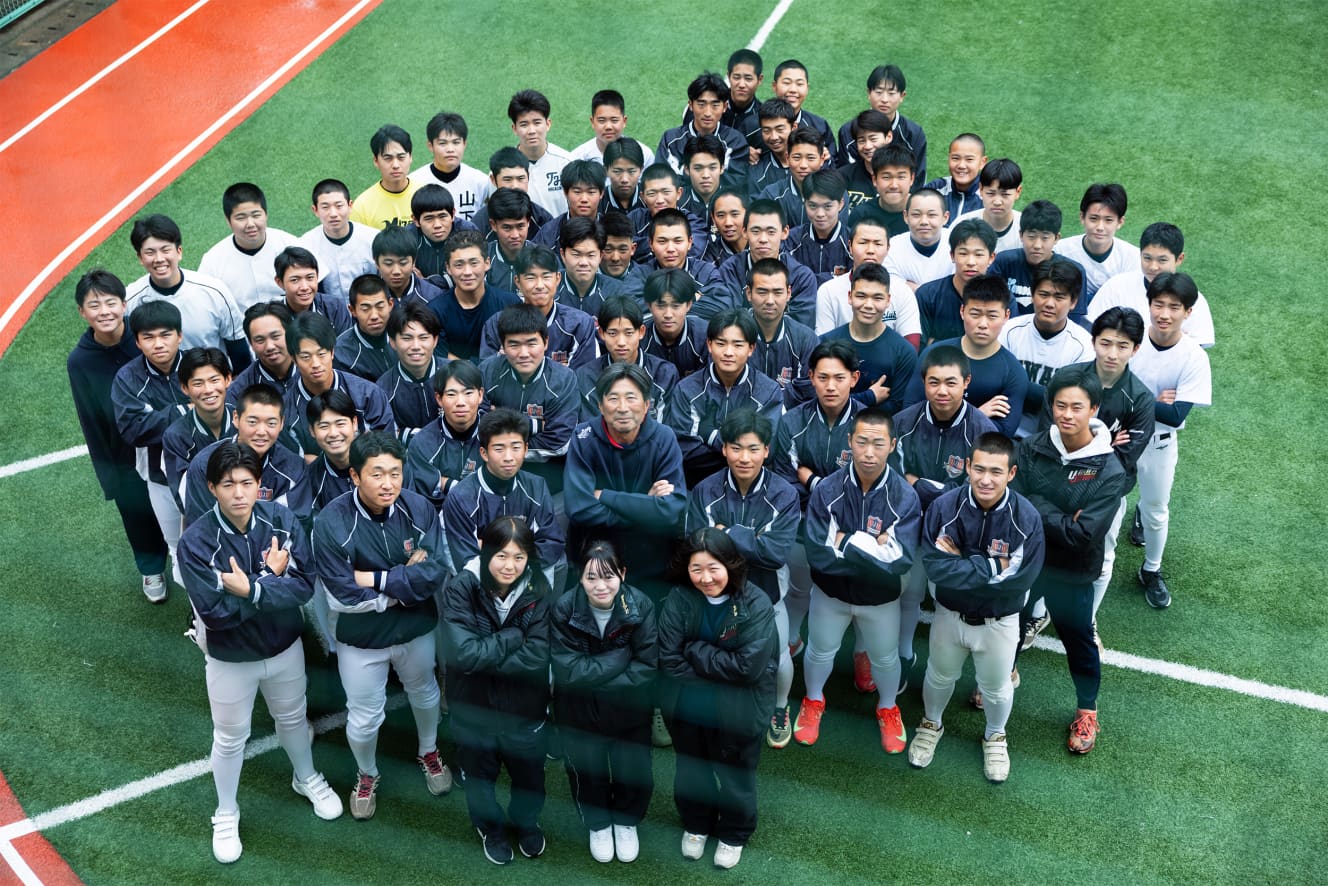
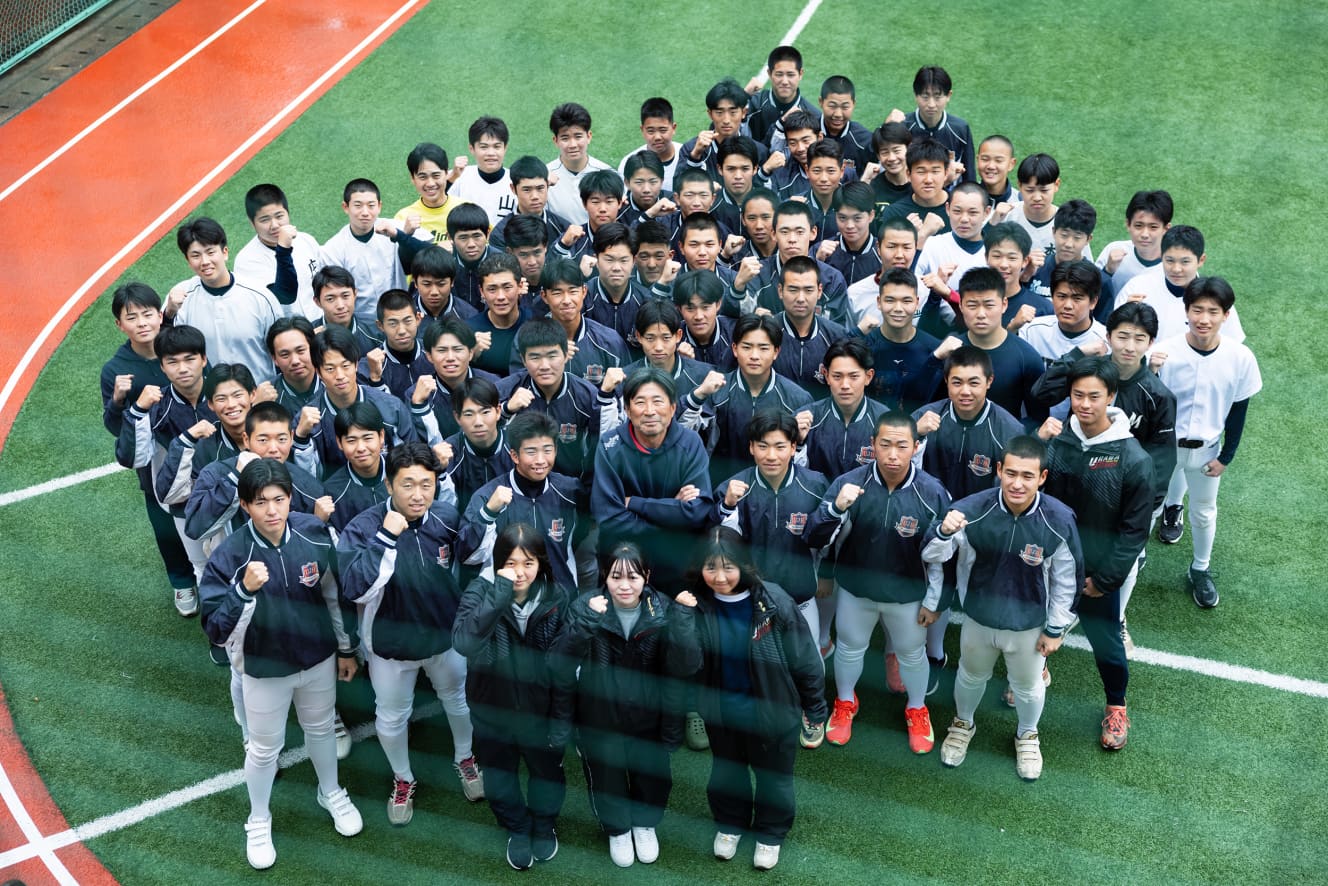
From the April 25 and May 2, 2025 issue of “FRIDAY”
PHOTO: Hiroyuki Komatsu