280 Yen per Hour and Mall Warmth: Fuji TV Staff’s Cry for Help


Even though I worked hard for 280 yen an hour
“Due to this scandal, I suddenly lost all my work and became free. It’s a life-or-death issue, so I watched the entire press conference live. Despite the fact that such a lineup of people attended the conference for over 10 hours, they continued to hide behind privacy and the content was lacking. Throughout, I had the impression that they were being one-sidedly scolded.”
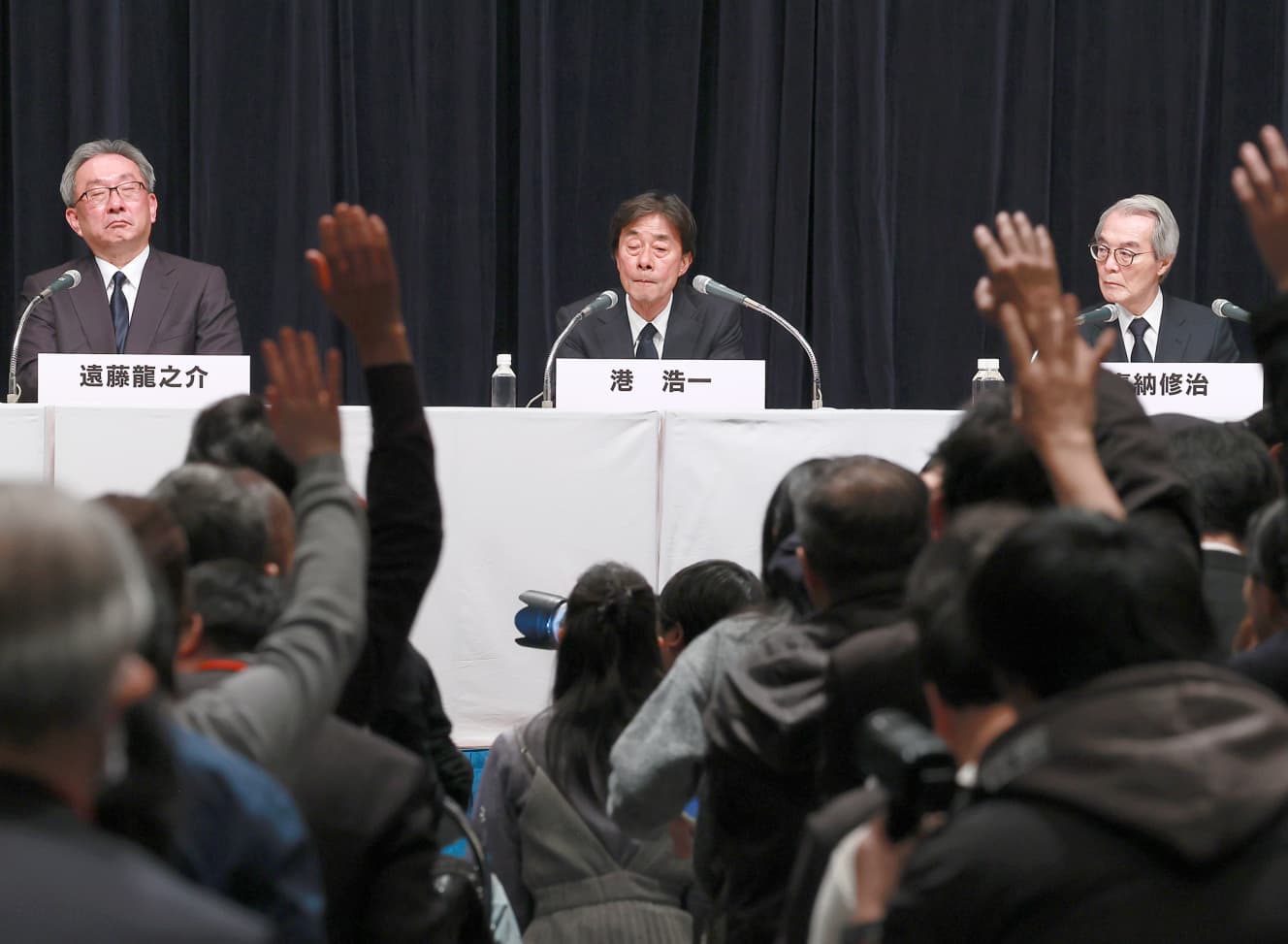
At the redo press conference held by Fuji TV on January 27, executives Koichi Minato (72), Shūji Kanō (74), and Ryūnosuke Endō (69) were present. Staff member A (55), who worked for a production company that handled Fuji’s variety shows and dramas, watched the event with complicated feelings.
“The thing that bothered me the most was the statement made at the employee briefing on January 23, before the redo conference. Kanō said, ‘We have savings, so we’re okay for a while.’ I fully understood that it was directed at the employees, but it made us feel like we were being left out. Every time I hear Minato’s response like ‘Maybe it’s this.” which lacked a sense of urgency, it felt like being strangled with a soft rope.”
According to A, at the year-end party held last year, “Fuji employees were saying, ‘The bonus amount has gone up. This year, we can expect a base increase.’ This was after ‘Women’s Seven’ reported on Masahiro Nakai’s (52) female troubles, but at that time, the sponsor’s CM stoppage had not yet begun.”
“We’ve been working desperately to recover the sales that drastically dropped during the pandemic. The production budget and staff were cut during the pandemic and have remained reduced. Our income has dropped, and the workload per person has increased. We’ve been working almost without rest. When converted to an hourly wage, it was 280 yen. Even though the wage is as low as 280 yen, it felt like the station knew we had no choice but to work. It’s frustrating.”
Even as a subcontractor, A was once envied by those around him for working on Fuji TV’s jobs.
“Now, it’s completely uncomfortable. It’s hard to be pitied. After the dark business scandal involving Yoshimoto comedians, there have been continuous scandals with celebrities. I had somewhat developed immunity, but this ‘Nakai shock’ is on a whole different scale in terms of shock and damage.”
Taking shelter to warm up at the shopping mall
Following the “Nakai shock,” Fuji Media Holdings forecast a decrease of 23.3 billion yen in Fuji TV’s advertising revenue for the fiscal year ending in March, along with a reduction of around a quarter in the parent company’s net profit.
The All Japan Television Program Production Association (ATP), an organization representing production companies, submitted a petition to Kenji Shimizu, President of Fuji TV (64). The petition expressed concerns about the severe impact of urgent re-editing of already delivered programs and sudden content changes, which could lead to overwork and even the bankruptcy of production companies due to program cancellations.
For a long time, production costs have been reduced due to the economic downturn, and the situation has worsened with the COVID-19 pandemic, leading to a series of bankruptcies in production companies. The impact of the “Nakai shock” on subcontracted production companies is beyond imagination.
“In location shoots, which rely on the cooperation of facilities and stores, we’ve already seen refusals for filming and harsh words being thrown at us. The unseen damage has already started. The impact may last for months, or even years. The situation is expected to drag on, and many production companies are facing the risk of bankruptcy,” said a key station producer.
A staff member from a production company (A) lamented, “After paying the mortgage and the gas for the shooting vehicles, there’s no money left.”
“Utility costs are soaring, so I don’t turn on the heating at home. The house is freezing, so I take refuge in shopping malls. My wife’s part-time job barely covers our food expenses, but we’re already at our limit. With no work for the time being, I plan to work abroad. Like when I had no work during the pandemic, I think I’ll grab the tuk-tuk handle again in Thailand.”
It’s not just the viewers being left behind by Fuji TV.
PHOTO.: Kazuhiko Nakamura, Shinji Hasuo Interview and text by: Hiroyuki Sato
